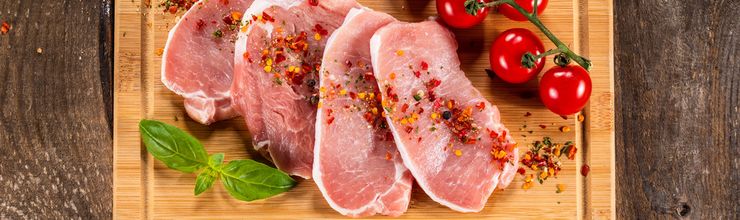
You grill a pork chop on Sunday. Wednesday morning, your big toe is swollen, hot, and throbbing so hard the bedsheet feels like a weapon. Was the chop to blame? Not automatically, but the numbers make pork worth a hard look.
Pork shows up in almost every form Americans eat: chops, ribs, tenderloin, bacon, sausage, pulled pork, ham, and the occasional liver. Some of those cuts sit in the moderate-purine range. A couple sit in the danger zone. The difference matters more than a blanket “pork is bad” rule, so let’s get into the actual numbers.
How Much Purine Is Actually in Pork?
Quick translation in case purine charts look like gibberish. Purines are natural compounds in food, and your body breaks some of them down into uric acid. Too much uric acid in the blood, and sharp crystals can form in a joint. That is a flare.
The most detailed modern purine database comes from a Japanese team that measured 270 foods with a lab method called high-performance liquid chromatography, or HPLC (PMID: 24553148). They sorted foods into five groups, from under 50 mg of purines per 100 g (very low) to over 300 mg (very high). Here is where common pork cuts landed, raw weight:
- Pork neck: 70.5 mg/100 g, the lowest of the common cuts.
- Pork ribs: 75.8 mg/100 g.
- Pork shoulder: 81.4 mg/100 g.
- Pork shoulder ribs: 90.8 mg/100 g.
- Pork sirloin: 90.9 mg/100 g.
- Pork rump: 113.0 mg/100 g.
- Pork heart: 119.2 mg/100 g.
- Pork tenderloin: 119.7 mg/100 g.
- Pork tongue: 104.0 mg/100 g.
- Pork shoulder knee (a leg cut near the hock): 107.6 mg/100 g.
See the split? Lean, everyday cuts like shoulder and ribs land in the 50 to 100 mg low group. Darker or more worked cuts like tenderloin and rump climb into the 100 to 200 mg moderate group. None of the muscle cuts reach the 200 mg line, which is why a single 4-ounce chop is not the same as eating offal.
Processed pork is a different conversation, and honestly a weirder one:
- Bacon: 61.8 mg/100 g.
- Boneless ham: 74.2 mg/100 g.
- Pressed ham: 64.4 mg/100 g.
- Prosciutto: 138.3 mg/100 g.
- Salami: 120.4 mg/100 g.
- Vienna sausage: 45.5 mg/100 g.
- Frankfurter: 49.8 mg/100 g.
Yes, bacon measures lower in purine than pork tenderloin. Before you celebrate, the salt and cured-meat problem is real and separate from purines. Processed meats have their own track record, which I covered in detail here: why bacon might be worse than you think.
The Pork Products That Belong in the Danger Zone
Two cuts blow past every other part of the animal, and both are organs:
- Pork liver: 284.8 mg of purines per 100 g, which lands in the high group. Eating 100 g produces an estimated 331.2 mg of uric acid.
- Pork kidney: 195.0 mg/100 g, just shy of the high-group line, with an estimated 232.0 mg of uric acid per 100 g.
Pork liver is the single biggest purine bomb on this list, nearly four times a chop. The 2020 American College of Rheumatology (ACR) gout guideline lists organ meats among the high-purine foods people with gout should limit (PMID: 32390306). If liver and onions was a family staple, this is the pork habit most worth dropping.
One more thing worth knowing from the same database. The purines in pork muscle are mostly hypoxanthine, usually well over half of the total. Pork liver and kidney, by contrast, are mostly adenine and guanine. Why care? Research suggests hypoxanthine pushes blood uric acid up harder than the other purine bases do. That makes a big plate of meat more problematic than its raw “total purine” number alone suggests, while plant purines don’t seem to behave the same way. It is also why tofu and beans got unfairly blamed for years.
What the Long-Term Studies Say About Meat and Gout
Purine tables tell you what is in the food. The follow-up question is whether people who eat more meat actually get gout more often. They do.
The landmark study followed 47,150 men with no history of gout for 12 years. Men who ate the most meat had a 41 percent higher risk of developing gout than men who ate the least, with a relative risk of 1.41. Seafood was similar at 1.51. Dairy went the other way: the biggest dairy eaters had a relative risk of 0.56, meaning roughly a 44 percent lower risk (PMID: 15014182). Total protein itself wasn’t the villain. The source was.
A broader review of 53 studies reached the same conclusion, listing meat and seafood right alongside beer, liquor, and sugary drinks as dietary factors that raise the risk of gout, while folate, coffee, and dairy were linked with a lower risk (PMID: 21285714).
Here is the part that should make you rethink the all-you-can-eat pulled pork night. In a one-year study of 633 people with gout, those who ate the most purines over a two-day stretch were 4.76 times more likely to have a flare than those who ate the least. Animal-source purines drove most of it, with a top-quintile risk of 2.41. Plant purines barely moved the needle (PMID: 22648933).
That 4.76 figure is the answer to “can a single meal set me off?” It can. The body can get hit with a short, concentrated purine load it can’t clear fast enough.
Before You Blame the Whole Flare on the Chop
Context matters, and honesty matters. Diet explains less than most people assume.
A 2018 meta-analysis of 16,760 people found seven foods associated with higher urate levels, including meat such as beef, pork, or lamb. But the whole diet explained well under 1 percent of the variation in blood urate between people. Common inherited genetic variation explained 23.9 percent (PMID: 30305269). Roughly two-thirds of people with gout simply don’t flush uric acid efficiently. You didn’t eat your way into this disease single-handed, and cutting out pork alone usually won’t fix it.
Which is why the pork chop may have been a contributor, not the cause. A big meal, a few beers, dehydration, or starting a urate-lowering pill can all pile onto a body whose uric acid was already close to the edge. If flares keep coming, that is a conversation about medication and a uric acid target, not just a shopping list.
Does How You Cook Pork Change Anything?
A bit, and mostly in one direction.
Purines leach into cooking water. The same Japanese database tested tofu before and after a 3-minute boil, and its total purine content dropped from 31.1 to 21.9 mg per 100 g, close to a 30 percent fall. The mechanism, purines dissolving into the water, applies to animal tissue too, which suggests boiling, poaching, or slow-cooking pork and discarding the liquid can trim some of its purine load. Don’t drink the cooking broth or use it for gravy if you want that benefit.
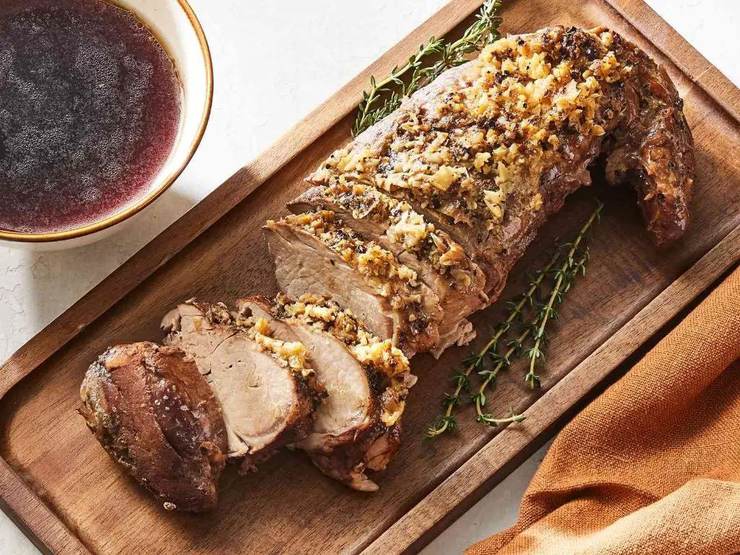
Frying and roasting keep all the purines in the meat. High heat also browns and chars the surface, and meat cooked well-done or charred tends to come with compounds that don’t do your metabolism any favors. Grilled pork isn’t poison, but a boiled or braised piece is the gentler pick.
What about pairing? Build the plate around the chop instead of stacking trigger on trigger. A modest portion of pork with rice, vegetables, and a glass of water is one meal. Pork ribs plus beer plus a sugary dessert is a far heavier load, and alcohol deserves special mention: beer and liquor both slow uric acid excretion, which you can read about in the beer versus wine comparison.
So Can You Still Eat Pork With Gout?
Most people can, with guardrails. This is not an all-or-nothing food, and pretending it is pushes people toward either denial or guilt-driven binges.
- Keep muscle cuts to a sensible portion, around 3 to 4 ounces (roughly 85 to 115 g), and treat pork as part of a meal rather than the whole plate.
- Favor shoulder, loin-adjacent cuts, and ribs over giant portions of rump or tenderloin if you are watching purines closely.
- Skip pork liver and kidney. That is the clearest rule in this whole article.
- Go easy on bacon, sausage, salami, and prosciutto because of salt, processing, and portion creep, even where their purine numbers look modest.
- During an active flare, give meat a break for a few days and lean on eggs, dairy, and vegetables. Milk and yogurt are among the few foods tied to a lower gout risk.
- Track what actually happens. If pork reliably precedes your flares by a day or two, your body is giving you data. Use it.
The people who get into trouble aren’t usually the ones eating one pork chop. They’re the ones doing a pound of brisket with beer on a dehydrated Friday, or frying liver every week. Fix those patterns, keep your uric acid checked, and pork doesn’t have to disappear from your life.
Frequently Asked Questions
Is pork worse than beef or chicken for gout?
Not dramatically. Pork muscle cuts measure in the same range as beef, and a large 2018 analysis grouped beef, pork, and lamb together as meats associated with slightly higher urate levels (PMID: 30305269). Chicken breast, at 141.2 mg/100 g, actually measures higher in purines than a pork chop, though portion size and preparation matter more than the cut alone.
Can a single pork-heavy meal trigger a flare?
Yes. In a case-crossover study, people eating the most purines over two days were 4.76 times more likely to have an attack than those eating the least (PMID: 22648933). A big pulled pork feast, especially with beer, can push an already borderline person over the line within a day or two.
Is bacon safe because its purine number looks low?
No, that reading is too generous. Bacon comes in around 61.8 mg of purines per 100 g, but it is cured, very salty, and easy to overeat. Processed meats have a worse overall track record than fresh cuts, which is why they deserve their own caution: processed meat and gout.
Should I stop eating pork to lower my uric acid?
You may not need to stop completely, but cutting back on portion size, liver, and processed pork is reasonable. Know the limit of diet too: diet as a whole explains under 1 percent of urate variation, while genetics explains about 24 percent (PMID: 30305269). If flares continue, urate-lowering medication is usually the real fix.
Is pork liver really that much worse than a chop?
Yes, by a wide margin. Pork liver contains 284.8 mg of purines per 100 g versus 70 to 120 mg for most muscle cuts, and the ACR guideline names organ meats as foods to limit (PMID: 32390306). Liver and kidney are the pork cuts you are best off skipping.
References
- Choi HK, Atkinson K, Karlson EW, Willett W, Curhan G. “Purine-rich foods, dairy and protein intake, and the risk of gout in men.” The New England Journal of Medicine. 2004;350(11):1093–1103. doi:10.1056/NEJMoa035700. PMID: 15014182.
- Kaneko K, Aoyagi Y, Fukuuchi T, Inazawa K, Yamaoka N. “Total purine and purine base content of common foodstuffs for facilitating nutritional therapy for gout and hyperuricemia.” Biological and Pharmaceutical Bulletin. 2014;37(5):709–721. doi:10.1248/bpb.b13-00967. PMID: 24553148.
- FitzGerald JD, Dalbeth N, Mikuls T, et al. “2020 American College of Rheumatology Guideline for the Management of Gout.” Arthritis and Rheumatology. 2020;72(6):879–895. doi:10.1002/art.41247. PMID: 32390306.
- Major TJ, Topless RK, Dalbeth N, Merriman TR. “Evaluation of the diet wide contribution to serum urate levels: meta-analysis of population based cohorts.” BMJ. 2018;363:k3951. doi:10.1136/bmj.k3951. PMID: 30305269.
- Singh JA, Reddy SG, Kundukulam J. “Risk factors for gout and prevention: a systematic review of the literature.” Current Opinion in Rheumatology. 2011;23(2):192–202. doi:10.1097/BOR.0b013e3283438e13. PMID: 21285714.
- Zhang Y, Chen C, Choi H, et al. “Purine-rich foods intake and recurrent gout attacks.” Annals of the Rheumatic Diseases. 2012;71(9):1448–1453. doi:10.1136/annrheumdis-2011-201215. PMID: 22648933.
- Choi HK, Liu S, Curhan G. “Intake of purine-rich foods, protein, and dairy products and relationship to serum levels of uric acid: the Third National Health and Nutrition Examination Survey.” Arthritis and Rheumatism. 2005;52(1):283–289. doi:10.1002/art.20761. PMID: 15641075.
Reviewed by the GoutSavvy Editorial Team