
You probably know the routine. A few beers after work on Friday, maybe some wings. At three in the morning you wake up and the base of your big toe feels like someone jammed a screwdriver into it. Meanwhile your partner sips one glass of red wine most nights and hasn’t felt a twinge. For years the advice was simple: all alcohol is the same for gout, so just stop drinking. The newest and largest look at the question says that message is too blunt, and the type of drink matters a lot.
A United Kingdom study tracked 331,865 adults for nearly twelve years and counted 5,728 new gout diagnoses along the way. When the researchers sorted people by what they actually drank, beer, spirits, white wine, and red wine landed in very different places. Here is what the numbers show, what they do not show, and how to use them without giving yourself permission for the wrong drink.
What a Drink Does to Your Uric Acid in the First Few Hours
To understand why one drink behaves differently from another, it helps to see the two ways alcohol raises uric acid. Your kidneys are the exit door for uric acid, and most people with gout are people whose kidneys underexcrete it. When your liver breaks down ethanol, it churns out lactic acid. Lactic acid and uric acid compete for the same exit, and lactic acid wins. The kidney ends up holding on to urate instead of flushing it, and blood levels can climb within hours of a single drinking session. We walked through the full pathway in our piece on how alcohol affects uric acid.
Ethanol also burns through ATP, the energy currency inside cells. ATP is built from purine building blocks, and when it gets spent faster than it gets rebuilt, the leftovers get converted into uric acid. So alcohol both creates more uric acid and blocks its removal. That is a genuinely bad two-for-one.
Beer adds a third problem. It is brewed from grain and carries a load of absorbable purines, including guanosine, which your body converts into uric acid very efficiently. Back in the 1980s, British researchers gave people controlled amounts of beer and watched plasma urate climb in a way vodka and wine did not quite match. In one early diet study, heavy beer drinkers with gout got about half of their daily purine nitrogen from beer alone. Wine and spirits contain almost no purines, which tells you something important: the ethanol in them is fully capable of causing trouble without any help.
The 12-Year Study: Beer, Spirits, and the Curious Case of Red Wine
The new analysis, led by Weiwei Chen and colleagues and published in the Journal of Rheumatology in 2024, used the United Kingdom Biobank, a giant medical database of middle-aged and older adults. Over a mean follow-up of 11.7 years, 5,728 participants developed gout. The team ran dose-response models, which means they could watch how risk moved as weekly intake went up, rather than just comparing drinkers with nondrinkers.
The headline findings:
- Beer was the worst drink by a wide margin. People in the heaviest beer-drinking group had a hazard ratio of 2.13, developing gout at about twice the rate of people in the lowest-intake group.
- Spirits came next, with heaviest drinkers at a hazard ratio of 1.59.
- Champagne and white wine were linked with higher risk at every intake level the model could measure. There was no clearly safe amount.
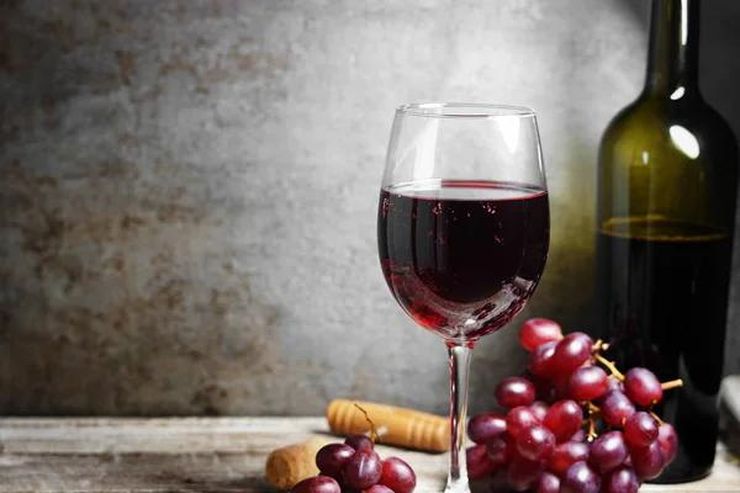
- Light red wine and fortified wine sat on a slight downward slope instead. At low intake they were associated with a small reduction in risk, though heavy intake curved back upward into harm.
Then came the finding that will get quoted out of context. The J-shaped curve, the little dip at light intake that makes people say “a glass a day is medicine,” showed up only in women. Women who kept below about 95 grams of alcohol a week, roughly seven standard drinks spread across the week, had a hazard ratio of 0.78, about 22 percent fewer cases than women who did not drink. In men there was no protective zone at any amount. Risk started above the nondrinker line and climbed from there.
This is not the only recent cohort to rank drinks this way. A separate population-based study asking the same question found beer or cider carried the strongest per-serving link, with one pint a day associated with a hazard ratio around 1.60 in men and 1.62 in women. Spirits looked particularly unfavorable for women in that analysis, at about 1.54 per daily measure. Two large datasets, same pecking order.
Why That Red Wine Result Is Not Permission to Drink
Before anyone orders a case of cabernet, three qualifications matter.
First, this was observational data. The people in the Biobank who drank a little red wine tended to be wealthier, thinner, more physically active, and more likely to see doctors than both heavy drinkers and teetotalers. Researchers adjust for those factors statistically, but nobody can adjust for every difference between a person who drinks one pinot noir with dinner and a person who drinks nothing at all. The study’s own authors called the wine signal a reason for more research, not a recommendation.
Second, the study counted who developed gout over more than a decade. If you already have gout, your question is different and sharper: will tonight’s drink set off the flare you have been dodging? On that question the evidence is less forgiving. A 2014 case-crossover study led by Tuhina Neogi compared what people drank in the 24 hours before a flare against their own no-flare days. More than one or two drinks in a day came with a 36 percent higher risk of an attack, risk rose with the amount consumed, and no beverage type, wine included, was in the clear.
Third, the flare math keeps getting worse with quantity. A 2026 analysis reported in the Journal of Comparative Effectiveness Research estimated that each additional standard drink per week adds roughly 12 percent to the number of flares a person can expect in a year. One drink is a small nudge. A nightly habit is a much heavier load.
If red wine has any edge, the likely explanation is mundane: lower purine content plus polyphenols that may slightly help the metabolic background. You can get polyphenols from grapes and berries without the ethanol. Nobody’s uric acid needs alcohol.
What to Actually Do at the Table
Ranking the drinks for gout risk gives you this, from worst to least bad: beer, spirits, white wine and champagne, red wine. Notice that “least bad” is not the same as “good.”
The 2020 American College of Rheumatology (ACR) guideline advises people with gout to limit alcohol of any type, and singles out beer and spirits for strict restriction. It also notes, based on the flare-trigger evidence, that some people do best avoiding it altogether, particularly during flares, when tophi are present, or when attacks keep coming despite treatment. That lines up with what the attack-timing studies show: if your toe is already flaring, alcohol is fuel on a small fire. What to do while you wait for the meds to work is laid out in our first 12 hours playbook, and the day-by-day course of an untreated flare is here.
If you are going to drink during a stable period, a few moves reduce the damage:
- Pick red wine over beer or liquor when you have a choice, and keep it to one glass.
- Alternate every alcoholic drink with a full glass of water. Dehydration is an independent flare trigger, and alcohol pushes fluid out faster than it comes in. More on that in our look at why dehydration makes your joints pay the price.
- Eat first. A drinking session on top of a burger-and-beer spread is the classic game day flare combo for a reason: purines from food and alcohol stack on top of each other.
- Know what counts as a drink: 12 ounces of 5 percent beer, 5 ounces of wine, or 1.5 ounces of spirits. A 9 percent craft pint or a restaurant double pour is two drinks, not one.
- Do not assume nonalcoholic beer is a free pass. Much of the grain-derived purine content is still in there even though most of the ethanol is gone.
Keep this in proportion. Alcohol matters, but for most people with recurrent gout it is not the main lever. Diet and drinks together usually move uric acid by only about 1 to 2 mg/dL, which is why urate-lowering medication exists and why staying on it, not label-reading, predicts who stops flaring years out. We dug into that gap in why your gout medication isn’t working.
The honest summary of the new data: if your household splits into a beer drinker and a red wine drinker, the beer drinker is the one rolling out of bed at 3 a.m. But nobody should start drinking for their joints, and anyone who already has gout should treat “light red wine looked okay in a population study” as the weak evidence it is. Beer off the table, spirits rare, water in hand, and if the toe twinges, none of it.
Frequently Asked Questions
Is one glass of red wine a day actually good for gout?
Not enough to act on. The 22 percent reduction appeared only among light-drinking women in an observational study, and it could partly reflect that light wine drinkers tend to be healthier and wealthier to begin with. Men showed no protective zone at any amount, and in people who already have gout, wine still showed up as a short-term flare trigger. No guideline recommends that anyone start drinking for joint health.
Which alcohol is worst for gout?
Beer, consistently, in both the old controlled studies and the new cohorts. The heaviest beer drinkers in the United Kingdom analysis developed gout at about twice the rate of the lowest-intake group, and a separate cohort found one pint a day carried the strongest per-serving risk of any beverage. Spirits came second. Beer combines ethanol with absorbable grain purines, so it pushes uric acid up from two directions at once.
How long after drinking can a gout flare start?
Often within hours, and the risk window runs through the following day. Studies comparing people’s own flare days with their non-flare days found that more than one or two drinks in 24 hours raised attack risk by about 36 percent. The classic pattern is beer at night, pain around 3 to 6 a.m. Alcohol peaks uric acid quickly, and dehydration plus sleep does the rest.
Can I drink alcohol during a gout flare?
Wait until it fully settles. Alcohol can lengthen and intensify an attack, and the ACR guideline singles out flare periods as a time for strict avoidance. Treat the flare with whatever your doctor prescribed, usually an NSAID, colchicine, or a short steroid course, keep hydrating, and give the joint several clear days after the pain stops before you test a drink again.
Will quitting alcohol lower my uric acid enough to skip medication?
It helps, but usually not enough on its own. Alcohol and diet together typically move serum urate by around 1 to 2 mg/dL. If your level is well above 6 mg/dL, or you have tophi, kidney stones, or attacks more than twice a year, lifestyle changes work alongside medication rather than replacing it. Cutting beer is one of the highest-value drink changes you can make, but it is not the whole treatment.
References
- Chen W, Cai Y, Sun X, et al. “Dose-Response Relationship Between Alcohol Consumption and Gout Risk: Do Subtypes of Alcoholic Beverages Make a Difference?” J Rheumatol. 2024;51(8). doi:10.3899/jrheum.2024-0065.
- “Consumption of Total and Specific Alcoholic Beverages and Long-Term Risk of Gout Among Men and Women.” 2024. PubMed Central: PMC11358860.
- Choi HK, Atkinson K, Karlson EW, Willett W, Curhan G. “Alcohol Intake and Risk of Incident Gout in Men: A Prospective Study.” Lancet. 2004;363(9417):1277-1281.
- Neogi T, Chen C, Niu J, et al. “Alcohol Quantity and Type on Risk of Recurrent Gout Attacks: An Internet-Based Case-Crossover Study.” Am J Med. 2014;127(4):311-318.
- Gibson T, Rodgers AV, Simmonds HA, Toseland P. “Beer Drinking and Its Effect on Uric Acid.” Br J Rheumatol. 1984;23(3):203-209.
- FitzGerald JD, Dalbeth N, Mikuls T, et al. “2020 American College of Rheumatology Guideline for the Management of Gout.” Arthritis Rheumatol. 2020;72(6):879-895.
- Appah M, et al. “Comparison of Two-Stage Methods for Count Data in Mendelian Randomization: A Simulation Study.” J Comp Eff Res. 2026;e250081.
- “Serum Urate and Its Relationship with Alcoholic Beverage Intake in Men and Women: Findings from the CARDIA Cohort.” 2017. PubMed Central: PMC5404888.
Reviewed by the GoutSavvy Editorial Team