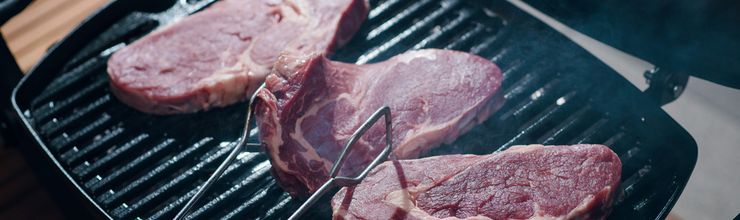
You had a steak dinner Friday night, and by Sunday your big toe is pounding, swollen, and hot enough that even a sock feels cruel. Was the beef the trigger? Maybe, maybe not. But beef is the food people with gout ask about more than almost any other, so it deserves a straight answer built on numbers rather than vibes.
Here is the short version before we dig in. Most everyday beef cuts sit in the low to moderate purine range, which means a normal portion is not an automatic flare. A few parts of the animal, mainly liver, are a genuine problem. Processed beef brings its own salt and curing issues. Let me walk you through the actual data, cut by cut.
How Much Purine Is in the Beef You Actually Buy?
Quick primer if purine charts make your eyes glaze over. Purines are natural compounds found in food, and your body turns some of them into uric acid. When uric acid builds up in the blood, sharp crystals can settle into a joint. That is a flare. So the purine content of what you eat is worth knowing, even though it is only one piece of the puzzle.
The best modern numbers come from a Japanese research team that ran 270 foods through a lab method called high-performance liquid chromatography, or HPLC (PMID: 24553148). They grouped foods from under 50 mg of purines per 100 g (very low) all the way up to over 300 mg (very high). Here is where common beef cuts landed, measured raw per 100 g:
- Corned beef: 47.0 mg/100 g, the lowest beef item on the list.
- Ribloin (rib steak): 74.2 mg/100 g.
- Brisket: 79.2 mg/100 g.
- Shoulder ribs: 77.4 mg/100 g.
- Stomach (tripe): 83.9 mg/100 g.
- Tongue: 90.4 mg/100 g.
- Shoulder sirloin: 90.2 mg/100 g.
- Tenderloin: 98.4 mg/100 g.
- Neck: 100.6 mg/100 g.
- Clod (shoulder meat): 104.0 mg/100 g.
- Shin: 106.4 mg/100 g.
- Topside: 110.8 mg/100 g.
Notice anything? The steak cuts people panic over, ribloin, brisket, tenderloin, mostly land between 74 and 100 mg. That puts them in the low group, under the 100 mg line, or right on its edge. A single 3 or 4 ounce steak is a far cry from the kind of purine load your body cannot handle. The tougher, hardworking cuts like shin, clod, and topside climb a little higher into the moderate band because they carry more hypoxanthine, but none of them run away from the pack.
One cut on that list deserves a closer look because cooking changes the number. When the same team tested topside raw and then heated, total purines went from 135.2 mg raw to 143.5 mg per 100 g after heating. Cooked meat weighs less than raw meat because it loses water, so the same purines get packed into a smaller weight. That 100 g of cooked beef is not the same portion as 100 g raw. Keep that in mind when you weigh a cooked steak on your plate.
The Beef Products That Belong in the Danger Zone
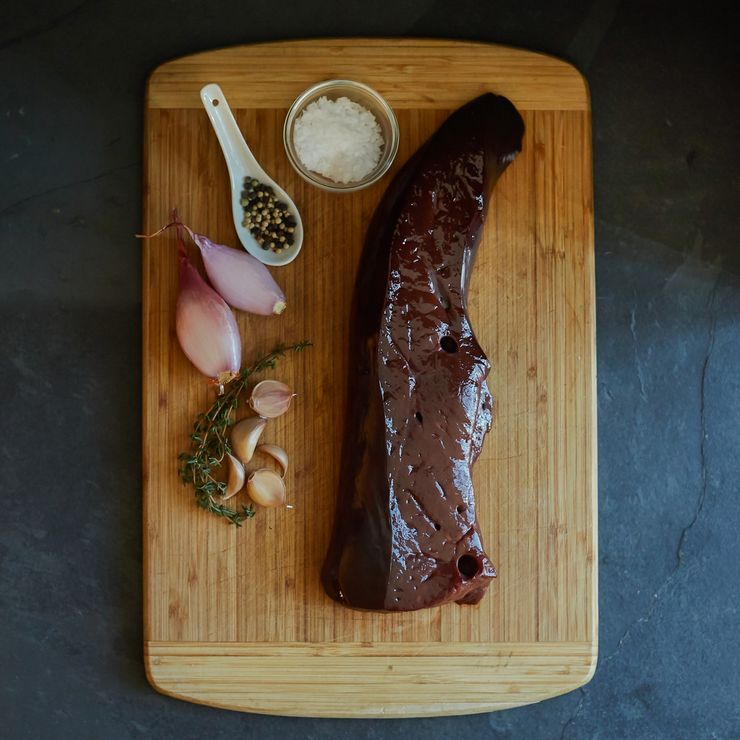
Most of the beef animal is reasonable. Then there are the organs, where the numbers jump hard:
- Beef liver: 219.8 mg of purines per 100 g, landing in the high group. Eating 100 g produces an estimated 255.5 mg of uric acid.
- Beef heart: 185.0 mg/100 g, moderate but closing in on the high line.
- Beef kidney: 174.2 mg/100 g, also in the moderate group.
Beef liver is the clear outlier, nearly three times the purines of a rib steak. The 2020 American College of Rheumatology, or ACR, gout guideline names organ meats among the high-purine foods people with gout should limit (PMID: 32390306). If liver and onions or pâté shows up often in your house, that is the beef habit worth dropping first. Heart and kidney are not as extreme as liver, but they sit high enough that treating them as everyday food is a bad bet.
Here is something the raw number does not tell you. The purines in beef muscle are mostly hypoxanthine, often well over half of the total. The Japanese team found hypoxanthine ran from 50.8 percent of purines in beef tongue all the way up to 80.9 percent in pressed ham, while liver, kidney, and stomach were mostly adenine and guanine instead (PMID: 24553148). Why does that matter? Hypoxanthine pushes blood uric acid up harder than the other purine bases do, which means a big plate of beef muscle may be more potent than its total purine number suggests. Plant purines do not seem to behave the same way, which is a big part of why tofu and beans got a bad reputation they never earned.
What the Long-Term Studies Say About Beef and Gout
Purine tables tell you what is inside the food. The better question is whether people who eat more meat actually develop gout more often. They do, and beef sits squarely in that finding.
The landmark study followed 47,150 men with no history of gout for 12 years. Men who ate the most meat had a 41 percent higher risk of developing gout than men who ate the least, a relative risk of 1.41. Seafood came in similar at 1.51. Dairy moved the other way, with the biggest dairy eaters showing a relative risk of 0.56, or roughly a 44 percent lower risk (PMID: 15014182). Total protein was not the culprit. The source of the protein was.
A wider review of 53 studies reached the same conclusion, grouping meat and seafood with beer, liquor, and sugary drinks as dietary factors that raise gout risk, while folate, coffee, and dairy were linked with a lower risk (PMID: 21285714). Data from the Third National Health and Nutrition Examination Survey, a large U.S. sample, likewise tied higher intake of purine-rich meats to higher uric acid levels in the blood (PMID: 15641075).
Now the number that answers “can one big meal set me off?” In a one-year study of 633 people with gout, those who ate the most purines over a two-day stretch were 4.76 times more likely to have a flare than those who ate the least. Animal-source purines drove most of the risk, while plant purines barely moved it (PMID: 22648933). So yes, a steakhouse binge can hit a body already near the edge with a short, concentrated load it cannot clear in time. A 12-ounce steak plus a few beers plus a rich dessert is not the same event as one modest steak with vegetables.
Before You Blame the Whole Flare on the Steak
Honesty matters here, because diet explains less than most people assume.
A 2018 meta-analysis covering 16,760 people found seven foods tied to higher urate levels, including meats like beef, pork, and lamb. But the entire diet explained well under 1 percent of the difference in blood urate between people. Common inherited genetic variation explained 23.9 percent (PMID: 30305269). Most people with gout simply do not flush uric acid out efficiently, often for reasons baked into their kidneys and genes. You did not eat your way into this disease single-handed, and dropping beef alone usually will not fix it.
That is why the steak may have been a contributor rather than the cause. A heavy meal, a couple of drinks, dehydration from a long day, or starting a urate-lowering pill can all stack onto a body whose uric acid was already hovering near the threshold. If flares keep landing on you, that is a conversation about medication and a uric acid target, not just a grocery list.
Does How You Cook Beef Change the Purines?
A little, and mostly in one direction.
Purines leach out into cooking water. The same Japanese database tested tofu before and after a 3-minute boil, and its total purine content fell from 31.1 to 21.9 mg per 100 g, close to a 30 percent drop. The mechanism, purines dissolving into water, applies to animal tissue too, which suggests boiling, poaching, or braising beef and then discarding the liquid can trim some of its purine load. Skip drinking the broth or turning it into gravy if you want that benefit. Frying and grilling keep every purine locked in the meat, and high heat also chars the surface, which brings compounds your metabolism does not love. A grilled steak is not poison, but a braised or boiled piece is the gentler choice.
What you put next to the beef matters just as much. Build the plate around the steak instead of piling trigger on trigger. A modest cut with rice, vegetables, and water is one kind of meal. A giant steak with beer and a sugary dessert is a much heavier load, and alcohol deserves its own warning, since beer and liquor both slow uric acid excretion. You can read the full breakdown in the beer versus wine comparison.
So Can You Still Eat Beef With Gout?
Most people can, with a few guardrails. Beef is not an all-or-nothing food, and pretending it is pushes people toward either needless denial or guilt-driven binges.
- Keep muscle cuts to a sensible portion, around 3 to 4 ounces, roughly 85 to 115 g, and treat beef as part of the plate rather than the whole plate.
- Favor ribloin, sirloin, brisket, and tenderloin over giant helpings of topside or shin if you are watching purines closely.
- Skip beef liver. That is the single clearest rule in this article, and go easy on heart and kidney too.
- Treat corned beef carefully even though its purine number is low, because it is cured and packed with salt. The same goes for other processed meats, which have their own track record here.
- During an active flare, give beef a break for a few days and lean on eggs, dairy, and vegetables. Milk and yogurt sit among the few foods tied to a lower gout risk.
- Track what actually happens. If beef reliably shows up a day or two before your flares, your own body is handing you useful data.
The people who run into trouble are rarely the ones enjoying one normal steak. They are the ones doing a pound of beef with beer on a dehydrated Friday, or frying liver every other week. Fix those patterns, keep your uric acid checked, and beef does not have to vanish from your life.
Frequently Asked Questions
Is beef worse than pork or chicken for gout?
Not by much. A large 2018 analysis grouped beef, pork, and lamb together as meats linked with slightly higher urate levels (PMID: 30305269). In the Japanese database, a beef rib steak measured 74.2 mg per 100 g, while chicken breast came in higher at 141.2 mg. Chicken is not automatically safer than beef, and how much you eat often matters more than which animal it came from.
Can a single steak dinner trigger a flare?
It can. In a case-crossover study, people eating the most purines over two days were 4.76 times more likely to have an attack than those eating the least (PMID: 22648933). A large steak, especially with beer and poor hydration, can push someone whose uric acid was already borderline over the line within a day or two.
Is lean beef safe to eat regularly?
Lean cuts like sirloin, tenderloin, and brisket measure in the 74 to 100 mg range, so a normal portion a few times a week is workable for many people with stable gout. That said, the long-term study found higher meat intake overall was tied to a 41 percent higher gout risk (PMID: 15014182), so keeping portions moderate and filling most of the plate with vegetables, dairy, and grains is the smarter balance.
Why is beef liver so much worse than a steak?
Beef liver contains 219.8 mg of purines per 100 g, versus 74 to 100 mg for most steak cuts, and the ACR guideline names organ meats as foods to limit (PMID: 32390306). Liver also produces an estimated 255.5 mg of uric acid per 100 g. If you eat one beef product less often, make it liver.
Should I cut out beef entirely to lower my uric acid?
You probably do not need to, and it would not solve the problem on its own. Diet as a whole explains under 1 percent of urate differences between people, while genetics explains about 24 percent (PMID: 30305269). Trimming portion size and skipping liver is reasonable, but if flares continue, urate-lowering medication aimed at a clear uric acid target is usually the real fix.
References
- Choi HK, Atkinson K, Karlson EW, Willett W, Curhan G. “Purine-rich foods, dairy and protein intake, and the risk of gout in men.” The New England Journal of Medicine. 2004;350(11):1093–1103. doi:10.1056/NEJMoa035700. PMID: 15014182.
- Kaneko K, Aoyagi Y, Fukuuchi T, Inazawa K, Yamaoka N. “Total purine and purine base content of common foodstuffs for facilitating nutritional therapy for gout and hyperuricemia.” Biological and Pharmaceutical Bulletin. 2014;37(5):709–721. doi:10.1248/bpb.b13-00967. PMID: 24553148.
- FitzGerald JD, Dalbeth N, Mikuls T, et al. “2020 American College of Rheumatology Guideline for the Management of Gout.” Arthritis and Rheumatology. 2020;72(6):879–895. doi:10.1002/art.41247. PMID: 32390306.
- Major TJ, Topless RK, Dalbeth N, Merriman TR. “Evaluation of the diet wide contribution to serum urate levels: meta-analysis of population based cohorts.” BMJ. 2018;363:k3951. doi:10.1136/bmj.k3951. PMID: 30305269.
- Singh JA, Reddy SG, Kundukulam J. “Risk factors for gout and prevention: a systematic review of the literature.” Current Opinion in Rheumatology. 2011;23(2):192–202. doi:10.1097/BOR.0b013e3283438e13. PMID: 21285714.
- Zhang Y, Chen C, Choi H, et al. “Purine-rich foods intake and recurrent gout attacks.” Annals of the Rheumatic Diseases. 2012;71(9):1448–1453. doi:10.1136/annrheumdis-2011-201215. PMID: 22648933.
- Choi HK, Liu S, Curhan G. “Intake of purine-rich foods, protein, and dairy products and relationship to serum levels of uric acid: the Third National Health and Nutrition Examination Survey.” Arthritis and Rheumatism. 2005;52(1):283–289. doi:10.1002/art.20761. PMID: 15641075.
Reviewed by the GoutSavvy Editorial Team