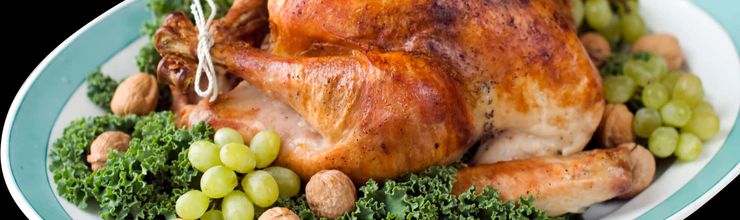
You know the pattern. Thanksgiving dinner ends, you push back from the table full of turkey, gravy, and a slice of pie. Two days later, your big toe feels like someone drove a nail into it.
Turkey gets blamed for a lot of those post-holiday flares. But is the bird actually the villain, or is it the company it keeps on the table? The answer is more interesting than a flat yes or no, and the numbers tell a clear story once you line them up.
How Much Purine Is Actually in Turkey?
Turkey sits in the middle of the poultry pack. It is not organ meat, and it is not an egg. Depending on the cut and how it was processed, it lands in the moderate purine band, the same neighborhood as chicken.
Recent lab work measured purines in turkey meat directly and then tested ways to cut them down. Researchers in China treated turkey with steam, infrared, and microwave heat, alone and in combination. Plain steaming at 140 C knocked total purines down by 27.96% and sliced the hypoxanthine content, the purine base that hits uric acid hardest, by 39.15%. A triple process of microwave, steam, and infrared together lowered total purines by 28.78% and hypoxanthine by 32.83% (PMID: 41275557).
Two things matter here for your kitchen. First, heat and water move purines out of meat, which means boiled or steamed turkey sheds some of what you are trying to avoid. Second, hypoxanthine is the base to watch. In the same study, mice fed hypoxanthine showed the biggest jump in serum uric acid of all the individual bases tested. Turkey carries a meaningful share of its purines in that form, which helps explain why some people swear the bird targets their joints.
Turkey vs Chicken: Which Is Worse?
A lot of people assume turkey is lighter and cleaner than chicken because it feels drier and less rich. The measured data does not back that up.
Japanese researchers who profiled hundreds of foods using high-performance liquid chromatography (HPLC) found chicken breast at 141.2 mg of total purines per 100 g, chicken leg at 122.9 mg, and chicken wing at 137.5 mg per 100 g. Since poultry species carry very similar purine profiles and the turkey processing study treats turkey as a standard moderate-purine meat, swapping one bird for the other barely moves your purine load. The two are, for practical purposes, tied.
Where turkey really does differ is the processed versions. Deli turkey, smoked turkey, turkey sausage, and turkey bacon are easy to pile high on a sandwich without noticing, and they bring a heavy load of sodium your kidneys have to work around. Fresh roasted meat from a whole bird is the cleaner pick by a clear margin.
What the Big Cohort Studies Say About Meat and Gout
Single meals are one thing. Long-term risk is another, and that is where the large studies earn their keep.
The landmark analysis followed 47,150 men with no history of gout for 12 years. Men in the top fifth of meat intake had a relative risk of 1.41 for developing gout compared with men in the bottom fifth. Seafood ran slightly higher at 1.51. Dairy went the other way: men eating the most dairy cut their risk to 0.56 (PMID: 15014182). Turkey counts in that meat column. One Thanksgiving plate is not the issue. A daily sandwich plus regular meat dinners is what adds up over years.
Meta-analyses point the same direction. Pooling 19 studies, red meat came in with an odds ratio of 1.29 for gout, alcohol at 2.58, and fructose at 2.14, while dairy sat at 0.56 (PMID: 30485934). A larger and more recent review covering studies through 2023 reported red meat at an odds ratio of 1.27 for gout and seafood at 1.29 (PMID: 39289820).
Notice what these numbers do not say. Meat raises risk by roughly 30 to 40%, not 500%. It moves the dial. It does not flip a switch.
One Big Meal Can Still Trigger a Flare
Long-term odds and acute triggers are different games. If you already have urate crystals parked in your joints, a single purine-heavy 48 hours can be the match that lights them.
A case-crossover study tracked 633 people with established gout and compared what they ate in the two days before a flare with normal two-day periods. People in the highest fifth of total purine intake had an odds ratio of 4.76 for a flare, almost five times the lowest group. Purines from animal sources drove most of it, climbing to an odds ratio of 2.41 in the top group. Plant purines barely moved the needle (PMID: 22648933).
This is the study that explains your post-Thanksgiving flare. Not because turkey is uniquely toxic, but because the whole weekend is a purine delivery system. Second helpings of meat, gravy made from drippings, a few beers or cocktails, a slice of sugared pie, and skipped water all land in the same 48-hour window the researchers identified as dangerous.
The Real Thanksgiving Problem Is Not the Turkey
Blame the bird and you miss the bigger culprits sitting next to it.
Alcohol is the heavyweight. A meta-analysis put alcohol’s odds ratio for gout at 2.58, nearly double red meat, because it both cranks up uric acid production and blocks the kidney from clearing it (PMID: 30485934). Beer is the worst choice since it adds purines on top of the alcohol. If you want the full breakdown, our comparison of beer and wine lays out why the choice matters.
Sugar runs close behind. Men drinking two or more sugar-sweetened soft drinks a day had a relative risk of 1.85 for gout in a 12-year cohort of 46,393 men, and the top fifth of fructose intake hit 2.02 (PMID: 18244959). Sweet potato casserole, pecan pie, and cranberry sauce out of a can load the same fructose from a different door. A pooled analysis of more than 154,000 people found sugar-sweetened beverages carried a relative risk of 2.08 for gout and fruit juice 1.77 (PMID: 31061018).
Then come the non-food factors. Travel, dehydration, a late night, and a broken sleep schedule all cluster around holidays. Gout attacks spike overnight for reasons that include cooler joint temperature and hours without fluids. The turkey shows up to the party, but it brings a rough crowd.
How to Eat Turkey Without Paying for It
You do not need to skip the bird. A few practical moves take most of the risk out of the plate.
Keep the portion honest. A slice or two of real roasted turkey, about the size of a deck of cards, is a moderate purine meal. Piling a huge mound of dark meat plus a gravy-soaked heap of stuffing is how you hit that top fifth from the flare study.
Choose breast over deli meat and sausage. Fresh roasted breast is the cleanest version on the table. Processed turkey products pile on sodium and are far easier to overeat.
Boil or steam if you are cooking turkey outside the holiday. The processing data showed water-based heat pulling roughly 28% of total purines out of the meat (PMID: 41275557). A turkey soup where you discard the first cooking water leans on that effect.
Drink water like it is part of the meal. A glass before dinner and another through the evening keeps urine flowing and gives uric acid an exit ramp. Skip the round of after-dinner beers if you can, since stacking alcohol on top of the meal roughly doubles the danger per the risk ratios above.
Load up on the sides that protect instead of damage. If you are looking for safer things to put on a plate year-round, our list of gout-friendly snacks covers the dairy, fruit, and nut options that large cohorts associate with lower risk. Low-fat dairy is tied to a markedly lower gout risk, with that 0.56 relative risk in the top intake group (PMID: 15014182).
And keep taking your medication. The 2020 American College of Rheumatology guideline is explicit that urate-lowering treatment keeps running through a flare and through holidays. Stopping allopurinol or febuxostat because you are eating differently is one of the more common self-inflicted triggers clinicians see. For more on how that works, see our note on why gout medication sometimes seems not to work.
What to Do if the Flare Shows Up Anyway
Sometimes you do everything reasonable and the toe still throbs on Friday morning.
Start treatment early. Flares respond best when anti-inflammatory medication goes in within the first 24 hours, whether that is colchicine, a nonsteroidal anti-inflammatory drug (NSAID), or a prescription steroid from your doctor. Ice the joint, elevate the foot, and rest it. Do not heat it, and do not try to walk it off.
Do not stop your urate-lowering medicine during the attack. Keep it at the same dose unless your doctor tells you otherwise.
If you are getting flares after every big meal, or more than once or twice a year, that is a signal to talk with a rheumatologist about getting serum uric acid under 6 mg/dL for good. Diet and willpower have limits, and the people who escape gout long-term usually do it with a plan, not a ban on one food.
The Bottom Line
Turkey is a moderate-purine meat, roughly in the same band as chicken, and a sensible plate of roasted breast is not what drives most holiday flares. The near fivefold acute risk in the research comes from the total 48-hour load: large meat portions, alcohol, fructose, dehydration, and broken sleep stacked together.
Eat a normal slice, pass on the second beer, drink water, and keep taking your pills. Blame the whole feast, not the bird.
Frequently Asked Questions
Is turkey breast or dark meat worse for gout?
Dark meat from the thigh and leg tends to run slightly higher in purines than breast across poultry analyses, though the gap is modest and both sit in the moderate band. The bigger difference is portion size and processing, not white versus dark.
Can I eat turkey during an active gout flare?
You can, but keep it small and choose plain roasted breast over sausage, deli slices, or gravy-smothered meat. During a flare, load up on water, vegetables, and low-fat dairy instead, and start your prescribed anti-inflammatory treatment early.
Why do gout attacks happen after Thanksgiving?
Thanksgiving stacks several proven triggers into about two days: large portions of meat, alcohol, fructose-heavy desserts, dehydration, travel, and short sleep. The case-crossover data shows high-purine 48-hour windows raise flare risk by almost fivefold in people who already carry urate crystals (PMID: 22648933).
Is turkey worse than chicken for uric acid?
No. HPLC food analyses put chicken breast at about 141 mg of purines per 100 g, and poultry profiles are similar enough that turkey sits in the same moderate band. Treat them as the same food for gout purposes and watch portions and processing instead.
References
- Choi HK, Atkinson K, Karlson EW, Willett W, Curhan G. Purine-rich foods, dairy and protein intake, and the risk of gout in men. N Engl J Med. 2004;350(11):1093-1103. doi:10.1056/NEJMoa035700. PMID: 15014182.
- Zhang Y, Chen C, Choi H, Chaisson C, Hunter D, Niu J, Neogi T. Purine-rich foods intake and recurrent gout attacks. Ann Rheum Dis. 2012;71(9):1448-1453. doi:10.1136/annrheumdis-2011-201215. PMID: 22648933.
- Li R, Yu K, Li C. Dietary factors and risk of gout and hyperuricemia: a meta-analysis and systematic review. Asia Pac J Clin Nutr. 2018;27(6):1344-1356. doi:10.6133/apjcn.201811_27(6).0022. PMID: 30485934.
- Choi HK, Curhan G. Soft drinks, fructose consumption, and the risk of gout in men: prospective cohort study. BMJ. 2008;336(7639):309-312. doi:10.1136/bmj.39449.819271.BE. PMID: 18244959.
- Ayoub-Charette S, Liu Q, Khan TA, et al. Important food sources of fructose-containing sugars and incident gout: a systematic review and meta-analysis of prospective cohort studies. BMJ Open. 2019;9(5):e024171. doi:10.1136/bmjopen-2018-024171. PMID: 31061018.
- FitzGerald JD, Dalbeth N, Mikuls T, et al. 2020 American College of Rheumatology Guideline for the Management of Gout. Arthritis Care Res (Hoboken). 2020;72(6):744-760. doi:10.1002/acr.24180. PMID: 32391934.
- Chi X, Cen Y, Yang B, et al. Effects of dietary factors on hyperuricaemia and gout: a systematic review and meta-analysis of observational studies. Int J Food Sci Nutr. 2024;75(8):753-773. doi:10.1080/09637486.2024.2400489. PMID: 39289820.
- Hou C, Xiao L, Huang Z, Sha W, Li K, Wang M, Wang Y, Ren J. Sequential thermal processing strategies reduces purine contents in Turkey meat. Food Chem. 2026;498(Pt 1):147222. doi:10.1016/j.foodchem.2025.147222. PMID: 41275557.
Reviewed by the GoutSavvy Editorial Team