
When people get their first gout diagnosis, milk is one of the first things they cut. It feels like a safe bet. Meat is bad, seafood is bad, so protein-rich dairy must be bad too, right?
That logic is wrong. Milk is one of the few foods that has actually been put to the test in gout, and the results are the opposite of what most people expect. In a small but carefully run trial, drinking skim milk dropped blood urate by about 10 percent within three hours, while a soy drink pushed it up by about the same amount. Let’s walk through what the studies actually show, what kind of milk to buy, and where the catch is.
What happened when researchers gave people milk and watched their uric acid
The cleanest piece of evidence is a randomized crossover trial published in 2010. Researchers at the University of Auckland gave 16 healthy men four different drinks on separate days: early-season skim milk, late-season skim milk, an ultra-filtered skim milk product, and a soy control. Each drink packed 80 grams of protein, and blood and urine were sampled every hour for three hours.
The soy drink raised serum urate by roughly 10 percent. Every milk drink did the reverse, lowering it by roughly 10 percent, and the difference was not a fluke (p < 0.0001). The milk also raised the fractional excretion of uric acid, which is a technical way of saying the kidneys let more uric acid leave in the urine. Late-season milk, which happens to carry high amounts of orotic acid, worked best of all.
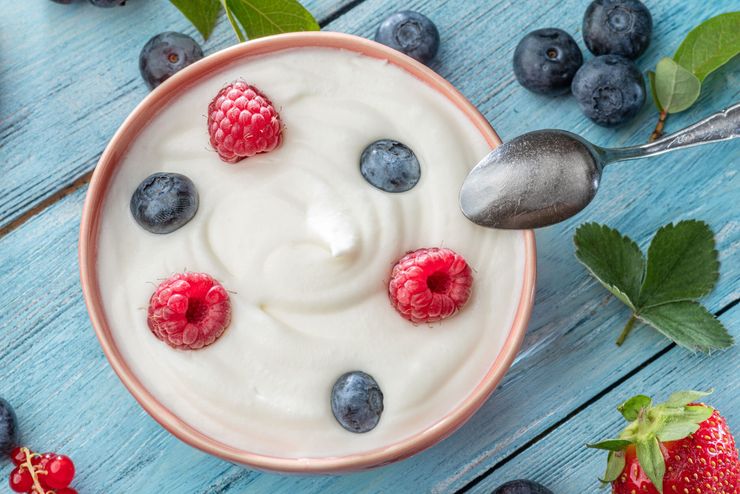
Why would milk do this? Milk proteins like casein and whey contain barely any purine, the stuff your body turns into uric acid. On top of that, milk appears to have a uricosuric effect, meaning it nudges the kidneys to flush more urate. Soy has protein but comes with purines, which helps explain why it went the other direction.
The trial that actually counted gout attacks
A short-term blood test is one thing. What people with recurrent gout really want to know is whether milk changes how often flares happen. A second New Zealand trial, published in 2012, tried to answer that.
The team enrolled 120 people with recurrent flares and split them into three groups for three months: a lactose-powder control, plain skim milk powder, and skim milk powder enriched with two milk fractions called glycomacropeptide (GMP) and G600 milk fat extract. Lab work had flagged both fractions as anti-inflammatory in gout models.
Flare frequency fell in all three groups, which is a reminder that keeping a daily symptom diary and paying closer attention to health tends to help on its own. But the enriched milk group pulled ahead, with a significantly bigger drop in flares over the three months (p = 0.031 overall, and p = 0.044 versus lactose control). That group also had better pain scores and uric acid excretion, with no extra side effects.
One honest caveat: this was a proof-of-concept study. It was small, and the GMP-enriched powder used in it is not something you can pick up at a regular grocery store. It points a direction. It does not prove that a nightly glass of supermarket milk will silence your gout.
What the huge long-term studies say
The trial evidence lines up with what researchers have seen by following large populations for years. The landmark one is the Health Professionals Follow-Up Study, which tracked 47,150 men with no history of gout for 12 years and recorded 730 new cases.
Men who ate the most meat had a relative risk of gout of 1.41 compared with men who ate the least. Seafood came in at 1.51. Dairy ran the other way: men in the top fifth of dairy intake had a relative risk of 0.56, meaning roughly 44 percent fewer cases, and the trend strengthened as intake went up (p for trend < 0.001).
This is observational data, so it cannot prove the milk itself did the work. People who drink milk may simply exercise more, drink less soda, or see doctors more often. Still, the same pattern has shown up again and again. A Brazilian study of 14,320 adults found a clear dose-response link between higher dairy intake and lower serum uric acid in both men and women. And a 2024 systematic review and meta-analysis pulled the dietary evidence together and found dairy products associated with lower odds of hyperuricemia (OR 0.69, 95 percent CI 0.61 to 0.78).
Skim, low-fat, or whole milk? Does it matter?
The strongest signal sits with skim and low-fat milk, not full-fat. There are two practical reasons for that.
First, the trials that showed a urate-lowering effect used skim milk products. Second, whole milk and full-fat dairy carry more saturated fat and more calories, which matters because weight itself is a major driver of gout. Visceral fat and insulin resistance make the kidneys hold on to uric acid, which is exactly the mechanism we wrote about in our piece on why people at a normal weight can still get gout. If the full-fat version contributes to weight gain, it quietly cancels some of the benefit.
For most people, skim or 1 percent milk is the sensible default. Plain low-fat yogurt fits the same category and may be even better tolerated, since fermentation breaks down part of the lactose. Just check the label. Flavored yogurt and drinkable yogurt bottles can carry as much added sugar as a dessert, and sugar, especially fructose, is one of the clearest dietary gout triggers around. One meta-analysis linked high fructose intake to a 65 percent higher odds of gout (OR 1.65, 95 percent CI 1.36 to 2.01).
What about cheese and ice cream?
Cheese is low in purine and is not a known gout trigger, so it does not need to go on a banned list. But it is calorie-dense, so treat it as food rather than medicine. The protective studies were built mostly around milk and yogurt, not cheese boards.
Ice cream is a different story. The problem is rarely the dairy. It is the sugar load that comes with it. A scoop now and then is not going to single-handedly cause an attack, but pints of premium ice cream deliver exactly the fructose and calorie combination you want to avoid. If you crave something cold and creamy, plain Greek yogurt with a handful of cherries on top is a smarter swap, and cherries have their own track record in gout research.
Who needs to be careful with milk?
Milk helps many people, but it is not universal.
If you are lactose intolerant, regular milk will hand you bloating and diarrhea, which is its own kind of misery and can dehydrate you at exactly the wrong time. Lactose-free milk or plain yogurt solves this for most people. Plant milks vary a lot. Unsweetened soy milk has good protein but, like the soy control in the crossover trial, it is not a urate-lowering drink. Almond milk is very low in purine but also low in protein, so think of it as neutral rather than protective. Watch out for sweetened oat and plant milks, which can be quietly loaded with added sugar.
If you have significant chronic kidney disease, the protein and mineral content of milk matters in ways a general article cannot sort out, so check with your kidney doctor or dietitian about amounts.
Will drinking milk replace your medication?
No, and this is the part worth being blunt about. A 10 percent dip in blood urate after a glass of milk is real, but it is modest and temporary. Gout control usually means holding serum uric acid below 6 mg/dL, and below 5 mg/dL if you have tophi, so that the existing crystals slowly dissolve. Diet alone rarely gets people there.
That is why urate-lowering medication like allopurinol remains the backbone of treatment for people with recurrent flares. You can read more about how that works, and why the dose is titrated to a target rather than fixed, in our overview of common gout medication mistakes. Milk is a helpful add-on, not a substitute, and nobody should stop their prescribed pills because they read that dairy is protective.
Frequently asked questions
Is it okay to drink milk during an active gout flare? Yes. Milk will not worsen a flare, and staying hydrated with skim milk or water supports your kidneys while your anti-inflammatory medication does the real work. Do not stop your allopurinol or febuxostat during a flare unless your doctor tells you to.
How much milk should I drink for gout? There is no proven exact dose. A couple of servings a day of skim or low-fat milk or plain yogurt fits the pattern seen in the protective studies. Think of it as a steady daily habit, not a gallon chugged during a flare.
Does warm milk help with gout pain at night? The temperature does not matter for uric acid. What helps is the milk itself and the hydration. For nighttime pain, the bigger wins are treating the flare early, icing the joint, and protecting the sheet from touching it. We covered the full bedtime routine in our guide to sleeping with a gout flare.
Is almond milk good for gout? Unsweetened almond milk is low in purine and should not raise uric acid, so it is a safe choice. It just does not have the same protein or the urate-flushing signal that cow’s milk shows in trials.
Can yogurt trigger gout? Plain low-fat yogurt is associated with the same protective pattern as milk. Flavored yogurt with added sugar is the version to limit, since fructose and added sugars are linked to higher gout risk.
The bottom line
Milk went on most people’s forbidden list for no good reason. The trials show skim milk can lower urate acutely, enriched skim milk powder trimmed flare frequency in a small study, and the largest long-term cohorts link regular dairy intake with substantially lower gout risk. Your move is simple: pour skim or low-fat milk, eat plain yogurt, skip the sugary dairy desserts, and keep taking the medication that holds your uric acid at target. Milk helps. It just does not work alone.
References
- Dalbeth N, Wong S, Gamble GD, et al. Acute effect of milk on serum urate concentrations: a randomised controlled crossover trial. Ann Rheum Dis. 2010;69(9):1677-1682. doi:10.1136/ard.2009.124230. PMID: 20472590
- Dalbeth N, Ames R, Gamble GD, et al. Effects of skim milk powder enriched with glycomacropeptide and G600 milk fat extract on frequency of gout flares: a proof-of-concept randomised controlled trial. Ann Rheum Dis. 2012;71(6):929-934. doi:10.1136/annrheumdis-2011-200156. PMID: 22275296
- Choi HK, Atkinson K, Karlson EW, Willett W, Curhan G. Purine-rich foods, dairy and protein intake, and the risk of gout in men. N Engl J Med. 2004;350(11):1093-1103. doi:10.1056/NEJMoa035700. PMID: 15014182
- Silva MTD, Diniz MFHS, Coelho CG, et al. Intake of selected foods and beverages and serum uric acid levels in adults: ELSA-Brasil (2008-2010). Public Health Nutr. 2020;23(3):506-514. doi:10.1017/S1368980019002490. PMID: 31587682
- Chi X, Cen Y, Yang B, et al. Effects of dietary factors on hyperuricaemia and gout: a systematic review and meta-analysis of observational studies. Int J Food Sci Nutr. 2024;75(8):753-773. doi:10.1080/09637486.2024.2400489. PMID: 39289820
- Jamnik J, Rehman S, Blanco Mejia S, et al. Fructose intake and risk of gout and hyperuricemia: a systematic review and meta-analysis of prospective cohort studies. BMJ Open. 2016;6(10):e013191. doi:10.1136/bmjopen-2016-013191. PMID: 27697882
- National Institute for Health and Care Excellence. Gout: diagnosis and management. NICE guideline NG219. Published 9 June 2022. https://www.nice.org.uk/guidance/ng219
Reviewed by the GoutSavvy Editorial Team