
Somebody once told me the exact moment he knew chicken was not the “safe” meat. Two nights after a chicken breast dinner, he woke at 3 a.m. with his big toe on fire. Sound familiar?
Here is the thing. Most people treat chicken like a free pass. Red meat is bad, beer is bad, seafood is bad, but chicken? Grilled chicken salad, chicken soup, chicken wings at the game, all fine. Then a flare shows up anyway, and you start to wonder. Is chicken actually causing this, or is it just bad luck?
The short answer: chicken sits in the middle. It is not something you have to give up, but it is far from harmless, and a few parts of the bird are loaded. Let me walk you through what the numbers actually say, because once you see them, eating chicken gets a lot simpler.
How much purine is actually in chicken?
Gout starts with uric acid, and uric acid comes from purines. Foods that pack a lot of purines dump more raw material into your blood, and in someone whose kidneys already struggle to keep up, that can push uric acid over the line. Crystals form, and a few hours later you are icing your foot at 2 a.m.
So where does chicken land on the purine scale? The best lab data we have comes from a Japanese team that measured purines in 270 common foods using high-performance liquid chromatography (HPLC), a precise chemistry method that separates and counts each purine base separately. Their numbers for raw chicken are worth memorizing (Kaneko et al., 2014):
- Chicken breast: 141.2 mg of purines per 100 g
- Chicken heart: 125.4 mg per 100 g
- Chicken gizzard: 142.9 mg per 100 g
- Chicken liver: 312.2 mg per 100 g
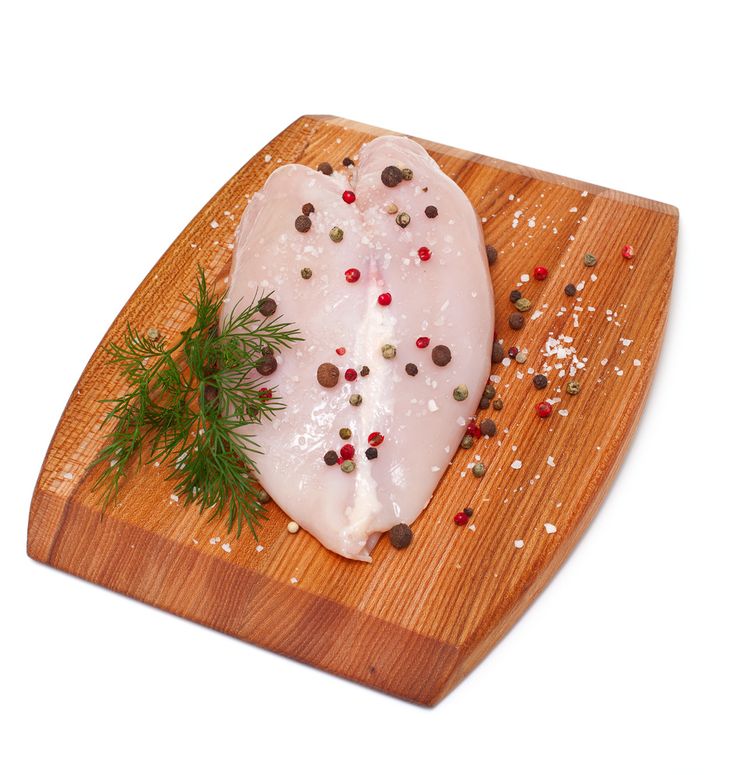
Read those again. The breast, the cut everyone calls “healthy,” runs at about 141 mg of purines. That puts it in the moderate group, not the low group. And the liver is more than double that.
Here is the part most diet handouts skip. Most of the purine in chicken meat is one specific base called hypoxanthine. In the breast, hypoxanthine alone accounts for 98.4 mg out of 141.2 mg total. Why does that matter? Because a 2025 food chemistry study tested the individual purine bases in an animal model and found hypoxanthine is the key base that drives serum uric acid up (Hou et al., 2026). In other words, chicken is not just carrying purines, it is carrying mostly the exact purine that raises uric acid the most.
To put this in perspective, the Japanese guideline for daily purine intake for people managing gout is under 400 mg. A single large chicken breast can weigh 200 to 250 g raw. Do the math, and one dinner can hand you 280 to 350 mg of purines before you even count the rest of the day’s food. That is how a “healthy” dinner quietly becomes a flare.
Does the data on meat and gout actually include chicken?
Fair question. The purine table tells us what is in the meat, but does eating it really change who gets gout? Yes, and the evidence is stronger than most people assume.
The landmark study followed 47,150 men with no history of gout for 12 years. By the end, 730 had developed confirmed gout. The men eating the most meat had a relative risk of 1.41 compared with the men eating the least, meaning about a 41 percent higher risk (Choi et al., 2004). Seafood was similar at 1.51. Dairy went the other way, with a relative risk of 0.56, which is why milk and yogurt keep showing up on the good list.
That study grouped meat together, but a large cross-sectional analysis of 6,813 Chinese adults isolated poultry on its own. Poultry intake raised the risk of hyperuricemia independently, alongside red meat and seafood, even after the researchers adjusted for age, sex, region, body weight, alcohol, blood pressure, and grains (Aihemaitijiang et al., 2020). Animal-sourced food as a category was the main purine source in people’s diets, and every extra 10 g per day nudged the risk up 2.4 percent.
A 2024 systematic review and meta-analysis pulled the observational research together and reached the same conclusion. Red meat, seafood, alcohol, and fructose all raised the odds of hyperuricemia and gout, while dairy, nuts, vegetables, and coffee lowered them (Chi et al., 2024). Chicken may be leaner than beef, but lean and low-purine are not the same thing. It has less saturated fat, which is good for your heart. It still carries the hypoxanthine, which is what your uric acid cares about.
Which parts of the chicken should you really avoid?
Not every bite of the bird is equal. If you remember nothing else from this article, remember the ranking.
Chicken liver is the one I would skip without much debate. At 312.2 mg of purines per 100 g, it sits in the high group, alongside anchovies and sardines. Pâté, liver gravy, and fried chicken livers all count. This is not a “small portion is fine” situation during a flare, or really any time you are working to bring uric acid down.
The other giblets are not far behind. Heart comes in at 125.4 mg and gizzard at 142.9 mg. Giblet gravy, the stuff some families pour over holiday meals, concentrates all of it. If that is a once-a-year tradition, fine, but it should not be a weekly habit.
Skin is worth removing. The skin itself adds purines and is where a lot of the fat sits, too. Fried chicken with the skin on is the worst version of this food you can pick. Breaded, deep-fried, skin-on wings are basically a delivery system for both purines and calories.
The breast is the best of the meat cuts. Even at 141 mg, it is lean, easy to portion, and simple to prepare in ways that drop the purine count further. Thigh and drumstick meat run a bit higher in many database entries, and dark meat tends to carry more fat without any purine advantage.
And the egg? Eggs are not even on the same chart. The same lab that measured the meats found a whole chicken egg contains essentially zero purines, measured at 0.0 mg per 100 g (Kaneko et al., 2014). If you want the cheapest, simplest low-purine protein in the grocery store, it has been sitting in the egg case the whole time.
Can cooking chicken lower the purine count?
This is the good news, and it is more useful than most people realize. Purines, especially hypoxanthine, can leach out of meat into water when you boil it. You are not destroying the purine, you are moving it out of the meat and into the liquid. Skip the liquid, and you skip a share of the purines too.
The cooking experiments on poultry confirm it can work. When researchers steamed turkey meat at 140 °C, total purines dropped by 27.96 percent and hypoxanthine dropped by 39.15 percent (Hou et al., 2026). A combined treatment with steam, microwave, and infrared cut total purines by 28.78 percent, and digestion tests confirmed the cooked meat released less uric acid afterward.
A three-year follow-up study of 424 Japanese adults looked at the same principle from the fish counter. People eating more raw fish had up to 3.46 times the odds of hyperuricemia, and people eating more roasted fish had up to 5.17 times the odds. But boiled fish showed no significant increase at all (Ren et al., 2016). Moist cooking that lets purines escape into water came out cleaner than dry heat every time.
So what does that mean for Tuesday dinner?
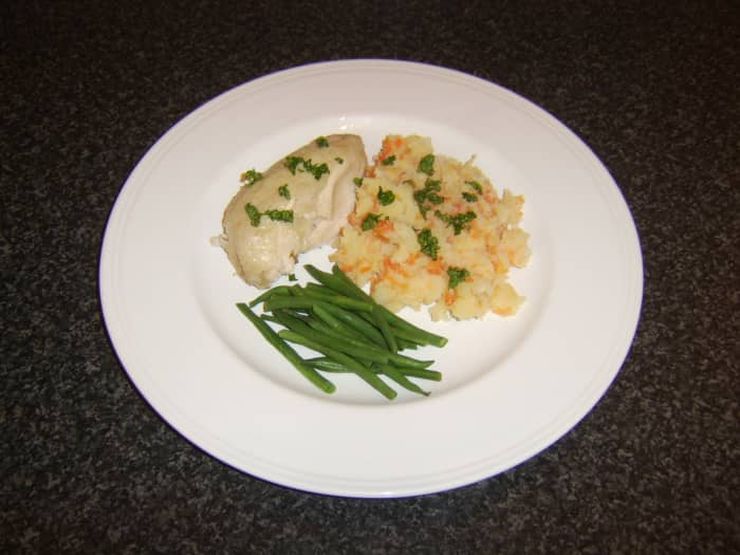
- Boiling, poaching, and steaming are your friend. Think poached chicken for salad, chicken and vegetable soup where you drain or replace the first water, or steamed chicken with rice.
- If you boil chicken, do not drink the first broth. That cooking water now holds purines. Soup made with a long meat simmer is not a gout health food, no matter what your grandmother says. For soup, a common trick is to blanch the meat, dump that water, and finish with fresh liquid.
- Grilling, roasting, and frying keep the purines in. They taste great. They just do not reduce anything.
- Skip the rich pan sauces and gravies made from meat drippings. Same logic as the broth.
So how much chicken can you actually eat?
Enough theory. Here is how I would actually run your week.
During a flare, I would give chicken a break for a few days. When your joint is already inflamed, the goal is to stop adding fuel. Eggs, low-fat dairy, beans, lentils, tofu, vegetables, and rice can cover your protein easily. A 2024 meta-analysis found soy products were actually associated with lower gout risk, and dairy clearly was (Chi et al., 2024), so you are not starving. If you want to know exactly how long the flare itself runs, the day-by-day flare timeline breaks it down.
Between flares, keep portions modest. A sensible target is about 100 g, or roughly 3.5 oz, of cooked breast per serving, a piece about the size of a deck of cards. Two or three servings a week is a reasonable pattern for most people, not a daily double breast. Fill the rest of the plate with vegetables, whole grains, and some low-fat dairy or eggs.
Hydration and weight matter as much as the cut of meat. Drinking enough water and losing excess weight gradually both lower uric acid, which is why a crash diet is a bad trade even though it sounds like a shortcut. An overall eating pattern like DASH, built around vegetables, fruit, low-fat dairy, and less meat, lowered serum uric acid in a pooled analysis of four randomized trials (Gohari et al., 2023). One good meal will not save you, and one bad one will not sink you. The weekly average is what your blood sees.
Keep your uric acid tested, and remember medication is the heavy lifter. Diet alone usually moves uric acid by only about 1 mg/dL. If you have recurrent flares, tophi, or stones, pills like allopurinol are what actually get you under 6 mg/dL and keep you there. Do not let a few good chicken dinners convince you to skip treatment. If you are on medication and unsure how the numbers work, it helps to understand why uric acid can look normal during a flare.
Chicken vs turkey vs fish vs eggs: the quick protein lineup
If you are standing in the grocery store trying to decide, here is the simple version. Turkey breast is slightly lower in purines than chicken breast in most food database entries and is a fine swap. Fish is split. Fatty fish like salmon is moderate, but anchovies, sardines, and shellfish are high, and fish is often eaten in portions large enough to add up. Eggs and low-fat dairy are the two categories with essentially no uric acid downside, and dairy actively lowers risk. Beans, lentils, and tofu sit in the safe and helpful column, which surprises people raised on “all purines are equal” advice. If chicken is your default protein, try rotating in eggs for breakfast, yogurt as a snack, and one or two meatless dinners a week. That single swap does more than any supplement.
Speaking of supplements, people often ask whether a splash of vinegar or a bottle of cherry extract can cancel out a chicken dinner. It does not work that way, which you can read more about in the pieces on apple cider vinegar and gout and the facts on coffee and uric acid. And yes, what you drink with the meal matters, since alcohol, especially beer, is one of the strongest triggers there is, covered in the beer vs wine comparison.
Frequently asked questions
Is chicken bad for gout?
Chicken is moderate in purines, about 141 mg per 100 g in breast meat, so it is not off the menu, but large daily portions can raise uric acid and contribute to flares. Keep servings around 100 g, choose breast meat, remove the skin, and prefer boiling or steaming over frying. Skip the liver and other giblets, which run from 143 to 312 mg per 100 g.
Can I eat chicken during a gout flare?
It is not dangerous, but during a flare most people do better pausing meat for a few days and using eggs, low-fat dairy, tofu, beans, and vegetables instead. These proteins are equal or better for uric acid and let you avoid adding more purines while the joint is already inflamed.
Is chicken better for gout than red meat?
Chicken is leaner and lower in saturated fat, but its purine content is still moderate, and the big studies that found higher gout risk with meat included poultry. The practical advantage of chicken is portion control and cooking method, not a free pass. Boiled or poached breast in a small serving is a reasonable choice. Fried chicken is not much better than any other indulgence.
Are chicken livers high in purines?
Yes. Chicken liver measured 312.2 mg of purines per 100 g in the Japanese food analysis, which puts it firmly in the high-purine group, more than double the breast. Chicken heart and gizzard are also elevated at 125.4 and 142.9 mg. If you manage gout, organ meats are the first thing to cut.
Do eggs affect gout?
No. Whole chicken eggs were measured at essentially 0 mg of purines per 100 g. Eggs are one of the cheapest and safest proteins you can eat with gout, which makes them an easy swap on days you would otherwise reach for meat.
Does boiling chicken remove purines?
It removes a meaningful share. Purines leach into the cooking water. Steaming turkey cut total purines by about 28 percent and hypoxanthine by about 39 percent in controlled testing. The key is not to drink or sauce with that first cooking water, since the purines are now in it.
References
- Kaneko K, Aoyagi Y, Fukuuchi T, Inazawa K, Yamaoka N. “Total purine and purine base content of common foodstuffs for facilitating nutritional therapy for gout and hyperuricemia.” Biological & Pharmaceutical Bulletin. 2014;37(5):709–721. doi:10.1248/bpb.b13-00967. PMID: 24553148.
- Choi HK, Atkinson K, Karlson EW, Willett W, Curhan G. “Purine-rich foods, dairy and protein intake, and the risk of gout in men.” New England Journal of Medicine. 2004;350(11):1093–1103. doi:10.1056/NEJMoa035700. PMID: 15014182.
- Aihemaitijiang S, Zhang Y, Zhang L, Yang J, Ye C, Halimulati M, Zhang W, Zhang Z. “The association between purine-rich food intake and hyperuricemia: a cross-sectional study in Chinese adult residents.” Nutrients. 2020;12(12):3835. doi:10.3390/nu12123835. PMID: 33334038.
- Chi X, Cen Y, Yang B, Zhang H, Pu Z, Feng J, Pan H, Zhang Y. “Effects of dietary factors on hyperuricaemia and gout: a systematic review and meta-analysis of observational studies.” International Journal of Food Sciences and Nutrition. 2024;75(8):753–773. doi:10.1080/09637486.2024.2400489. PMID: 39289820.
- Hou C, Xiao L, Huang Z, Sha W, Li K, Wang M, Wang Y, Ren J. “Sequential thermal processing strategies reduces purine contents in turkey meat.” Food Chemistry. 2026;498(Pt 1):147222. doi:10.1016/j.foodchem.2025.147222. PMID: 41275557.
- Ren Z, Huang C, Momma H, Cui Y, Sugiyama S, Niu K, Nagatomi R. “The consumption of fish cooked by different methods was related to the risk of hyperuricemia in Japanese adults: a 3-year follow-up study.” Nutrition, Metabolism and Cardiovascular Diseases. 2016;26(9):778–785. doi:10.1016/j.numecd.2016.05.009. PMID: 27345758.
- Gohari S, Ghobadi S, Jafari A, Ahangar H, Gohari S, Mahjani M. “The effect of dietary approaches to stop hypertension and ketogenic diets intervention on serum uric acid concentration: a systematic review and meta-analysis of randomized controlled trials.” Scientific Reports. 2023;13(1):10492. doi:10.1038/s41598-023-37672-2. PMID: 37380733.
- FitzGerald JD, Dalbeth N, Mikuls T, Brignardello-Petersen R, Guyatt G, Abeles AM, Gelber AC, et al. “2020 American College of Rheumatology guideline for the management of gout.” Arthritis Care & Research. 2020;72(6):744–760. doi:10.1002/acr.24180. PMID: 32391934.
Reviewed by the GoutSavvy Editorial Team