You’re at a Chinese restaurant. The mapo tofu comes out, glistening in chili oil, and someone at the table stops you. “You can’t eat that,” they say. “You’ve got gout. Soy’s high in purines.”
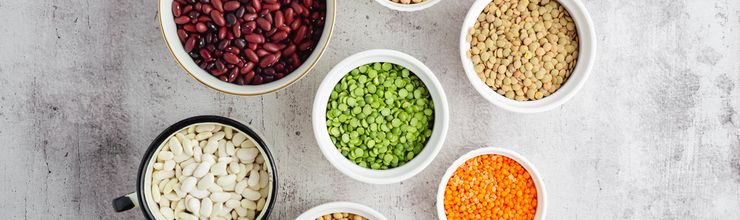
Or maybe you made a big pot of lentil soup, then saw beans on some “avoid” list online and poured half of it down the sink.
Millions of people with gout are avoiding beans, tofu, lentils, and soy milk because of a decades-old piece of advice that the research has thoroughly overturned. These foods don’t raise your gout risk. Some of them appear to lower it. Here’s where the confusion came from, what the studies actually show, and what you can safely put back on your plate.
The Origin of the “Beans Are Bad” Myth
The logic sounds airtight. Purines are compounds found in food, your body breaks them down into uric acid, and high uric acid is what forms the crystals in your joints. Beans test moderately high in total purines, so early diet charts grouped them with organ meats and shellfish. Done and dusted.
The problem: not all purines behave the same way once they hit your bloodstream. That simple fact broke the “high purine = high risk” rule, and it took a landmark study to prove it.
In 2004, researchers at Massachusetts General Hospital and Harvard published a study in the New England Journal of Medicine tracking 47,150 men over 12 years. Meat and seafood clearly raised gout risk. Men eating the most meat had a 41 percent higher risk; the top seafood eaters were 51 percent higher. But purine-rich vegetables, including beans, peas, and lentils? No increased risk at all. Not even a little. The researchers adjusted for total purine intake and the plant foods still came out clean.
“Moderate intake of purine-rich vegetables or protein is not associated with an increased risk of gout,” the authors wrote. That sentence quietly killed the old rule, though it took diet charts a long time to catch up.
Why Your Body Treats Plant Purines Differently
A few things separate the purines in a bowl of lentils from the purines in a steak:
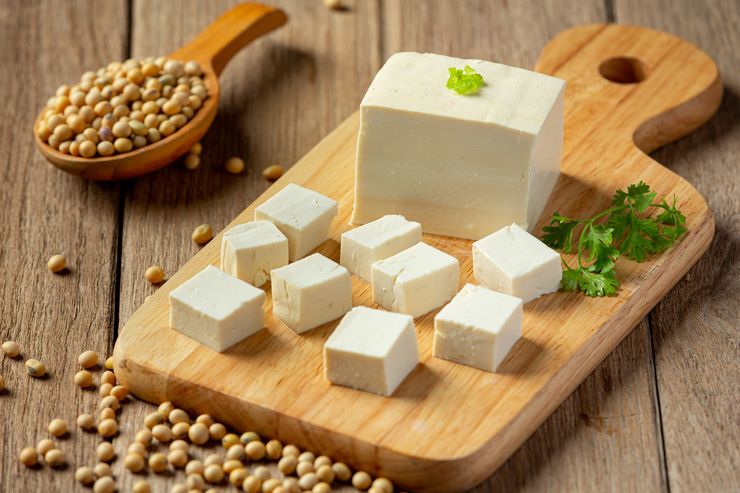
The purine types are different. Animal muscle tissue is loaded with hypoxanthine, a purine your body converts to uric acid quickly and efficiently. Soybeans and other legumes contain mostly adenine and guanine, which follow a different, slower metabolic route. A 2026 food chemistry analysis in npj Science of Food measured purine types across soy products and found that finished foods like tofu and soy milk contained very little hypoxanthine at all.
Plant purines are harder to absorb. They’re wrapped in plant cell walls made of fiber, which human digestive enzymes only partially break down. A meaningful fraction passes through without ever entering your bloodstream.
Processing washes purines away. Turning soybeans into tofu involves soaking, grinding, filtering, and pressing. Purines dissolve in water, and much of that water gets thrown out with the okara pulp. The numbers tell the story: raw dried soybeans run moderately high in purines, similar to lean meat, but finished tofu drops to roughly 29 to 55 mg per 100 g, and soy milk to about 15 to 22 mg. For comparison, organ meats run 200 to 400 mg per 100 g, sardines and anchovies over 300 mg, and even chicken breast sits well above tofu. A 2025 food chemistry analysis in npj Science of Food calculated that a person with gout could eat well over a kilogram of tofu in a day without crossing the recommended purine limit. Nobody eats that much tofu, which tells you where the real risk isn’t.
Legumes also come bundled with fiber, potassium, magnesium, and soy isoflavones, compounds that appear to support healthier uric acid metabolism rather than undermine it. You’re not eating a pile of isolated purines. You’re eating food.
The Soy Research: A Protective Effect, Not a Neutral One
Plant purines doing no harm would already be good news. The studies say something stronger: regular soy and legume intake may actually protect you.
The Singapore Chinese Health Study followed 63,257 Chinese adults and published its findings in Arthritis & Rheumatology. Over the follow-up period, people eating the most soy foods had a 14 percent lower risk of developing gout, and non-soy legumes were linked to a 17 percent lower risk. Poultry and shellfish, meanwhile, pushed risk up. Dr. Teng Gim Gee, a rheumatology consultant at the National University Hospital, put it plainly: “There is no need to control or restrict the intake of soy food, legumes, nuts and seeds.”
A meta-analysis pooling the soy data found habitual soy consumption associated with lower odds of both gout and high uric acid. And in 2026, researchers at Fudan University published a prospective cohort in Nutrients tracking 43,371 Shanghai residents for a median of 5.6 years. People who ate the most legumes were 26 percent less likely to develop high uric acid, with every extra gram per day shaving about 2 percent off risk. The sweet spot landed at roughly 6 to 28 grams of dried legumes a day, which is a small block of tofu or a cup of soy milk territory. You don’t need to eat buckets of the stuff.
One honest caveat: in acute lab studies where people drank concentrated soy protein isolate, uric acid ticked up slightly for a few hours. That’s isolated supplement powder, not food. Long-term studies of people eating tofu and beans show the opposite pattern. Stick to real foods and the short-term blip doesn’t apply to you.
What About Lentils, Chickpeas, and the Rest?
Same story. A case-crossover study in Annals of the Rheumatic Diseases asked whether eating purine-rich vegetables could trigger actual flares in people who already had gout. Animal purines did. Vegetable purines didn’t. That answers the worry that beans might be fine for prevention but still spark attacks: the flare data says no.
Rough numbers per half cup, cooked:
- Chickpeas: about 19 mg of purines.
- Red kidney beans: about 55 mg.
- Pinto beans: about 57 mg.
- Lentils: about 70 to 75 mg.
- Edamame: about 45 to 70 mg.
Even lentils, the highest on the list, contain fewer purines per serving than 100 grams of chicken breast, and again, those are plant purines. Canned beans are perfectly fine; just rinse them, which also sheds sodium and a bit of added sugar in cheaper brands of baked beans.
One product deserves a little caution: yuba (tofu skin, or dried bean curd sticks). It’s made by skimming the film off boiling soy milk, which skips the washing and filtering steps and concentrates purines up around 84 mg per 100 g. It’s not dangerous in a stir-fry occasionally, but it’s the one soy product where the purine charts actually mean something. Watch the sauces too: hoisin, oyster sauce, and bean paste can be loaded with added sugar and salt, and sugary drinks and sauces are the real dietary villains for gout. If you’re curious about what actually drives flares, our breakdown of sugary drinks versus alcohol covers the dietary triggers that genuinely matter.
Why This Matters Beyond the Plate
Here’s the part most “avoid” lists never think through. If you cut out beans, tofu, and lentils, you need protein from somewhere. For most people, that means more meat, more seafood, and more cheese, the exact foods the evidence ties to higher uric acid and more flares. Beans are one of the cheapest, most practical meat substitutes on the planet, and they come with fiber your gut and blood sugar will thank you for.
The official guidance has caught up. The 2020 American College of Rheumatology (ACR) guideline for gout no longer recommends restricting purine-rich vegetables. British rheumatology guidance actively encourages plant and soy protein as part of a gout-friendly diet, and China’s updated hyperuricemia and gout guidelines say soy products don’t need to be limited. If you’re looking for the full picture of what a gout-friendly diet actually looks like, our complete guide to the DASH diet for gout walks through the pattern that lowers both uric acid and blood pressure.
Swapping one beef stir-fry a week for a tofu and vegetable stir-fry, or adding lentils to soup instead of bacon, does two good things at once: less animal purine coming in, more fiber and plant protein going in. Weight loss itself lowers flare frequency, and legumes make that a lot easier to sustain. More on how the metabolic side works in our piece on the uric acid and weight connection.
Practical Rules You Can Actually Use
Go ahead and eat: tofu, tempeh, soy milk, edamame, chickpeas, lentils, kidney beans, black beans, pinto beans, split peas, hummus, and peanut butter. A typical serving is a half cup of cooked beans or a 3-4 ounce block of tofu, a few times a week. Most people in the Chinese studies ate soy daily without issues.
Easy does it with: yuba and dried bean curd sticks (concentrated purines), soy protein isolate powder (not the same as food), and sugary soy products like sweetened soy milk or dessert tofu with syrup. It’s the sugar, not the soy, that will get you.
If you’re in an active flare: some people find they feel better eating mildly and avoiding big heavy meals of any kind. That’s fine, but there’s no reason to single out tofu. Stay hydrated, keep taking the medication your doctor prescribed, and don’t restart urate-lowering therapy on your own if you stopped it during a flare. Your medication schedule matters far more than one dinner.
Finally, if you test your uric acid at home after a tofu stir-fry and see a small bump, don’t panic. Blood levels fluctuate throughout the day and after every meal. What counts is your average level over months, which is why doctors test fasting and watch the trend.
Frequently Asked Questions
Does tofu really cause gout?
No. Multiple large population studies, including one tracking 63,000 Chinese adults, found soy foods either had no effect or were associated with a modestly lower risk of gout. Tofu in particular is low in purines after processing.
I ate beans once and had a flare the next day. Coincidence?
Probably coincidence, or correlation rather than cause. Flares build up over days and often hit at night after triggers like dehydration, alcohol, or a big meal. The case-crossover research on actual flares found vegetable purines didn’t trigger attacks. If it happens repeatedly for you personally, keep a food diary and discuss it with your doctor rather than relying on one data point.
Can I drink soy milk every day with gout?
Yes. Soy milk contains roughly 15 to 22 mg of purines per 100 ml, among the lowest of any protein source. Choose unsweetened versions, since added sugar is a real gout trigger.
Are lentils really higher in purines than chicken?
Some purine charts list cooked lentils moderately high, but those are plant purines with low bioavailability. The 2004 New England Journal study found purine-rich vegetables like lentils had zero association with new gout cases, while meat and seafood raised risk, up to 41 percent for the biggest meat eaters.
Do vegetarians get less gout?
A 2020 analysis of two large cohort studies found vegetarian diets were associated with a 60 to 67 percent lower gout risk, with much of the protection remaining even after accounting for uric acid levels. Diet isn’t destiny, but it clearly moves the needle.
Should I replace all meat with beans?
You don’t have to go fully plant-based. Even partial swaps help, and fish with heart-healthy fats can still fit for many people. The practical move is shifting the balance: more plants, less red meat and shellfish, and keeping alcohol and fructose in check.
The short version? That mapo tofu won’t trigger a flare. Your well-meaning dinner companion, and a 40-year-old diet chart, got it wrong. Beans and soy aren’t the enemy. They’re some of the cheapest, safest protein you can eat.
References
- Choi HK, Atkinson K, Karlson EW, Willett W, Curhan G. “Purine-rich foods, dairy and protein intake, and the risk of gout in men.” New England Journal of Medicine. 2004;350(11):1093-1103. doi:10.1056/NEJMoa035700.
- Teng GG, Pan A, Yuan JM, Koh WP. “Food sources of protein and risk for incident gout in the Singapore Chinese Health Study.” Arthritis & Rheumatology. 2015;67(7):1933-1942. doi:10.1002/art.39108.
- Zhang Y, Chen C, Choi H, et al. “Purine-rich foods intake and recurrent gout attacks.” Annals of the Rheumatic Diseases. 2012;71(9):1448-1453. doi:10.1136/annrheumdis-2011-201215.
- Wang J, et al. “Association of legume intake with incident hyperuricemia: a prospective cohort study in Shanghai adult residents.” Nutrients. 2026;18(9):1355. doi:10.3390/nu18091355.
- Li R, et al. “Soy consumption and serum uric acid levels: a systematic review and meta-analysis.” Frontiers in Nutrition. 2022;9:975718. doi:10.3389/fnut.2022.975718.
- Sun Y, et al. “Purine content of different soybean products and dynamic transfer in food processing techniques.” npj Science of Food. 2025;9:68. doi:10.1038/s41538-025-00435-9.
- FitzGerald JD, Dalbeth N, Mikuls T, et al. “2020 American College of Rheumatology guideline for the management of gout.” Arthritis Care & Research. 2020;72(6):744-760. doi:10.1002/acr.24180.
- Chiu TH, et al. “Vegetarian diet and risk of gout in two separate prospective cohort studies.” Clinical Nutrition. 2020;39(7):2387-2394. doi:10.1016/j.clnu.2019.11.017.
Reviewed by the GoutSavvy Editorial Team