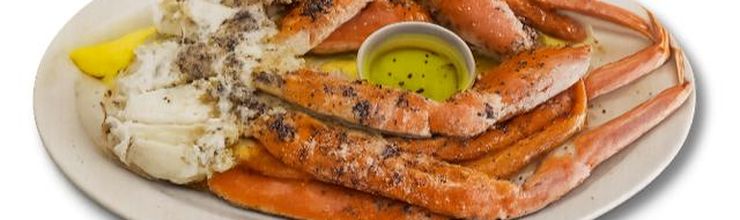
A cracked crab on the table, a bowl of melted butter, a cold beer beside it. You have gout, and somewhere in the back of your head a diet sheet is yelling the word shellfish. So you reach for the bread instead and spend the whole meal wondering if one leg would really have done any harm.
It is a fair question, and the honest answer is more interesting than a flat yes or no. Crab is not in the same danger zone as organ meat or a plate of anchovies, but it is not free food either. Where it falls depends on the species, the part you eat, how much you pile on your plate, and what you wash it down with. Here are the actual numbers.
How Much Purine Is in Crab?
When Japanese chemists measured purines directly in 270 common foods using high-performance liquid chromatography, the shellfish numbers told a clear story. The table reports both total purines and the amount expressed as uric acid, since that is what your body actually turns them into.1
Snow crab meat came in at 136.4 mg of total purines per 100 g, or 161.4 mg calculated as uric acid. Red king crab was a little lower, at 99.6 mg total and 119.4 mg as uric acid. Spiny lobster sat between them, at 102.1 mg total and 125.2 mg as uric acid.1 For comparison, the same table put sardines and several shrimp species well above 190 mg, and dried fish milt over 300 mg. Crab lands in the moderate band, not the extreme one.
Before you get too comfortable, look at one more row. Crab ovary, the rich orange roe that many people consider the best part, measured 152.2 mg of total purines per 100 g, or 175.4 mg as uric acid.1 The plain white meat is the milder choice. The roe and the butter it gets dipped in are where a crab dinner quietly gets expensive.
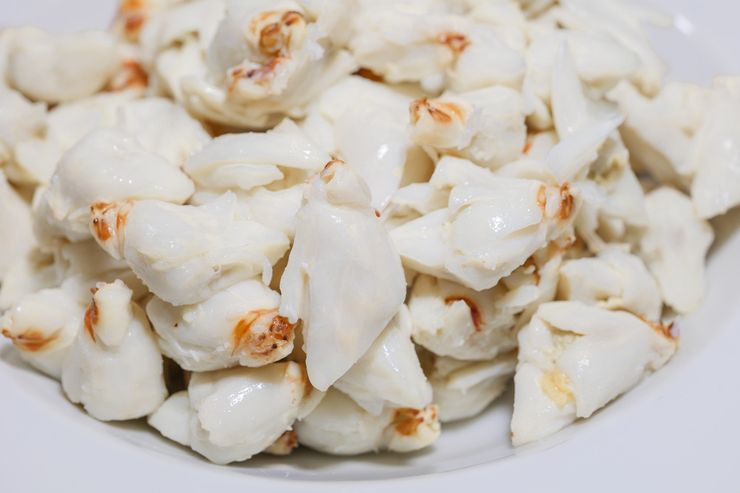
A normal serving of picked crab meat is around 85 to 100 g, roughly the meat from one decent snow crab cluster. Eat two or three clusters and you have crossed into a genuinely high-purine meal without ever feeling like you overdid it. The food is light, rich, and easy to keep eating. That is the trap.
What the Studies Found in People Who Ate Seafood
Purine tables come from a lab. The more useful question is what happens to real people who eat this stuff for years, and two large American studies answered it.
The Health Professionals Follow-Up Study tracked 47,150 men with no history of gout for 12 years and recorded 730 new cases. The men eating the most seafood had a 51% higher rate of new gout than the men eating the least (relative risk 1.51). Meat tracked the same direction at 1.41, while dairy pointed the opposite way, with a 44% lower rate among the biggest dairy eaters.2
A separate analysis of 14,809 adults in the Third National Health and Nutrition Examination Survey measured actual blood uric acid. People in the top fifth of seafood intake ran about 0.16 mg/dL higher serum uric acid than people in the bottom fifth.3 That gap sounds small, and for a single reading it is, but urate is a numbers game: the higher your level sits over the years, the more likely crystals are to form and the more often a joint gets lit up.
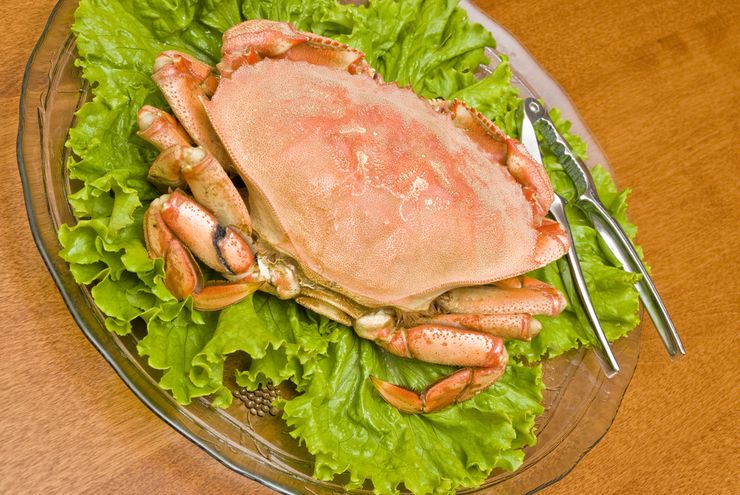
Notice that these studies lump seafood together, crab included. They do not show that a single crab dinner causes gout, or even a flare. They show that people who eat a lot of animal-source seafood, year after year, end up with higher urate and more gout. Occasional crab is a very different exposure from a twice-weekly shellfish habit.
Why the Beer and Butter Matter More Than You Think
If crab alone were the whole story, this would be a short article. The traditional way to eat it is what does the real damage, and that is worth being blunt about.
Alcohol competes with uric acid for excretion by the kidneys and dehydrates you at the same time. In the same cohort of 47,150 men followed for 12 years, drinking 50 or more grams of alcohol a day came with a 2.53-fold higher rate of gout than not drinking, and beer was the single worst beverage, at a relative risk of 1.49 per 12-ounce serving per day. Wine showed no meaningful link at the levels people usually drink.4 The classic crab-and-beer night stacks two independent triggers on top of each other, then the beer keeps you from flushing the urate the meal produced. This combination, a big plate of shellfish washed down with beer, is exactly the meal rheumatologists describe hearing about right before a flare.
The butter is a smaller but real issue. Dipping sauces do not contain purines, so they do not directly raise uric acid. What they do add is calories, and fast. A quarter cup of melted butter is around 400 calories. A long, buttery, beer-soaked seafood feast can run well past 1,500 calories, and steady weight gain pushes urate up because extra body fat worsens insulin resistance and slows uric acid clearance. The crab raises the input. The beer and butter raise the input and slow the output at the same time.
So Can You Eat Crab or Not?
Most people with well-controlled gout can eat crab now and then without turning a moderate-purine food into a crisis. The word in that sentence is now and then. A practical way to think about it:
- Pick the white meat over the roe. King crab and snow crab leg meat run 100 to 136 mg of total purines per 100 g, while crab ovary runs higher. Skip the tomalley-style innards and the roe if you are trying to be careful.1
- Keep the portion to one cluster or one small steamed crab. Around 100 g of picked meat is a reasonable serving, not the all-you-can-eat tower. One meal is a data point; a weekly pile-up is a pattern.
- Drop the beer. This is the highest-value swap on the page. Drink water instead, plenty of it, and you remove the part of the meal most tied to actual flares. If you want alcohol with dinner, wine has shown a far weaker link than beer or spirits, though skipping it during a flare is still the safer call.4
- Go easy on the butter. Steam or boil the crab, dip lightly, and skip the creamy pasta and fries that usually ride along. The lighter the rest of the plate, the more room the crab has.
- Time it away from a flare. During an active attack, the goal is to calm the joint, not test it. Hold off until things have settled for a couple of weeks.
If you have just been diagnosed or your serum urate is still high, above the target your doctor set, it makes sense to be stricter for a while. The 2020 American College of Rheumatology guideline lists shellfish among the animal-source foods people with gout should limit, while encouraging low-fat dairy, vegetables, and nuts instead.5 That advice is about shifting the overall pattern of what you eat, not punishing one dinner.
What you choose on the other 20 nights of the month matters far more than what you choose on one. A glass of skim milk, a yogurt, or an egg on the nights you are not eating crab is genuinely protective: dairy was the one protein source that consistently tracked with lower urate and less gout in both large studies.2,3 Build the diet around that, and an occasional crab becomes an exception the system can absorb.
What to Do if Crab Already Triggered You
Some people genuinely flare after shellfish, and if that is you, trust your own history over any population average. Gout is individual, and a food that reliably sets off your joint is a food to avoid regardless of what a table says. The crystals already sitting in your joint react to the local conditions in your body, not to the average of 47,000 men.
If a familiar flare starts, the hours matter more than guilt. Treat it early with whatever your doctor prescribed, usually a nonsteroidal anti-inflammatory drug (NSAID) such as naproxen, colchicine, or a short steroid course, rest the joint, ice it rather than heating it, and drink water. We covered exactly what to do in the first 12 hours here, and why ice beats a hot bath for most flares.
Do not respond to a crab dinner by suddenly starting or stopping your allopurinol or febuxostat. Urate-lowering medication is taken steadily through flares and feasts alike, and changing the dose on a whim can itself make an attack worse. If you are not yet on treatment and flares keep coming, that is the conversation to have with your doctor, because diet alone rarely holds serum uric acid under the 6 mg/dL target.
The Bigger Lever
Here is the part that actually changes your life with gout. The difference between eating crab once a month and eating it every week is real, but it is small compared with the things that set your baseline urate: your weight, your genes, your kidney function, your medication, and how much beer and sugar you take in. If you fix those, an occasional cluster of snow crab is not what sends you to the emergency room.
We have done the same purine-by-purine breakdown for shrimp, sardines, and salmon if you are rebuilding your seafood list, and a direct comparison of beer versus wine for anyone still reaching for the bottle. Crab is not poison. It is a moderate-purine food that shows up in life wearing its two worst friends, butter and beer. Eat the white meat in one honest portion, drink water, save it for a night you are not already flaring, and put your real effort into the daily habits and the medication that set the number underneath.
Frequently Asked Questions
Is crab high in purines?
It sits in the moderate range rather than the extreme. Snow crab meat measures about 136 mg of total purines per 100 g and red king crab about 100 mg, while sardines, anchovies, and organ meats run considerably higher. Crab roe and innards are higher than the white leg meat, so the part you eat matters.
Can I eat crab during a gout flare?
Best to hold off until the attack has settled for a couple of weeks. A flare is driven by crystals already in the joint, and a heavy shellfish meal with beer adds urate and dehydration at the worst possible time. Treat the inflammation first, then revisit crab as an occasional meal.
Which seafood is the worst for gout?
Anchovies, sardines, herring, mussels, scallops, shrimp roe, and organ-type fish products tend to top the purine tables and are named most often in dietary guidance. Among shellfish, crab and lobster are moderate rather than the very highest, which is why portion control and skipping the beer matter more than total avoidance.
Does butter or the way crab is cooked make a difference?
Butter has no purines, so it does not directly raise uric acid, but it adds a lot of calories, and weight gain worsens urate over time. Steamed or boiled crab with light dipping is gentler than a buttery, beer-heated seafood boil with fries and creamy sauce on the side.
I flared after eating crab once. Does that mean I have to give it up forever?
Not necessarily, but your own track record deserves respect. If crab reliably precedes an attack, avoid it. A single flare after one dinner could also have been the beer, the dehydration, or the portion. Try a smaller serving of white meat with water on a day you feel well, and talk to your doctor if flares are recurring.
References
- Kaneko K, Aoyagi Y, Fukuuchi T, Inazawa K, Yamaoka N. “Total purine and purine base content of common foodstuffs for facilitating nutritional therapy for gout and hyperuricemia.” Biol Pharm Bull. 2014;37(5):709-721. doi:10.1248/bpb.b13-00967. PMID: 24553148
- Choi HK, Atkinson K, Karlson EW, Willett W, Curhan G. “Purine-rich foods, dairy and protein intake, and the risk of gout in men.” N Engl J Med. 2004;350(11):1093-1103. doi:10.1056/NEJMoa035700. PMID: 15014182
- Choi HK, Liu S, Curhan G. “Intake of purine-rich foods, protein, and dairy products and relationship to serum levels of uric acid: the Third National Health and Nutrition Examination Survey.” Arthritis Rheum. 2005;52(1):283-289. doi:10.1002/art.20761. PMID: 15641075
- Choi HK, Atkinson K, Karlson EW, Willett W, Curhan G. “Alcohol intake and risk of incident gout in men: a prospective study.” Lancet. 2004;363(9417):1277-1281. doi:10.1016/S0140-6736(04)16000-5. PMID: 15094272
- FitzGerald JD, Dalbeth N, Mikuls T, Brignardello-Petersen R, Guyatt G, Abeles AM, et al. “2020 American College of Rheumatology Guideline for the Management of Gout.” Arthritis Rheumatol. 2020;72(6):879-895. doi:10.1002/art.41247. PMID: 32390306. ACR guideline page
Reviewed by the GoutSavvy Editorial Team