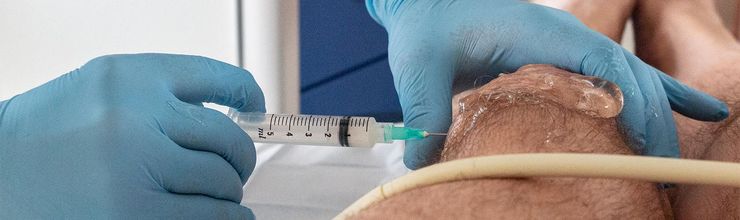
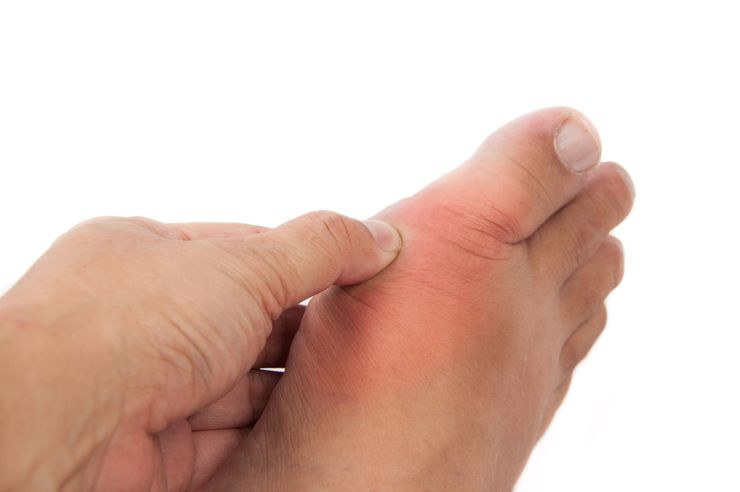
Picture this. Your big toe has swollen to the size and color of a plum, even the bedsheet hurts, and the doctor says one sentence you did not expect: “I can put a shot right in the joint.”
A needle. Into the already screaming toe. You hesitate. A lot of people do. Then the doctor adds that the pain relief often starts within a day or two, and suddenly the idea sounds a lot less crazy.
Corticosteroid injections, usually called steroid or cortisone shots, are one of the standard ways doctors treat a gout flare when pills are a bad fit. But they come with questions almost nobody asks in the room. How well does the shot actually work? What is the catch? And what about that “steroid flare” some people get a few hours later, where the joint feels worse before it feels better?
Let me walk you through what the evidence actually says.
First, What Exactly Gets Injected?
A steroid shot is a dose of synthetic anti-inflammatory hormone, most often triamcinolone or methylprednisolone, delivered straight into the swollen joint space. The doctor usually mixes in a local anesthetic like lidocaine too, so the area numbs quickly while the steroid ramps up.
There are two ways steroids are used for a flare:
- An intra-articular shot goes directly into one joint. This is the toe, knee, ankle, or elbow that is causing all the trouble.
- An intramuscular shot goes into the buttock or thigh muscle, and the drug spreads through the whole body over days. Doctors reach for this one when more than one joint is flaring at once, which makes injecting every joint impractical.
Both routes bypass your stomach and kidneys. That detail matters more than it sounds, because the usual pill options, the nonsteroidal anti-inflammatory drugs (NSAIDs) like ibuprofen and naproxen, can be genuinely dangerous for people with bad kidneys, ulcers, blood thinners, or heart failure. For them the shot is often the safest option on the menu.
Does the Shot Work as Well as Pills?
Here is where the story gets interesting. For steroids taken by mouth or given as a muscle shot, the evidence is surprisingly strong.
Dutch family doctors ran a double-blind, randomized equivalence trial in 120 patients with crystal-confirmed gout. Half got prednisolone 35 mg a day for 5 days, and half got naproxen 500 mg twice a day. After 90 hours, the pain score on a 100-point scale had dropped 44.7 points with prednisolone and 46.0 points with naproxen. The 1.3-point difference was well inside the equivalence margin, meaning the two treatments worked the same.1 Side effects were minor and similar in both groups.
A later systematic review pooled six randomized trials covering 817 patients and reached the same conclusion. Steroids did not differ from NSAIDs for pain within a week or after it, and people on steroids were half as likely to report indigestion (relative risk 0.50).2 A Cochrane review of systemic steroids came to a similar verdict from three head-to-head trials in 148 patients: no clinically meaningful differences between steroids and the comparison drugs.3
Now the awkward part. For the shot that goes directly into the joint, the gold-standard evidence is basically missing. When the Cochrane team went looking for randomized trials of intra-articular steroids for acute gout, they found zero. No trial had ever been done.4 Their conclusion was honest: evidence from osteoarthritis and rheumatoid arthritis, where joint injections are well studied, suggests the treatment is safe and effective and may be especially useful when NSAIDs or colchicine are off the table, but the gout-specific trial data do not exist.
So why do rheumatologists still do it every day? Because decades of clinical experience, guideline support, and what doctors have learned injecting the same drugs for other inflamed joints all point the same way. The 2020 American College of Rheumatology (ACR) guideline lists intra-articular steroids as a first-line option, particularly for a flare confined to one joint, alongside NSAIDs, colchicine, and systemic steroids.5 The European League Against Rheumatism (EULAR) says the same, recommending the first-line drug be chosen based on the patient’s kidney function, other medicines, and which joints are involved.6 A 2014 evidence synthesis for the ACR put it bluntly: no randomized trial had ever tested intra-articular glucocorticoids in gout, yet the drugs are standard practice.7
In other words, the shot is not experimental. It is just under-tested, which is a different thing.
How Fast Does It Work, and How Long Does It Last?
The local anesthetic usually takes the edge off within minutes. Then it wears off after a few hours, and you may feel the joint again before the steroid kicks in. Most people notice the real improvement somewhere between 24 and 72 hours after the injection, with the swelling and redness settling over the following days.
A single intra-articular dose keeps working for several weeks, which covers the whole flare in one visit and no pill schedule. Untreated, most gout attacks run about one to two weeks, and we break down that timeline here.
An intramuscular dose of triamcinolone behaves a little differently. It forms a small depot in the muscle that releases gradually over days, which is why one buttock shot can settle a multi-joint flare without a prescription to fill.
Why Doctors Pick the Shot for Some People and Not Others
The injection earns its keep in a few specific situations:
- Your kidneys are shaky. NSAIDs can shove kidney function off a cliff in someone with chronic kidney disease. Gout and kidney disease travel together often, so this comes up constantly.
- You take blood thinners like warfarin or apixaban, or you have a history of stomach ulcers or bleeding. NSAIDs make bleeding more likely; a local steroid shot barely changes that math.
- Colchicine does not agree with you or you started it too late. Colchicine works best in the first day or two and causes diarrhea in plenty of people.5
- One joint is doing all the damage. Putting the drug right where the inflammation is means the rest of your body gets a tiny fraction of the dose.
- You cannot keep pills down or simply will not take them for five days.
The shot is a worse fit when several joints are involved at once (that is when the muscle shot or oral steroids make more sense), when the joint might actually be infected rather than gouty, or when you have already had repeated injections in the same joint.
The “Steroid Flare”: When the Shot Makes You Feel Worse First
This is the bit that surprises people. A small share of injections cause a short, sharp pain flare a few hours after the needle comes out. The joint aches more, sometimes substantially, for a day or two before the steroid wins. It is called a post-injection flare or steroid flare, and it is caused by the crystals in the steroid preparation irritating the joint lining.
How often does it happen? It depends heavily on which drug is used. In a prospective study of 436 shoulder injections, methylprednisolone acetate caused a flare reaction in 22.8% of injections, versus just 4.0% with triamcinolone acetonide.8 That is a more-than-fivefold difference, and it is one reason many rheumatologists reach for triamcinolone by default. The study was done in shoulders rather than gouty toes, so treat the exact percentages as ballpark rather than destiny, but the pattern that some steroid preparations flare more than others is well established.
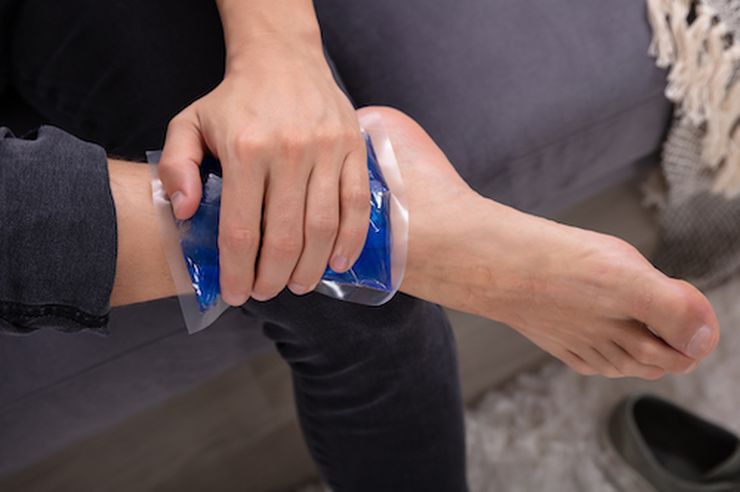
If it happens to you, ice the joint, rest it, and use plain acetaminophen if your doctor says that is safe. The flare almost always burns itself out within 24 to 72 hours.
Do not confuse that short rebound with an infection. Infection after a properly done joint injection is uncommon, but it is serious. Worry if the pain keeps climbing past two days, the skin gets hot and redder, or you run a fever or feel genuinely ill. That is not a steroid flare. That is a same-day call to the doctor or an emergency department visit.
The Other Fine Print
Systemic side effects are possible even with a local shot. Some steroid is absorbed into the bloodstream. People with diabetes can see their blood sugar rise for several days, sometimes by a lot, and should check glucose more often. Flushing of the face, trouble sleeping, and a short mood lift or jitteriness are also reported. These whole-body effects are more likely with an intramuscular shot than with one placed in a single joint.
You cannot get injected every month. Repeated steroid shots damage joint cartilage over time. The standard conservative ceiling is no more than about three or four injections per joint per year, and many doctors space them even further apart. If you need shots that often, the problem is not the flare, it is that your uric acid is not being controlled between flares.
The shot does nothing to your uric acid level. Steroids put out one fire. They do not dissolve the crystal deposits that light the next fire, and the one after that. If you have two or more flares a year, visible lumps called tophi, kidney stones, or chronic kidney disease, the ACR recommends starting urate-lowering medicine like allopurinol and keeping serum urate below 6 mg/dL.5 Expect more flares when you first start it, which is exactly why doctors often prescribe a short course of colchicine or an NSAID as cover. The injection treats today. The urate medicine treats next year.
So Should You Take the Shot?
If your doctor offers a joint injection for a single, furious flare, especially if your kidneys, stomach, or heart make NSAIDs risky, say yes. The evidence for systemic steroids is genuinely strong, the evidence for the joint shot is thin but consistent with decades of use, and both ACR and EULAR back it as first-line care. Ask which steroid they use, because triamcinolone flares less. Watch your glucose if you have diabetes. Expect a possible 48-hour rebound, ice it, and do not mistake a fever for one.
Then, when the toe feels like yours again, have the bigger conversation about getting your uric acid under control. The shot is a fire extinguisher. Nobody wants to keep buying extinguishers forever.
Frequently Asked Questions
Is a steroid shot better than pills for a gout flare?
It is roughly equally effective, not better. A randomized trial of 120 patients found oral prednisolone and naproxen equivalent for pain (44.7 vs 46.0 points of relief),1 and a review of six trials in 817 patients found steroids and NSAIDs matched for pain with less indigestion on steroids.2 The shot’s real advantage is safety when NSAIDs are risky and convenience when only one joint is involved.
How long after a cortisone shot does gout pain improve?
The local anesthetic works in minutes but wears off within hours. The steroid itself usually produces noticeable relief within 24 to 72 hours, and the effect can last several weeks. A short post-injection pain flare in the first day or two is common and is not a sign the treatment failed.
Can the shot make gout worse first?
Yes, temporarily. A steroid flare reaction hits a few hours after injection and typically settles within 24 to 72 hours. Rates depend on the preparation: in one large injection study, methylprednisolone flared in 22.8% of injections versus 4.0% for triamcinolone.8 Worsening pain with fever after two days is a red flag for infection, not a steroid flare.
How often can I get a steroid injection for gout?
Only occasionally, and not close together, because repeated steroid exposure in the same joint can damage cartilage. Your doctor sets the spacing based on the joint and your other conditions. Needing injections over and over means you should discuss daily urate-lowering treatment instead of treating one flare after another.
Does the injection raise blood sugar?
It can. Some steroid is absorbed systemically even from a joint injection, and blood glucose can rise for several days, occasionally well over a week with intramuscular doses. People with diabetes should monitor more closely and contact their doctor if readings stay high.
Will the shot lower my uric acid?
No. Steroids suppress inflammation but do not change serum uric acid or dissolve urate crystals. If flares recur, guidelines recommend urate-lowering therapy aimed at a serum urate below 6 mg/dL.5,6 Read more about what your blood test numbers mean here.
References
- Janssens HJ, Janssen M, van de Lisdonk EH, van Riel PL, van Weel C. “Use of oral prednisolone or naproxen for the treatment of gout arthritis: a double-blind, randomised equivalence trial.” Lancet. 2008;371(9627):1854-1860. doi:10.1016/S0140-6736(08)60799-0. PMID: 18514729
- Billy CA, Lim RT, Ruospo M, Palmer SC, Strippoli GFM. “Corticosteroid or nonsteroidal antiinflammatory drugs for the treatment of acute gout: a systematic review of randomized controlled trials.” J Rheumatol. 2018;45(1):128-136. doi:10.3899/jrheum.170137. PMID: 28765243
- Janssens HJ, Lucassen PL, Van de Laar FA, Janssen M, Van de Lisdonk EH. “Systemic corticosteroids for acute gout.” Cochrane Database Syst Rev. 2008;(2):CD005521. doi:10.1002/14651858.CD005521.pub2. PMID: 18425920
- Wechalekar MD, Vinik O, Schlesinger N, Buchbinder R. “Intra-articular glucocorticoids for acute gout.” Cochrane Database Syst Rev. 2013;(4):CD009920. doi:10.1002/14651858.CD009920.pub2. PMID: 23633379
- FitzGerald JD, Dalbeth N, Mikuls T, Brignardello-Petersen R, Guyatt G, Abeles AM, et al. “2020 American College of Rheumatology Guideline for the Management of Gout.” Arthritis Rheumatol. 2020;72(6):879-895. doi:10.1002/art.41247. PMID: 32390306
- Richette P, Doherty M, Pascual E, Barskova V, Becce F, Castañeda-Sanabria J, et al. “2016 updated EULAR evidence-based recommendations for the management of gout.” Ann Rheum Dis. 2017;76(1):29-42. doi:10.1136/annrheumdis-2016-209707. PMID: 27457514
- Wechalekar MD, Vinik O, Moi JH, Sivera F, van Echteld IA, van Durme C, Falzon L, Bombardier C, Carmona L, Aletaha D, Landewé RB, van der Heijde DM, Buchbinder R. “The efficacy and safety of treatments for acute gout: results from a series of systematic literature reviews including Cochrane reviews on intraarticular glucocorticoids, colchicine, nonsteroidal antiinflammatory drugs, and interleukin-1 inhibitors.” J Rheumatol Suppl. 2014;92:15-25. doi:10.3899/jrheum.140458. PMID: 25180124
- Eason RR, Joyce MR, Throckmorton TW, Azar FM, Bernholt DL, Naser AM, Brolin TJ. “Comparison of triamcinolone and methylprednisolone efficacy and steroid flare reaction rates after shoulder corticosteroid injection: a prospective interrupted time series study.” J Shoulder Elbow Surg. 2023;32(11):2214-2221. doi:10.1016/j.jse.2023.05.023. PMID: 37348782
Reviewed by the GoutSavvy Editorial Team