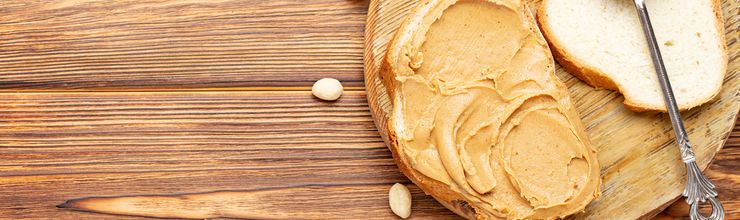
Someone hands you a spoon from a nearly empty peanut butter jar, and you freeze. You have gout, and everything you have read online says beans, peas, and peanuts are loaded with purines, the stuff your body turns into uric acid. One careless snack, and you picture your big toe swelling up tonight.
So you put the spoon back. Was that actually necessary?
The short answer is no, and the numbers behind that answer are better than most people expect. Peanuts and peanut butter are not the enemy the old diet lists made them out to be. They sit low on the purine table, and in the biggest studies that actually tracked people over years, eating peanuts lined up with slightly lower uric acid, not flares. The catch is what gets mixed into the jar.
How Much Purine Is Actually in a Peanut?
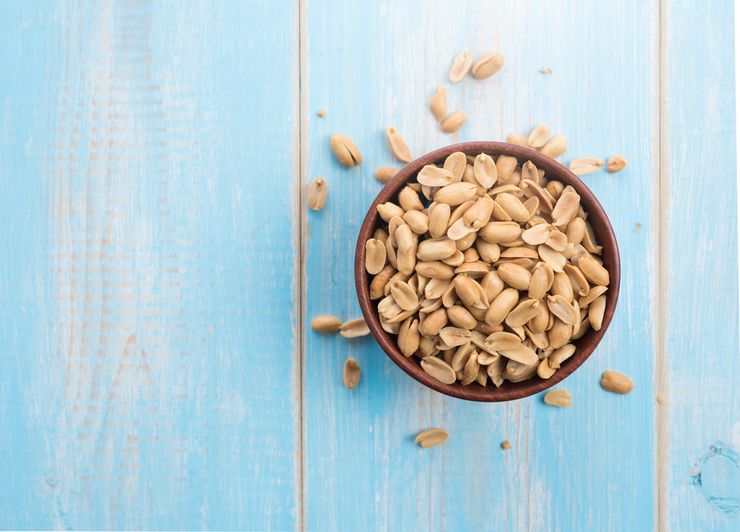
Purines in food get broken down into uric acid. The classic worry about peanuts comes from the fact that they are legumes, cousins of beans and lentils, and older gout diets banned the whole family. But when Japanese chemists measured purines directly in 270 foods using high-performance liquid chromatography, peanuts came in at 49.1 mg of total purines per 100 g.1
Give that number some context. Organ meats, anchovies, and dried fish milt run several hundred milligrams per 100 g, which is why doctors genuinely restrict those. Dried soybeans measured around 172.5 mg in the same table. Peanuts landed closer to green peas and tofu than to liver. Two tablespoons of peanut butter, about 32 g, therefore contribute roughly 15 mg of purines. Compare that with a single beer or a shrimp cocktail, and the spoon starts to look harmless.1
Not all purines behave the same way anyway. Plant purines come wrapped in fiber and are absorbed less efficiently than purines from meat, which is part of why the “high-purine vegetable” warning never held up in people.
What the Big Studies Found When They Actually Watched People
Purine math on paper is one thing. What happens to real joints over years matters more, and that evidence runs in the same direction.
A New Zealand team pooled diet and blood data from 16,760 adults across five American cohorts and tested every food on the questionnaire against measured serum urate. Seven foods tracked with higher urate, including beer, liquor, soft drinks, potatoes, poultry, and meat. Eight foods tracked with lower urate. Peanuts were on the protective list, right next to eggs, skim milk, cheese, cold cereal, brown bread, and non-citrus fruit.2
The same meta-analysis delivered a second, humbling finding. Diet as a whole explained less than 0.5% of the differences in urate between people, while common inherited genetic differences explained 23.9%.2 Food matters, but no single snack steers your level by much. Your kidneys and your genes do the heavy lifting.
Then there is the legume question. The Singapore Chinese Health Study followed 51,114 Chinese adults and recorded 2,167 cases of gout. The people eating the most non-soy legumes, a group that includes peanuts, had a 17% lower rate of gout than the people eating the fewest (hazard ratio 0.83), while soy foods showed a similar 14% reduction.3 Nuts and seeds on their own showed no link either way in that study, which is itself useful: they did not cause gout.
The pattern is not unique to peanuts. A cross-sectional study of 14,056 Chinese university students found the people eating the most pine nuts had a 29% lower odds of hyperuricemia, and high walnut intake pointed the same direction.4 In a Scottish study of 2,076 adults, purine-rich vegetables showed no relationship with plasma urate at all.5 Plants that happen to contain purines simply do not behave like a plate of anchovies, and we saw the same pattern with spinach, asparagus, and mushrooms.
Why Peanuts Are a Genuinely Useful Snack for Gout
Peanuts bring something most snack foods do not: protein and fat without a sugar spike. Two tablespoons of regular smooth peanut butter supply about 190 calories, roughly 7 g of protein, and 16 g of fat, with only about 3 g of sugar and around 2 g of fiber. The protein and fat slow digestion down, so you stay full longer and are less likely to scavenge something worse an hour later.
That matters because gout usually shares a body with insulin resistance, high blood pressure, and extra weight around the waist. A snack that does not raise blood glucose and displaces chips or pastries is doing double duty. The DASH diet, which pushes nuts, legumes, fruit, and low-fat dairy while cutting red meat and sweet drinks, was tied to a 32% lower risk of developing gout in 44,444 men followed for 26 years (relative risk 0.68).6 The Western diet, heavy in processed meats and sweets, did the opposite.
Dairy deserves a shout-out here too. In the Health Professionals Follow-Up Study, men eating the most dairy had a 44% lower rate of new gout than men eating the least, which is why peanut butter on its own is fine but a peanut butter banana smoothie made with skim milk or yogurt is arguably better.7
So Where Is the Catch?
Peanuts are not a free pass. Three things can turn a good snack into a problem, and none of them is the peanut.
The calories add up quietly. Peanut butter is one of the easiest foods to overeat. Six tablespoons instead of two is nearly 600 calories, and steady weight gain pushes urate up. Weight loss lowers it, so the portion matters more than the purines.
Check the label for sugar. Lots of popular jars add sugar, honey, or high-fructose corn syrup. Fructose raises urate directly, and in a pooled analysis of three prospective cohorts covering 154,289 people, the people drinking the most sugar-sweetened beverages had roughly double the rate of new gout compared with the lowest group (relative risk 2.08).8 A teaspoon of sugar in your peanut butter is not a soda, but the “reduced fat” jars are often the worst offenders, replacing fat with sugar. Buy the jar whose ingredients read “peanuts, salt” and stop there.
Salt matters for some people. Regular peanut butter often carries 100 to 150 mg of sodium per two tablespoons. Sodium does not directly raise urate, but many people with gout also have hypertension or kidney problems. Unsalted or low-sodium peanut butter is the boring, correct choice.
Two smaller groups need extra thought. Peanut allergy is real and can be severe; if you are allergic, none of the urate data applies, choose almond or sunflower seed butter instead. People with advanced chronic kidney disease sometimes have to limit potassium and phosphorus, so run the snack by your kidney doctor rather than a diet blog.
Peanut Butter in the Middle of a Flare
This question comes up constantly: your toe is already screaming, should you avoid peanut butter until it calms down? Some older Chinese dietary guides put peanuts in a “limit during an acute attack” bucket alongside soybeans and mushrooms. There is no modern evidence that a normal portion of peanut butter prolongs a flare or makes the pain worse. Flares are driven by urate crystals already sitting in the joint, not by lunch. Keep eating it if it agrees with your stomach, especially since a banana and peanut butter sandwich beats fasting, which can itself lift urate.
What actually moves the needle during an attack is treating the inflammation early with whatever your doctor prescribed, usually an NSAID, colchicine, or a steroid, and staying hydrated. We walked through the day-by-day timeline of a flare here, and we compared chicken, beef, shrimp, and sardines separately if you are rebuilding the rest of your diet.
The Bigger Lever
It would be great if swapping snack jars solved gout. It does not. With diet accounting for such a thin slice of urate variation, people with repeated flares usually need urate-lowering medication such as allopurinol or febuxostat to hold serum urate below 6 mg/dL. The 2020 American College of Rheumatology guideline recommends exactly that for anyone with two or more flares a year, visible tophi, or gout-related kidney damage.9 If you do not know where your number sits, this guide to reading your uric acid blood test will help.
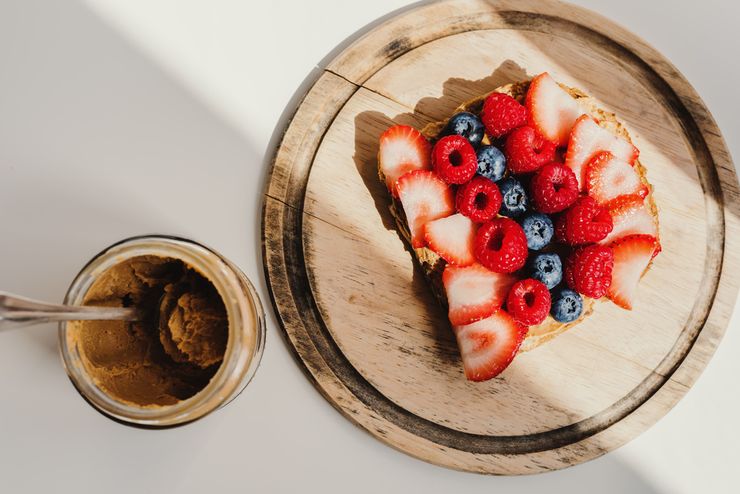
Peanut butter is the easy part. A tablespoon or two on toast, apple slices, or a spoon, plain and unsalted, a few times a week, is a reasonable gout-friendly snack. Skip the honey-roasted peanuts, the candy-coated ones, and the jar with five ingredients you cannot pronounce. Get the nut part right, then spend your energy on the things that genuinely change your urate: weight, alcohol, sugary drinks, and the pills if your doctor has prescribed them.
Frequently Asked Questions
Is peanut butter bad for gout?
No. Peanuts contain about 49 mg of purines per 100 g, which is low compared with organ meats and many seafoods, and pooled data from 16,760 adults actually linked peanut intake with slightly lower serum urate.1,2 Plain peanut butter in normal portions fits a gout-friendly diet. What can cause trouble is the added sugar and salt in flavored jars, plus the calories if you eat half the container.
Can peanut butter trigger a gout flare?
A normal serving is not a known flare trigger, and there is no study tying peanuts or peanut butter to attacks. Flares are set off by urate crystals already deposited in the joint. The sugary foods and drinks often eaten with peanut butter, like soda or jelly loaded with high-fructose corn syrup, are the better-documented culprits.8
How much peanut butter can I eat with gout?
One to two tablespoons, about 16 to 32 g, a few times a week is a sensible target. That keeps calories around 95 to 190 per serving and purines near 8 to 16 mg. Because peanut butter is dense, measuring it instead of eating from the jar keeps a snack from becoming a meal.
Which kind of peanut butter is best for gout?
Natural, unsalted or lightly salted peanut butter with no added sugar or hydrogenated oil. The ingredient list should say “peanuts” or “peanuts, salt.” Avoid honey-roasted, chocolate, or “reduced fat” versions, which usually add sugar or corn syrup. Almond butter and sunflower seed butter work just as well if you prefer them or have a peanut allergy.
Are peanuts or other nuts high in purines?
Peanuts measured 49.1 mg total purines per 100 g in a direct chemical analysis, and most tree nuts are similarly low.1 In a study of 14,056 young adults, people eating the most pine nuts had 29% lower odds of hyperuricemia, and walnuts showed a similar trend.4 Nuts are one of the snack groups gout guides actively encourage, alongside low-fat dairy.
Do I have to cut out peanut butter during an attack?
No. A plain peanut butter sandwich is a reasonable choice during a flare, and eating something is better than skipping meals, since fasting can raise uric acid. Focus your energy instead on starting your prescribed flare medicine promptly, icing the joint, and drinking water. Restricting peanut butter has no evidence behind it.
References
- Kaneko K, Aoyagi Y, Fukuuchi T, Inazawa K, Yamaoka N. “Total purine and purine base content of common foodstuffs for facilitating nutritional therapy for gout and hyperuricemia.” Biol Pharm Bull. 2014;37(5):709-721. doi:10.1248/bpb.b13-00967. PMID: 24553148
- Major TJ, Topless RK, Dalbeth N, Merriman TR. “Evaluation of the diet wide contribution to serum urate levels: meta-analysis of population based cohorts.” BMJ. 2018;363:k3951. doi:10.1136/bmj.k3951. PMID: 30305269
- Teng GG, Pan A, Yuan JM, Koh WP. “Food sources of protein and risk of incident gout in the Singapore Chinese Health Study.” Arthritis Rheumatol. 2015;67(7):1933-1942. doi:10.1002/art.39115. PMID: 25808549
- Wang C, Guo XF, Yang T, Zhao T, Li D. “Nut intake and hyperuricemia risk in young adults.” Public Health Nutr. 2021;24(18):6292-6298. doi:10.1017/S1368980021002998. PMID: 34261569
- Zgaga L, Theodoratou E, Kyle J, Farrington SM, Agakov F, Tenesa A, et al. “The association of dietary intake of purine-rich vegetables, sugar-sweetened beverages and dairy with plasma urate, in a cross-sectional study.” PLoS One. 2012;7(6):e38123. doi:10.1371/journal.pone.0038123. PMID: 22701608
- Rai SK, Fung TT, Lu N, Keller SF, Curhan GC, Choi HK. “The Dietary Approaches to Stop Hypertension (DASH) diet, Western diet, and risk of gout in men: prospective cohort study.” BMJ. 2017;357:j1794. doi:10.1136/bmj.j1794. PMID: 28487277
- Choi HK, Atkinson K, Karlson EW, Willett W, Curhan G. “Purine-rich foods, dairy and protein intake, and the risk of gout in men.” N Engl J Med. 2004;350(11):1093-1103. doi:10.1056/NEJMoa035700. PMID: 15014182
- Ayoub-Charette S, Liu Q, Khan TA, Au-Yeung F, Blanco Mejia S, de Souza RJ, et al. “Important food sources of fructose-containing sugars and incident gout: a systematic review and meta-analysis of prospective cohort studies.” BMJ Open. 2019;9(5):e024171. doi:10.1136/bmjopen-2018-024171. PMID: 31061018
- FitzGerald JD, Dalbeth N, Mikuls T, Brignardello-Petersen R, Guyatt G, Abeles AM, et al. “2020 American College of Rheumatology Guideline for the Management of Gout.” Arthritis Rheumatol. 2020;72(6):879-895. doi:10.1002/art.41247. PMID: 32390306. ACR guideline page
Reviewed by the GoutSavvy Editorial Team