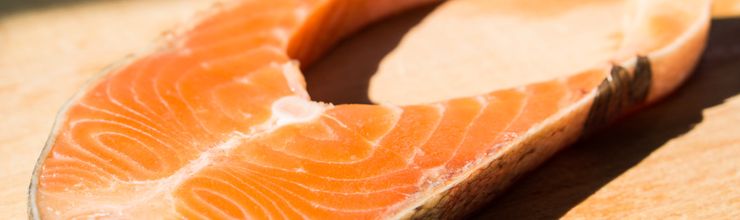
Someone hands you a diagnosis of gout, and the list of things you are “not allowed” to eat starts growing fast. Anchovies, sardines, shellfish all get crossed off. So it is only natural to look at a thick pink salmon fillet and wonder if that has to go too.
The honest answer is more interesting than a simple yes or no. Salmon does carry real purines. But the same fish also comes packed with omega-3 fats, and one study found that people who ate two or more servings of omega-3 rich fish actually had fewer gout flares. Let’s dig into the actual numbers, because how you cook the salmon and what you put on it matter just as much as the fish itself.
How much purine is actually in salmon?
Let’s start with the hard numbers rather than the vague “salmon is bad” advice. The most widely cited laboratory measurements come from a Japanese team that analyzed hundreds of common foods using high-performance chromatography. Fresh salmon came in at 119.3 mg of total purines per 100 g. Processed salmon measured slightly higher, at 132.9 mg per 100 g.
To put that in context, the same study measured rainbow trout at 180.9 mg per 100 g, and put sardines and bonito in the 200 to 300 mg range. So salmon sits in the middle of the pack, not the deep end. It is higher than a plain plate of vegetables, but well below the small whole fish and organ meats that are the genuine heavy hitters. Roughly 90 percent of the raw fish the team tested contained over 100 mg per 100 g, which means singling out salmon misses the bigger picture.
Seafood raises gout risk, but the story does not end there
There is no point pretending seafood is risk-free. The landmark study here followed 47,150 men with no history of gout for 12 years and recorded 730 new cases. Men who ate the most seafood had a relative risk of gout of 1.51 compared with men who ate the least. Meat came in at 1.41. Those are real numbers, and they are the reason doctors warn about heavy seafood intake.
But “seafood” is a giant category, and the risk is driven heavily by the highest-purine items, the anchovies, sardines, herring, mussels, and shrimp that people often eat in quantity. A moderate fillet of salmon is not the same exposure as a plate of fried sardines, and lumping them together is how people end up cutting the wrong foods.
The omega-3 finding that complicates everything
This is where it gets genuinely surprising. Researchers at Boston University used data from the Online Gout Study, a case-crossover project that asked people what they had eaten in the 48 hours before a flare versus a flare-free stretch. They looked specifically at omega-3 consumption and sorted through 724 participants.
People who took omega-3 capsules on their own saw no benefit. The adjusted odds ratio for supplements was 1.01, basically no effect. But people who ate two or more servings of omega-3 rich fish had an adjusted odds ratio of 0.74 for a recurrent flare, meaning about a 26 percent lower risk. That result held even after the researchers adjusted for total purine intake.
Before you read too much into that, note the fine print. This is observational data, not a gold-standard drug trial. It shows an association, and the authors were careful to say the question deserves a properly powered clinical trial. Still, it suggests that a food’s net effect is not just its purine count. The anti-inflammatory fats in fatty fish appear to pull in the other direction, and a piece of salmon comes with both at once.
How you cook the salmon changes the math
Here is a practical detail that almost no one talks about. A three-year follow-up study of 424 Japanese adults looked at how fish cooked by different methods related to the risk of developing high uric acid, and recorded 30 new cases during the study.
Raw fish, think sashimi and sushi, showed a clear trend. The odds ratios across increasing intake were 1.00, 2.51, and 3.46. Roasted or grilled fish was even starker, at 1.00, 3.00, and 5.17. Boiled or fried fish showed no significant relationship with high uric acid at all.
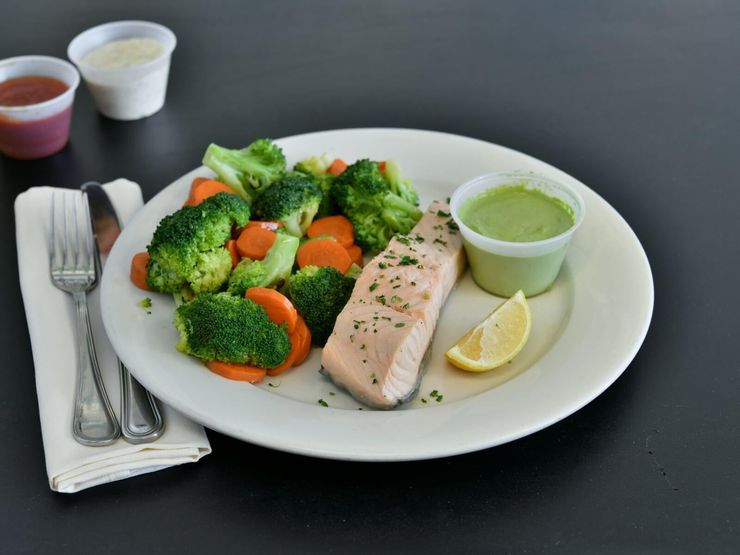
Why would boiling be kinder? When fish simmers, some of the purines leach out into the water. That is the same logic behind the advice not to drink the first broth when you boil meat. For you, it translates into a simple kitchen rule: poached, steamed, or boiled salmon where you discard the cooking liquid is the gentlest preparation. Grilling and roasting taste fantastic and do not add purines, but they do not remove any either. And whatever method you choose, skip the sugary teriyaki or honey glaze, because added fructose both raises uric acid and makes it harder for the kidneys to clear it.
So how much salmon can you actually eat?
The research does not hand down one magic number, but the pattern is clear enough to act on. A single serving of roughly 3 to 4 ounces, about 85 to 115 g, once in a weekly rotation fits the profile seen in the studies. That is a normal dinner fillet, not a towering stack of sashimi. People eating that amount and keeping the rest of the day low-purine generally do fine.
Portion control is doing most of the work here. Two or three modest servings spread across the week are a different story from a daily all-you-can-eat sushi habit. If you are trying to work out where salmon fits alongside everything else, our gout-friendly grocery list walks through the whole store.
During a flare, should you skip it?
Many people choose to play it safe and avoid fish while a joint is actively flaring, and that is a reasonable call. A flare is not the moment to add any dietary load, even a moderate one. During those painful days, lean hard on the foods that are clearly neutral or helpful. Eggs are an excellent low-purine protein, and we broke down why in our piece on eggs and gout. Low-fat dairy and skim milk have actually been shown to lower urate, which you can read about in our look at milk and gout research. Once the flare settles, salmon can go back in the rotation.
Will a fish oil pill do the same job without the purines?
Plenty of people reach for a capsule to get the omega-3 without the purine, and the logic is understandable. But here is the catch. In the Boston University study, self-directed supplements did not lower flare risk at all, with an odds ratio of 1.01, while eating the actual fish did. Nobody is entirely sure why. It could be dose, since people taking capsules on their own may not get enough, or it could be that something about eating the whole food matters.
There is also a separate, more interesting thread. Researchers tested whether omega-3 supplements could prevent the flares that sometimes get triggered when people first start urate-lowering treatment, in a small randomized, placebo-controlled feasibility study (Abhishek et al., 2022). That is a specific use case worth watching, but it is not the same as swallowing an over-the-counter pill to manage everyday gout. Do not assume a supplement replaces either the fish or your prescribed medication.
The part that matters most: salmon will not replace your medication
Whether salmon ends up neutral or mildly helpful for you, one thing stays constant. Diet has a fairly small effect on blood urate overall, and food alone rarely gets people to the target that dissolves crystals. Real control means holding serum uric acid below 6 mg/dL, and below 5 mg/dL if you have tophi.
That is why urate-lowering medication such as allopurinol remains the backbone of treatment for recurrent gout. Diet supports it but does not replace it, and nobody should stop their pills because they started eating more fish. A review of the diet evidence put it plainly: urate-lowering therapy is the mainstay, with dietary factors playing a limited role in definitive management.
Frequently asked questions
Is salmon bad for gout? Salmon contains a moderate amount of purine, around 119 mg per 100 g when fresh, which is less than trout, sardines, or anchovies. Its omega-3 fats may partly offset that load. In modest portions of 3 to 4 ounces, once a week, salmon fits into most gout diets.
What is the best fish to eat with gout? Lower-purine white fish such as cod, tilapia, and sole are the safest frequent choices, though they lack salmon’s omega-3 benefits. The fish to genuinely limit are anchovies, sardines, herring, and mackerel, which sit at the top of the purine range.
Can I eat salmon during an active flare? It is sensible to avoid fish while a joint is actively flaring and stick to clearly low-purine foods such as eggs, low-fat dairy, vegetables, and whole grains. You can bring salmon back once the flare settles.
Should I take fish oil instead? The study found that self-directed fish oil supplements did not reduce flare risk, while eating omega-3 rich fish did. Food appears to be the better-supported route, and supplements should not replace prescribed gout medication.
What is the safest way to cook salmon for gout? Poaching, steaming, or boiling and then discarding the liquid is the gentlest method, because some purines leach into the water. Grilling and roasting do not remove purines, and sugary glazes add fructose that can worsen uric acid.
The bottom line
Salmon does not deserve a spot on your permanent banned list. It carries a moderate purine load, lower than the small oily fish that drive most seafood risk, and the omega-3 evidence points to a possible flare-lowering benefit when it is eaten as food. Keep portions to a normal fillet about once a week, poach or steam it when you can, skip the sweet glaze, and set it aside during an active flare. Above all, keep taking the medication that holds your uric acid at target. Salmon can be part of the plan. It just is not the whole plan.
References
- Kaneko K, Aoyagi Y, Fukuuchi T, Inazawa K, Yamaoka N. Total purine and purine base content of common foodstuffs for facilitating nutritional therapy for gout and hyperuricemia. Biol Pharm Bull. 2014;37(5):709-721. doi:10.1248/bpb.b13-00967. PMID: 24553148
- Choi HK, Atkinson K, Karlson EW, Willett W, Curhan G. Purine-rich foods, dairy and protein intake, and the risk of gout in men. N Engl J Med. 2004;350(11):1093-1103. doi:10.1056/NEJMoa035700. PMID: 15014182
- Zhang M, Zhang Y, Terkeltaub R, Chen C, Neogi T. Effect of dietary and supplemental omega-3 polyunsaturated fatty acids on risk of recurrent gout flares. Arthritis Rheumatol. 2019;71(9):1580-1586. doi:10.1002/art.40896. PMID: 30908893
- Ren Z, Huang C, Momma H, Cui Y, Sugiyama S, Niu K, Nagatomi R. The consumption of fish cooked by different methods was related to the risk of hyperuricemia in Japanese adults: a 3-year follow-up study. Nutr Metab Cardiovasc Dis. 2016;26(9):778-785. doi:10.1016/j.numecd.2016.05.009. PMID: 27345758
- Danve A, Sehra ST, Neogi T. Role of diet in hyperuricemia and gout. Best Pract Res Clin Rheumatol. 2021;35(4):101723. doi:10.1016/j.berh.2021.101723. PMID: 34802900
- Clebak KT, Morrison A, Croad JR. Gout: rapid evidence review. Am Fam Physician. 2020;102(9):533-538. PMID: 33118789
- Abhishek A, Fuller A, Nakafero G, et al. Feasibility of conducting a randomized, placebo-controlled study assessing whether omega-3 fatty acids prevent gout flares when starting urate-lowering treatment. Rheumatol Adv Pract. 2022;6(3):rkac086. doi:10.1093/rap/rkac086. PMID: 36407800
- FitzGerald JD, Dalbeth N, Mikuls T, et al. 2020 American College of Rheumatology guideline for the management of gout. Arthritis Rheumatol. 2020;72(6):879-895. doi:10.1002/art.41247. PMID: 32390306
Reviewed by the GoutSavvy Editorial Team