You are at a restaurant, the shrimp scampi lands on the table smelling of garlic and butter, and you freeze. Someone at some point told you that all shellfish is off limits with gout, and now you are doing the math in your head while everyone else digs in. Should you push the plate away?
Not so fast. Shrimp is a genuinely mixed case, and the answer depends on which shrimp, how much, and how it is prepared. Some shrimp land in the high-purine tier, while others measure far lower. Let’s look at the actual laboratory numbers instead of the blanket warning everyone repeats.
How much purine is actually in shrimp?
The best data here comes from a Japanese team that ran 270 common foods through high-performance liquid chromatography. They did not just measure a single “shrimp.” They tested several species, and the numbers are all over the place.
Botan shrimp, a large cold-water prawn, came in at just 53.4 mg of total purines per 100 g, which the team classed as low. Kuruma shrimp measured 195.3 mg per 100 g, right at the top of the moderate tier. Oriental shrimp hit 273.2 mg per 100 g, landing it squarely in the high tier alongside sardines and pork liver. Shiba shrimp, the small ones often used in stir fries, measured 144.2 mg per 100 g. Dried sakura shrimp, used as a garnish, was a startling 749.1 mg per 100 g, though it is so light that nobody eats 100 g of it in one sitting.
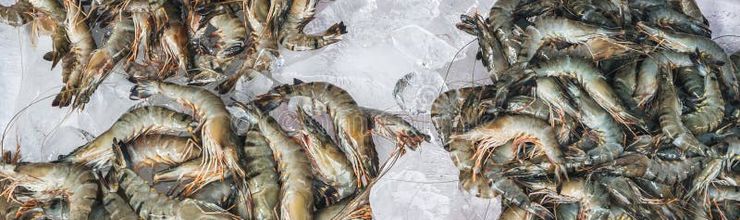
What does that mean at the grocery store? The farmed shrimp most people buy, the pink and white varieties on ice at the seafood counter, typically fall in the moderate range rather than the extreme. A separate Chinese study that measured purines across seafood reached the same broad conclusion: shrimp carried more purine than most fish and bivalves, with the exact amount shifting by species and even by freshness. So “shrimp is high purine” is a rough generalization, not a precise fact.
What the gout studies say about seafood
Here is the part nobody should gloss over. The landmark study in this area followed 47,150 men with no history of gout for 12 years and documented 730 new cases. Men who ate the most seafood had a relative risk of gout of 1.51 compared with men who ate the least. Meat came in at 1.41, and dairy actually looked protective at 0.56. Seafood as a category is tied to higher gout risk, and shrimp sits inside that category.
But the more relevant number for someone who already has gout comes from a different project. Researchers ran a case-crossover study of 633 people with gout and compared what they ate in the 48 hours before a flare with ordinary 48-hour periods. People in the highest quintile of total purine intake had 4.76 times the odds of a flare compared with people in the lowest quintile. That is the almost fivefold spike you may have heard about. When the researchers broke the purines down by source, animal purines, including shrimp, drove most of the relationship. Plant purines barely moved the needle.
Read that carefully. A heaping shrimp platter the night before a flare fits the exact exposure pattern that study measured. A single small portion doesn’t. Quantity is doing the heavy lifting here, which is why a blanket ban and a blanket free pass are both wrong.
How you cook shrimp changes the exposure
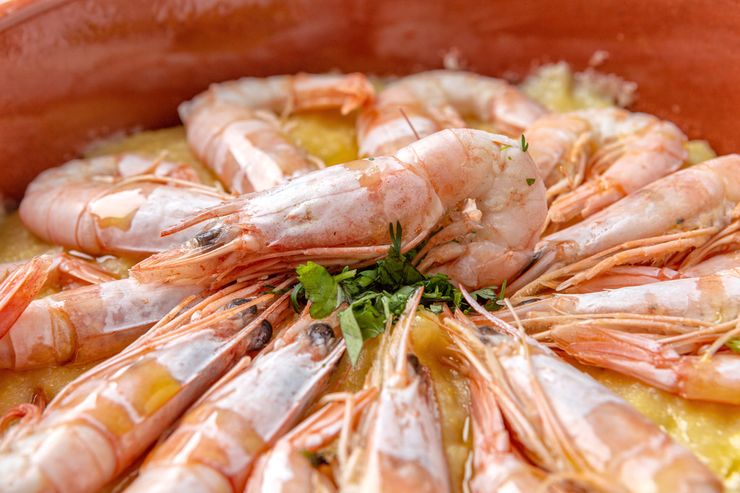
This is the practical part that most advice leaves out. Purines are water soluble, and they leach out of seafood into cooking liquid. The Japanese researchers specifically noted that fish and shellfish boiled in water lose purines into that water. Shrimp dropped straight into boiling water and drained therefore ends up with a smaller purine load than the same shrimp cooked another way.
Now flip to how most shrimp is actually served in America. Fried shrimp, coconut shrimp, shrimp dipped in batter and cooked in oil, none of the purines escape because there is no water for them to leach into, and you have just added a pile of refined starch and fat. Rich buttery shrimp sauces add calories without removing anything. Tempura is the same story.
Want the gentlest version? Boiled, poached, or steamed shrimp with the cooking liquid discarded, eaten cold with a squeeze of lemon, is about as kind to gout as shrimp gets. Grilled shrimp on skewers is a reasonable middle ground, no added batter, no purine removed either. Fried and heavily sauced preparations are the ones to save for rare occasions.
So how much shrimp can you actually eat?
The studies don’t hand down a single magic number, but the pattern is clear enough to act on. A modest appetizer portion of 5 or 6 small shrimp, roughly 85 g or about 3 ounces, once in a while fits well within the lower exposure groups. That is a handful on a salad or a few shrimp alongside a big plate of vegetables. It isn’t an endless shrimp basket.
The rest of the day matters more than most people think. If lunch was a steak and dinner is a mountain of shrimp with beer, the purines stack on top of each other, and that is exactly how people flare. If the rest of the day is built around eggs, low-fat dairy, vegetables, and rice, a small shrimp portion is a rounding error. For a full walk through what to put in your cart, our gout-friendly grocery list covers the whole store.
What about during an active flare?
Set the shrimp aside while a joint is actively flaring. During those painful days, there is simply no reason to add an animal-purine load of any size. Stick to the foods that are clearly neutral or helpful. Eggs are one of the cleanest protein sources you can eat, and we broke down the evidence in our piece on eggs and gout. Low-fat dairy has actually been shown to lower urate, which you can read about in our look at milk and gout. For getting through the flare itself, our guide on walking versus resting covers what to do with the joint.
Frequently asked questions
Can I eat shrimp if I have gout? Yes, in small portions and not as a daily habit. Most shrimp sit in the moderate purine range, though a few species are genuinely high. Boiled or steamed shrimp in a 3-ounce portion occasionally isn’t the kind of exposure that flares joints. All-you-can-eat fried shrimp is.
Are shrimp higher in purines than other seafood? Often, yes. The Chinese seafood analysis found shrimp carried more purine than most fish and bivalves, and the Japanese data put oriental shrimp above many fish. But the spread between species is large, so it is hard to make a clean ranking.
Does cooking remove purines from shrimp? Boiling and steaming pull some purines into the water, so discarding that cooking liquid lowers your exposure. Frying doesn’t remove purines because there is no water for them to dissolve into.
Is shrimp cholesterol a problem for gout? Shrimp is relatively high in cholesterol, but dietary cholesterol has a much smaller effect on blood cholesterol than people once thought, and it has nothing directly to do with uric acid. Gout and heart disease do overlap, though, so if your doctor has you watching cholesterol, take that up separately. The gout question is about purines, not cholesterol.
Can shrimp replace my gout medication? No food replaces urate-lowering medication, and shrimp certainly doesn’t. Keep taking the medication your doctor prescribed to hold your uric acid at target. Diet trims risk around the edges. The 2020 American College of Rheumatology guideline is clear that medication is the backbone of gout management, with diet playing a supporting role.
Shrimp doesn’t have to disappear from your life. Treat it like the occasional food it is, keep the portions small, prefer boiled or steamed over fried, and stack the rest of your plate with low-purine foods. Do that and you can enjoy the scampi without doing flare math in your head.
References
- Kaneko K, Aoyagi Y, Fukuuchi T, Inazawa K, Yamaoka N. Total purine and purine base content of common foodstuffs for facilitating nutritional therapy for gout and hyperuricemia. Biol Pharm Bull. 2014;37(5):709-721. doi:10.1248/bpb.b13-00967. PMID: 24553148
- Choi HK, Atkinson K, Karlson EW, Willett W, Curhan G. Purine-rich foods, dairy and protein intake, and the risk of gout in men. N Engl J Med. 2004;350(11):1093-1103. doi:10.1056/NEJMoa035700. PMID: 15014182
- Zhang Y, Chen C, Choi H, Chaisson C, Hunter D, Niu J, Neogi T. Purine-rich foods intake and recurrent gout attacks. Ann Rheum Dis. 2012;71(9):1448-1453. doi:10.1136/annrheumdis-2011-201215. PMID: 22648933
- Qu X, Sui J, Mi N, Lin H. Determination of four different purines and their content change in seafood by high-performance liquid chromatography. J Sci Food Agric. 2017;97(2):520-525. doi:10.1002/jsfa.7755. PMID: 27080363
- Choi HK. A prescription for lifestyle change in patients with hyperuricemia and gout. Curr Opin Rheumatol. 2010;22(2):165-172. doi:10.1097/BOR.0b013e328335ef38. PMID: 20035225
- FitzGerald JD, Dalbeth N, Mikuls T, et al. 2020 American College of Rheumatology guideline for the management of gout. Arthritis Rheumatol. 2020;72(6):879-895. doi:10.1002/art.41247. PMID: 32390306
Reviewed by the GoutSavvy Editorial Team