The short answer
No. Eggs are not bad for gout. They contain almost no purines, they do not raise uric acid in any meaningful way, and none of the large gout studies single eggs out as a trigger. So why do so many people ask? Because once gout shows up, you start treating every food like a suspect, and breakfast is full of them.
Here is what the research actually says, how many eggs are reasonable, and the one way eggs can get you into trouble (hint: it is not the egg).
Why eggs don’t trigger gout flares
A gout flare starts when uric acid builds up past its solubility point and forms needle-shaped crystals in a joint. Uric acid comes from purines. Your body produces most of those purines on its own, and somewhere around a third come from food. The foods that matter are the ones loaded with purines: organ meats, certain seafood, red meat in quantity.
Eggs are not in that group. An egg is a single reproductive cell, not muscle or organ tissue, so its purine content is very low. That is exactly why gout diet handouts put eggs in the “enjoy” column rather than the “limit” one.
The best evidence comes from a 12-year study that followed 47,150 men with no history of gout and recorded 730 new cases. Meat raised the risk, seafood raised it, and dairy actually lowered it. Eggs were not flagged as a culprit.1
What eggs actually bring to the table
One large egg gives you roughly 6 grams of protein and about 70 calories, with almost no carbohydrate and no sugar. That last part matters. The sugar fructose raises uric acid, and eggs contain none of it. When researchers looked at people drinking sugar-sweetened soft drinks, the heaviest drinkers had uric acid up to 0.42 mg/dL higher and an 82 percent higher odds of hyperuricemia.7 Eggs push in the opposite direction of that problem.
Eggs do contain cholesterol, and this is the part that confuses people. Dietary cholesterol and blood uric acid are two different things. Eating an egg does not pour crystals into your big toe. A pooled analysis of dietary studies found dairy products associated with lower gout risk (odds ratio 0.56), while eggs themselves were simply neutral, neither raising nor lowering the risk.5
One study is worth an honest mention. Researchers examining 752 elderly Taiwanese men noted an association between egg consumption and a group that had chronic kidney disease together with hyperuricemia.2 But that link appeared in men who already had kidney disease, not in healthy people developing gout. It is a reason for someone with advanced kidney disease to talk to their doctor, not a reason for the rest of us to skip breakfast.
How many eggs are reasonable?
For most people with gout, one to two whole eggs a day fit comfortably into a gout-friendly diet. The 2020 American College of Rheumatology gout guideline focuses its diet advice on limiting alcohol, purine-rich foods, and high-fructose drinks. It does not tell people to cut out eggs.3
If you are also watching blood cholesterol, or you have diabetes or heart disease, your own doctor may set a different number. That is a cardiovascular conversation, though, not a gout one.
Eggs vs. the protein people replace them with
Here is the irony. People who cut eggs out of worry usually replace them with something worse. They reach for sausage, bacon, or a stack of pancakes soaked in syrup. Swapping a low-purine egg for processed meat or a plate of refined carbs and fructose moves you straight toward the foods with the proven track record of raising gout risk. On a gout diet, the swap that actually helps is the other way around: eggs in, processed meats out.
The real trap: what you do to the egg
An egg starts innocent. Then breakfast happens.
- Fried eggs in bacon fat or butter add calories but not purines. The weight gain is the problem over time, since obesity is a solid gout risk factor.
- The plate around the egg is usually the actual trigger. Bacon, sausage, and ham are processed meats, and the big study found meat eaters in the highest intake group had a 41 percent higher gout risk.1
- Hidden fructose shows up in pancake syrup, jam, sweet iced coffee, and the sugary sauces drizzled over breakfast sandwiches. Fructose is the ingredient with the track record, not eggs.
- Deviled eggs and creamy egg salad can be loaded with mayonnaise, and store-bought versions often hide added sugar. Check the label.
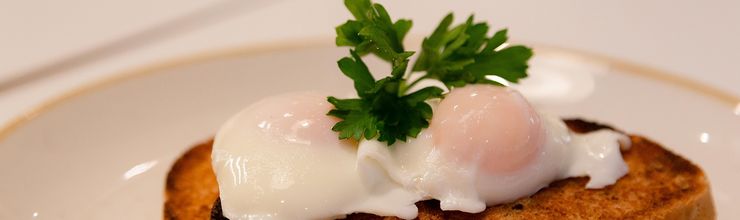
Poach them, soft-boil them, or scramble them in a small amount of olive oil and you keep all the protein with none of the baggage.
Gout-friendly ways to eat eggs

Try poached or soft-boiled eggs on whole-grain toast with sauteed spinach, mushrooms, and a slice of tomato. Spinach is a higher-purine vegetable, and the good news there is that purine-rich vegetables do not raise gout risk the way meat does.1 Add a glass of skim milk, and you are pairing eggs with the one food group that studies consistently link to lower gout risk.5
A vegetable omelet with a little low-fat cheese works too, as do hard-boiled eggs as a snack. If you have wondered about tomatoes alongside those eggs, you can read whether tomatoes are a real gout trigger.
Eggs during a flare
During an active flare, eggs are one of the easiest proteins to manage. They need no chewing, they take minutes to make, and they will not add purines while you are stuck with an elevated foot. Pair them with toast and water rather than a heavy breakfast, and save your energy. For the rest of getting through a painful night, here is how to sleep with a gout flare.
Do eggs clash with your gout medication?
Eggs do not have a meaningful interaction with the common gout medicines, including allopurinol, febuxostat, colchicine, or prednisone. You do not need to avoid eggs on the day you start allopurinol. If you are on prednisone and notice your blood sugar climbing, the thing to cut is the sugary pastry and sweetened latte, not the egg. People on a urate-lowering drug should also remember that the medication itself does the heavy lifting. Only about one third of people with gout in the United States are even receiving urate-lowering treatment,4 so staying on yours matters far more than agonizing over a single food.
The bigger breakfast picture
To understand why eggs are a non-issue, it helps to see what does raise risk. Alcohol does, strongly. In the landmark study, men drinking 50 or more grams of alcohol a day had more than double the risk of gout, and beer was the worst offender at a 49 percent higher risk per daily serving.6 Fructose does. Seafood and red meat do, at the portions people actually eat.
Eggs sit with the neutral or helpful foods, next to low-fat dairy, most vegetables, and that morning cup of coffee. If gout and kidney stones are both on your mind, the smart move is hydration rather than dropping eggs, and you can read more about gout and kidney stones here.
Frequently asked questions
Doesn’t the cholesterol in egg yolks make gout worse?
No. Cholesterol and uric acid are separate substances, and eating yolks does not raise uric acid enough to matter. One to two eggs a day is fine for most people with gout. If you are also treating high cholesterol, follow your doctor’s separate advice.
Are scrambled eggs as safe as boiled eggs?
Yes. The egg is the same either way. What changes is the company it keeps, so go easy on added butter, bacon, and sugary sauces.
Can I eat eggs if I’m having a flare right now?
Absolutely. Eggs are quick, soft, and low in purines, which makes them one of the better meals while a joint is inflamed.
Do eggs cause the kidney stones some people with gout get?
Eggs are not a known driver of uric acid kidney stones. Drinking enough water is the step that actually helps with stones.
Will eating eggs every day cure my gout?
No single food cures gout. Eggs are a safe protein choice, but consistent urate-lowering treatment and a healthy weight do the real work.
References
- Choi HK, Atkinson K, Karlson EW, Willett W, Curhan G. Purine-rich foods, dairy and protein intake, and the risk of gout in men. N Engl J Med. 2004;350(11):1093-1103. doi:10.1056/NEJMoa035700
- Chang WC. Dietary intake and the risk of hyperuricemia, gout and chronic kidney disease in elderly Taiwanese men. Aging Male. 2011;14(3):195-202. doi:10.3109/13685538.2010.512372
- FitzGerald JD, Dalbeth N, Mikuls T, et al. 2020 American College of Rheumatology Guideline for the Management of Gout. Arthritis Care Res. 2020;72(6):744-760. doi:10.1002/acr.24180
- Chen-Xu M, Yokose C, Rai SK, Pillinger MH, Choi HK. Contemporary prevalence of gout and hyperuricemia in the United States and decadal trends: NHANES 2007-2016. Arthritis Rheumatol. 2019;71(6):991-999. doi:10.1002/art.40807
- Li R, Yu K, Li C. Dietary factors and risk of gout and hyperuricemia: a meta-analysis and systematic review. Asia Pac J Clin Nutr. 2018;27(6):1344-1356. doi:10.6133/apjcn.201811_27(6).0022
- Choi HK, Atkinson K, Karlson EW, Willett W, Curhan G. Alcohol intake and risk of incident gout in men: a prospective study. Lancet. 2004;363(9417):1277-1281. doi:10.1016/S0140-6736(04)16000-5
- Choi JW, Ford ES, Gao X, Choi HK. Sugar-sweetened soft drinks, diet soft drinks, and serum uric acid level: the Third National Health and Nutrition Examination Survey. Arthritis Rheum. 2008;59(1):109-116. doi:10.1002/art.23245
Reviewed by the GoutSavvy Editorial Team