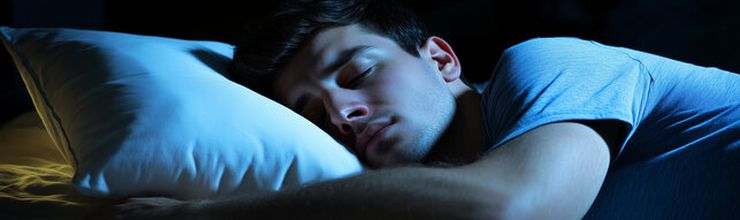
It is 2:47 in the morning, and you are not sleeping. Your big toe has turned into a throbbing little drum, and the sheet resting on it feels like a concrete block. If this is your night, take one slow breath and keep reading. You can do several things in the next twenty minutes that genuinely help, starting with the step most people botch.
This is a step-by-step plan for getting through tonight, based on what the research actually says, plus the move that keeps these 3 a.m. fire drills from becoming a monthly event.
Why the flare picked tonight
You may already know gout flares love the small hours, but the numbers behind it are striking. A Boston University team followed 724 people with gout online for a year and recorded 1,433 attacks. Flares that started between midnight and 7:59 a.m. happened 2.36 times as often as daytime flares (95% confidence interval 2.05 to 2.73). Flares in the evening block ran about 1.26 times the daytime rate (Choi 2015).
The pattern held even among people who drank no alcohol and ate the least purine, so you did not necessarily do anything wrong. Overnight, your joints run a little cooler, you go seven or eight hours without water, and cortisol, your body’s built-in anti-inflammatory hormone, dips to its low for the day. Crystals form more easily, and the inflammation they spark has less holding it back. I broke down the full mechanism in this piece on why gout flares happen at night if you want the details.
The cost is real sleep. In an internet survey of 320 people with doctor-diagnosed gout, respondents averaged 6.7 hours a night and rated their sleep quality at 5.5 on a 0 to 10 scale where higher means worse. About 23% had a diagnosed sleep disorder, 17% sleep apnea (Singh 2019). In other words, lying awake with gout is normal, and it is still worth fixing tonight.
1. Take the medicine now, not at sunrise
This is the step people botch. They lie in the dark trying to tough it out, and by 5 a.m. the flare is fully established. Every guideline says the same thing: treat early.
If you have colchicine, the modern regimen that the evidence supports is 1.2 mg to start, then one more 0.6 mg pill an hour later, and that is it for the hour. That dose comes from the AGREE trial, which randomized 184 people with early flares. About 37.8% of people on the low-dose regimen got at least half their pain back under control by 24 hours, compared with 15.5% on placebo (Terkeltaub 2010). The old habit of swallowing a pill every hour until you cannot stand up is not worth it: in that same study, 76.9% of people on the high-dose schedule developed diarrhea.
No colchicine in the house? A nonsteroidal anti-inflammatory drug (NSAID) such as naproxen or ibuprofen at the dose on the label is a standard first-line choice if your kidneys and stomach are healthy and your doctor has not told you to avoid them. A short course of oral steroids is the third first-line option, usually when the other two do not suit you (FitzGerald 2020). Pick one. Do not stack all three. Two caveats worth knowing: some antibiotics, notably clarithromycin, make colchicine dangerous even at normal doses, which I covered here, and a steroid course can end with a rebound flare, explained here.
2. Get the joint above your heart
Once the medicine is in, set up gravity in your favor. When a foot or ankle sits level with the mattress, fluid keeps pooling in the joint and the throbbing keeps its rhythm all night.
Lie on your back and stack two firm pillows so the sore foot rests above the level of your heart. Firm matters more than soft: a pillow that collapses lets the foot sink and you lose the benefit by midnight. If your knee is the problem, roll a blanket and tuck it under your calf so the knee stays slightly bent and supported. Side sleeping presses one foot against the other, and stomach sleeping twists the foot down, so both are worth avoiding tonight.
3. Get the bedding off the joint
During a gout flare, a cotton sheet can feel like a cinder block. That is not drama; the inflamed joint is genuinely that sensitive.
A bed cradle, the little frame hospitals use to hold covers up, solves it cleanly. No cradle? Prop the covers with a cardboard box or a stack of books on either side of your foot to make a tent, so nothing touches the toe. Wear one loose sock for warmth if the room is cool, and skip tight braces or compression sleeves tonight. If an NSAID is not touching your pain, you may want this piece on why, and what actually works.
4. Ice it, then ice again
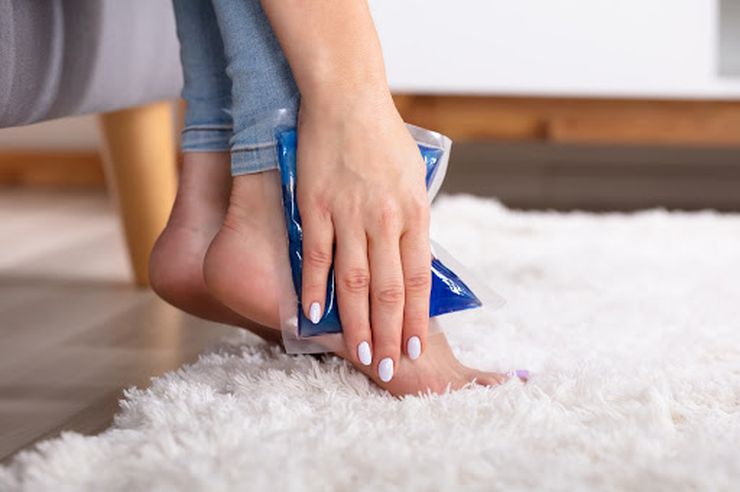
Before you lie back, spend twenty minutes with ice on the joint. Put a thin towel between the gel pack and your skin, and do not fall asleep on it. Twenty minutes on, then a break.
The numbers behind this come from a small randomized study of 19 people with acute gout, ten treated with ice and nine without. After a week, the ice group’s pain had fallen an average of 7.75 cm on a 10 cm scale, against 4.42 cm in the control group, a real difference statistically (p = 0.021) (Schlesinger 2002). Small study, so treat it as a useful add-on rather than a magic fix, but an add-on with no cost and a real signal is a good deal at 3 a.m. Heat is the wrong move for an active flare; if you are tempted by a hot soak, read this first.
5. Fix the room, not just the toe
While you are up, set the bedroom up for sleep instead of for suffering. Keep the room cool and dark, and put a full water bottle within arm’s reach so you can sip during the night without a trip to the kitchen. Skip the nightcap: alcohol blocks uric acid excretion for hours, which is the last thing you want while crystals are already active.
One thing you should not do is stop your regular uric acid medicine in a panic. If you take allopurinol or febuxostat, keep taking it on schedule through the flare, and treat the flare separately. That is guideline advice, and the evidence on stopping is laid out in this study-based piece on whether you can stop gout medication.
6. Know what the next few days should look like
A flare treated early usually peaks within a day and eases over the next several days; untreated, it can drag on for weeks. Knowing the day-by-day shape keeps you from either overreacting on day two or underreacting on day ten, so keep the flare timeline handy.
One situation is not a home project. Fever and chills with a genuinely hot joint, redness spreading past the joint, or a wound nearby can mean an infected joint rather than gout, and that needs same-day care. Here is how to tell gout fever from joint infection.
The real fix: fewer midnight flares
Everything above gets you through one night. The bigger move is making these nights rare. Gout affects about 3.9% of American adults, roughly 9.2 million people, and only about one in three of them takes urate-lowering medicine at all (Chen-Xu 2019). That gap is why emergency rooms see the same faces over and over.
Urate-lowering treatment, usually allopurinol started low and raised slowly, aims to hold your uric acid below 6 mg/dL, a level at which existing crystals slowly dissolve and flares thin out and stop. Most people also take a low dose of colchicine for the first three to six months, because starting the medicine can briefly stir up flares before it quiets them (FitzGerald 2020). If you have been struck by two or more flares in a year, that conversation with your doctor is the one that actually changes your nights.
Tonight, though, keep it simple: medicine now, foot up, covers off, ice on, water nearby. Morning comes regardless, and a treated flare is usually a lot smaller by then.
Frequently asked questions
What if I have no gout medicine in the house?
An NSAID such as naproxen at the labeled dose is reasonable if you have no kidney disease, ulcer or bleeding history, heart failure, or blood thinners, and your doctor has not barred it. Add ice, elevation, and the sheet tent above. If you cannot safely take an NSAID, call your clinician or an urgent-care line first thing; steroids and colchicine both require a prescription.
Can I sleep in my gout sock or brace?
A loose sock for warmth is fine. Tight braces, compression sleeves, and night splints usually add pressure on an actively inflamed joint and make the pain worse, so leave them off until the flare settles. Neutral ankle position with the foot supported by pillows works better than a rigid device tonight.
Should I take extra colchicine if I still hurt?
No. Stick to 1.2 mg followed by 0.6 mg an hour later, then follow your prescription. Extra doses mostly buy you stomach cramps and diarrhea, not faster relief, and if you are on interacting medicines such as clarithromycin, even ordinary doses can be dangerous. Keep treating pain with ice and an NSAID if your clinician says that combination is safe for you.
Is it normal to be woken up several nights running?
A single flare can throb for several nights before it eases, especially if treatment started late, so yes, that pattern can happen. Pain that keeps worsening past a few days, a flare beyond ten days, or flares coming back within weeks usually means the uric acid is not controlled and long-term treatment needs sorting out rather than another round of grit-and-bear-it.
When does nighttime joint pain need urgent care?
Go to urgent care or an emergency department if the joint pain comes with fever or shaking chills, redness spreading beyond the joint, a nearby cut or wound, or feeling faint or confused. Septic arthritis can look almost identical to gout at the start and worsens by the hour, so it is not something to diagnose yourself at 3 a.m.
References
- Choi HK, Niu J, Neogi T, Chen CA, Chaisson C, Hunter D, Zhang Y. “Nocturnal risk of gout attacks.” Arthritis & Rheumatology. 2015;67(2):555–562. doi:10.1002/art.38917. PMID: 25504842.
- Singh JA. “Self-reported sleep quality and sleep disorders in people with physician-diagnosed gout: an Internet cross-sectional survey.” Arthritis Research & Therapy. 2019;21(1):36. doi:10.1186/s13075-019-1821-2. PMID: 30683158.
- Terkeltaub RA, Furst DE, Bennett K, Kook KA, Crockett RS, Davis MW. “High versus low dosing of oral colchicine for early acute gout flare: twenty-four-hour outcome of the first multicenter, randomized, double-blind, placebo-controlled, parallel-group, dose-comparison colchicine study.” Arthritis & Rheumatism. 2010;62(4):1060–1068. doi:10.1002/art.27327. PMID: 20131255.
- FitzGerald JD, Dalbeth N, Mikuls T, et al. “2020 American College of Rheumatology Guideline for the Management of Gout.” Arthritis Care & Research. 2020;72(6):744–760. doi:10.1002/acr.24180. PMID: 32391934.
- Schlesinger N, Detry MA, Holland BK, et al. “Local ice therapy during bouts of acute gouty arthritis.” The Journal of Rheumatology. 2002;29(2):331–334. PMID: 11838852.
- Chen-Xu M, Yokose C, Rai SK, Pillinger MH, Choi HK. “Contemporary prevalence of gout and hyperuricemia in the United States and decadal trends: the National Health and Nutrition Examination Survey, 2007–2016.” Arthritis & Rheumatology. 2019;71(6):991–999. doi:10.1002/art.40807. PMID: 30618180.
- Khanna PP, Nuki G, Bardin T, et al. “Treatment of acute gout: a systematic review.” Seminars in Arthritis and Rheumatism. 2014;44(1):31–38. doi:10.1016/j.semarthrit.2014.02.003. PMID: 24650777.
Reviewed by the GoutSavvy Editorial Team