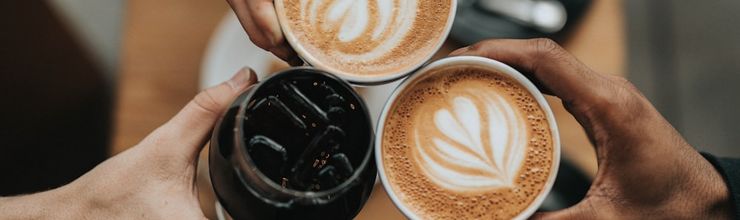
If you have gout and drink coffee, you’ve probably done the search at 2 a.m. during a flare: “Is coffee bad for gout?” The results are a mess. One site says caffeine dehydrates you and triggers attacks. Another says coffee lowers your uric acid. Your coworker swears his gout started the month he switched to cold brew.
So which is it?
The short answer: coffee is one of the few everyday drinks that research consistently links to lower uric acid and fewer gout attacks. The catch is what you put in it. A black coffee and a caramel Frappuccino might as well be two different beverages as far as your joints are concerned.
Let me walk you through what the data actually says, because it’s better news than you probably expect.
The studies behind coffee’s gout reputation
This isn’t one small survey. The coffee and gout connection has been checked in some of the largest long-term health studies ever run.
The biggest piece of evidence comes from the Health Professionals Follow-Up Study, which tracked nearly 46,000 men over 12 years. Men who drank 4 to 5 cups of coffee a day had a 40% lower risk of developing gout than men who drank none. Men drinking 6 or more cups had a 59% lower risk. Even 1 to 3 cups a day was tied to a modest drop in risk (Choi et al., Arthritis & Rheumatism, 2007).
The same pattern showed up in women. The Nurses’ Health Study followed almost 90,000 women for 26 years. Women who drank 4 or more cups a day saw a 57% reduction in gout risk compared with non-drinkers, and even 1 to 3 cups helped (Choi et al., American Journal of Clinical Nutrition, 2010).
The uric acid numbers point the same direction. Using data from the big U.S. NHANES survey, researchers found that people drinking 4 to 5 cups of coffee daily had serum uric acid levels about 0.26 mg/dL lower than non-drinkers. At 6 or more cups, the gap widened to 0.43 mg/dL. That is not a medication-level drop, but it is the kind of steady nudge in the right direction that adds up over years (Choi & Curhan, Arthritis & Rheumatism, 2007).
The newest confirmation comes from a UK Biobank analysis of hundreds of thousands of people, published in Rheumatology in 2023. People drinking more than 6 cups of coffee a day had a 40% lower risk of incident gout, and the benefit leveled off around 3 to 4 cups a day. The analysis also found coffee’s protection looked strongest in people who did not already have high uric acid, which makes sense: a daily habit helps most before crystals ever form.
Why coffee seems to help (and why it’s not the caffeine)
Here is the part that surprises most people. Decaf coffee showed almost the same benefit as regular coffee in both the men’s and women’s studies. Tea, which has plenty of caffeine, showed no consistent link to lower uric acid. Total caffeine intake from all sources combined did not track with gout risk either.
So the magic is not the buzz.
The likely explanation is coffee’s polyphenols, especially a group called chlorogenic acids. These are antioxidant compounds that do a couple of useful things. They appear to mildly inhibit xanthine oxidase, the same enzyme your allopurinol blocks, though coffee’s effect is a tiny fraction of the drug’s. They also seem to support insulin sensitivity, which matters because insulin resistance makes your kidneys hold onto uric acid instead of flushing it out. Coffee may also help the kidneys excrete urate directly, separate from the enzyme pathway.
I want to be honest about the limits here. These are observational studies, not a trial where half the people got assigned coffee. We can say coffee drinkers tend to have lower uric acid and less gout. We cannot say coffee alone prevents attacks. Coffee drinkers also tend to differ in other ways, though the big cohorts adjusted for weight, diet, alcohol, and kidney function and the association held.
How much coffee is the sweet spot?
Across the studies, the benefit mostly plateaus around 3 to 4 cups a day. Drinking 8 cups does not double the benefit of 4, and it does raise the odds of jitters, insomnia, heartburn, and a racing heart in people sensitive to caffeine.
A practical takeaway:
- If you already drink coffee, 2 to 4 cups a day of black or lightly dressed coffee is fine, and the data says it is probably helping your uric acid a bit.
- If you do not drink coffee, do not force yourself to start four cups a day for gout. The benefit is real but modest, and sleep problems or anxiety would be a bad trade.
- Decaf counts. If caffeine bothers you, decaf keeps most of the polyphenol benefit without the stimulation. Light roasts hold onto a bit more chlorogenic acid than dark roasts, though the difference is small enough that taste should win.
The way coffee can backfire: sugar
None of the good news applies to the coffee-shop dessert menu.
A large flavored latte or frozen coffee drink can pack 30 to 60 grams of sugar, and much of that is fructose or high-fructose corn syrup. Fructose is the one sugar that directly drives uric acid production in your liver, spiking serum uric acid within an hour or two of drinking. The sugary-drink data is striking: men drinking 2 or more sugar-sweetened sodas a day had an 85% higher gout risk, and women saw a 139% jump, in the same cohorts that found coffee protective (Choi et al., BMJ, 2008, and JAMA, 2007).
So a mocha loaded with syrup is not “coffee with sugar.” Metabolically, it is closer to soda with a coffee flavoring. You get the fructose hit that raises uric acid and a splash of the polyphenols that lower it. The fructose wins.
What is safe to add? A splash of low-fat or skim milk is actually a decent choice, since low-fat dairy is separately linked to lower uric acid and fewer flares. Black coffee is ideal. A teaspoon or two of sugar in your cup is not the same as a 50-gram coffee milkshake, but keeping it small is the move.
What about diet soda and energy drinks?
Since this comes up every time drinks and gout do: diet soda sweetened with aspartame or sucralose does not trigger the fructose pathway, and the large cohorts found no uric acid rise from artificially sweetened drinks. It is a reasonable swap for regular soda if you need the fizz. It is not a health food, and heavy artificial sweetener use may affect gut bacteria in ways research is still sorting out, but for uric acid specifically it is neutral.
Energy drinks are a different story. Most combine large fructose loads with heavy caffeine, and the dehydration from a high-caffeine, high-sugar can is exactly the state that invites a flare. Skip them.
Who should still be careful with coffee?
Coffee is not free of tradeoffs, and a few groups should think twice before upping their intake:
- Pregnant women should stay under roughly 200 mg of caffeine a day, about one to two standard cups, per obstetric guidance.
- If you have uncontrolled high blood pressure, heart rhythm problems, severe anxiety, or bad reflux, more coffee can make those worse, and those conditions already travel with gout.
- If coffee reliably ruins your sleep, cut back. Poor sleep and nighttime dehydration are their own flare triggers.
And none of this touches your medication. Coffee might nudge your uric acid down by a few tenths of a mg/dL. If you need allopurinol or febuxostat to hit a target under 6 mg/dL, diet and coffee do not replace it. They support it. If you are sorting out why your medication is not getting you to target, start here.
The bottom line for your morning cup
You can stop feeling guilty about coffee. In the best long-term data we have, regular coffee drinkers have lower uric acid and develop gout less often, decaf works nearly as well, and the benefit lands around 3 to 4 cups a day. The drink you actually need to watch is the one wearing a coffee costume: sugary blended drinks deliver fructose loads that swamp any benefit.
Black coffee or coffee with a splash of low-fat milk, a couple cups a day, water on the side so you stay hydrated, and your urate-lowering medication as prescribed. That is a routine the studies are happy with.
Wondering what else is safe to drink? We broke down the right way to drink water during a flare, looked at whether tart cherry juice actually holds up against medication, and separated the home remedies that work from the ones that do not.
Frequently Asked Questions
Does coffee cause gout flares?
There is no good evidence that coffee triggers flares. In the large cohort studies, coffee drinkers developed gout less often, not more. If a specific coffee drink seems to set off your attacks, look first at the sugar, syrup, or alcohol in it, and at whether it replaced your water intake that day.
Is decaf coffee okay for gout?
Yes. Decaf showed nearly the same association with lower uric acid and lower gout risk as regular coffee in both major studies, which is how researchers figured out caffeine is not the active ingredient. If caffeine keeps you up or spikes your anxiety, decaf is a straight swap with no gout penalty.
Can I drink coffee during a gout flare?
Coffee itself is fine during a flare. The priority during an attack is hydration, and coffee counts toward fluids for most people, though heavy caffeine can have a mild diuretic effect. Keep it black or with low-fat milk, skip the sugary versions, and make sure you are also drinking plain water. For handling the flare itself, our first-12-hours action guide walks through what actually helps.
How many cups of coffee a day are safe with gout?
The benefit in the studies mostly levels off around 3 to 4 cups a day, and 2 to 4 cups is a reasonable target for most adults. More than 5 or 6 cups adds little gout benefit and raises the risk of jitters, insomnia, and heartburn in caffeine-sensitive people. A standard cup means about 8 ounces of brewed coffee, not a 20-ounce shop drink.
Will coffee lower my uric acid enough to skip medication?
No. The measured effect is around 0.25 to 0.5 mg/dL lower uric acid at heavy intake. Most people with gout need to get below 6 mg/dL, and diet and lifestyle together typically move uric acid by 1 mg/dL at most. Medication does the heavy lifting. Think of coffee as a small daily bonus on top of treatment, not a substitute.
Are lattes and coffee-shop drinks bad for gout?
Plain lattes with milk are fine. The problem drinks are the sweetened ones: mochas, caramel macchiatos, frozen blended coffees, and anything with flavored syrup, which can carry 30 to 60 grams of fructose-heavy sugar. Fructose directly raises uric acid, so these drinks can cancel out coffee’s benefit and then some. Order espresso drinks unsweetened or with a sugar-free sweetener.
References
- Choi HK, Willett W, Curhan G. “Coffee consumption and risk of incident gout in men: a prospective study.” Arthritis & Rheumatism. 2007;56(6):2049-2055.
- Choi HK, Curhan G. “Coffee, tea, and caffeine consumption and serum uric acid level: the Third National Health and Nutrition Examination Survey.” Arthritis & Rheumatism. 2007;57(5):816-821.
- Choi HK, Willett W, Curhan G. “Coffee consumption and risk of incident gout in women: the Nurses’ Health Study.” American Journal of Clinical Nutrition. 2010;92(4):922-927.
- Li X, et al. “Dose-response relationships of tea and coffee consumption with gout: a prospective cohort study in the UK Biobank.” Rheumatology (Oxford). 2023;62(7):2517-2525.
- Choi HK, Willett W, Curhan G. “Sugar-sweetened soft drinks, diet soft drinks, and serum uric acid level: the Third National Health and Nutrition Examination Survey.” Arthritis & Rheumatism. 2008;59(1):109-116.
- FitzGerald JD, et al. “2020 American College of Rheumatology Guideline for the Management of Gout.” Arthritis & Rheumatology. 2020;72(6):879-895.
- Zhang Y, et al. “Gout and Diet: A Comprehensive Review of Mechanisms and Management.” Nutrients. 2022;14(17):3525.
Reviewed by the GoutSavvy Editorial Team