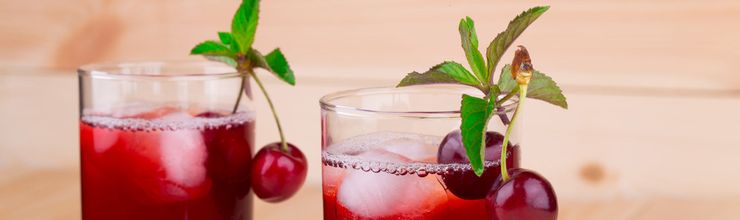
The Cherry Juice Post That Went Viral (And Why It’s Dangerous)
You’ve probably seen it on Reddit or Facebook. Someone posts that they quit their allopurinol, started drinking tart cherry juice every morning, and haven’t had a gout flare in months. The comments fill up with people asking what brand to buy. A few say they’re going to try the same thing.
It sounds convincing. Who wouldn’t rather drink juice than take a pill every day for the rest of their life?
But here’s what those posts rarely mention: the person who quit their medication and feels fine right now is almost certainly still building up urate crystals in their joints. They just can’t feel it yet. And when the next flare hits, and it will, it may be worse than anything they experienced before.
Cherry juice is not useless. Research does suggest it can reduce flare frequency. But reducing flares and treating the underlying disease are two completely different things, and confusing them is where people get hurt.
What Tart Cherry Actually Does (And What It Doesn’t)
The evidence behind tart cherry for gout comes mainly from one well-known study. In 2012, researchers at Boston University tracked 633 people with gout over a year and found that those who ate cherries or took cherry extract had about 35% fewer recurrent gout attacks compared to those who didn’t. That’s a real number. Not huge, but real.
What the study did not show is that cherries lower uric acid. And this is the critical distinction. Cherry juice appears to work by reducing inflammation, your body’s response to the crystals already in your joints. It does not stop those crystals from forming in the first place.
Think of it this way. If your joint is a fireplace, urate crystals are the logs. Allopurinol removes the logs. Cherry juice throws a cup of water on the flames. Both can help, but only one actually clears the fuel that keeps the fire coming back.
A 2024 evidence review by Examine.com gave tart cherry a grade of D for both gout symptoms and uric acid reduction, meaning the evidence is weak and inconsistent. The 2012 study was observational, not a randomized trial, and it showed a modest reduction in flare frequency, not a lowering of serum urate to the target level most doctors consider necessary for long-term control.
What Allopurinol Actually Does
Allopurinol works by blocking an enzyme called xanthine oxidase. That enzyme is what converts purines into uric acid. Block it, and your body produces less uric acid. Over time, as your blood urate drops below 6 mg/dL, the crystals that have already formed in your joints start to dissolve. That’s the goal. Not just fewer flares, but actually clearing the crystal deposits that cause them.
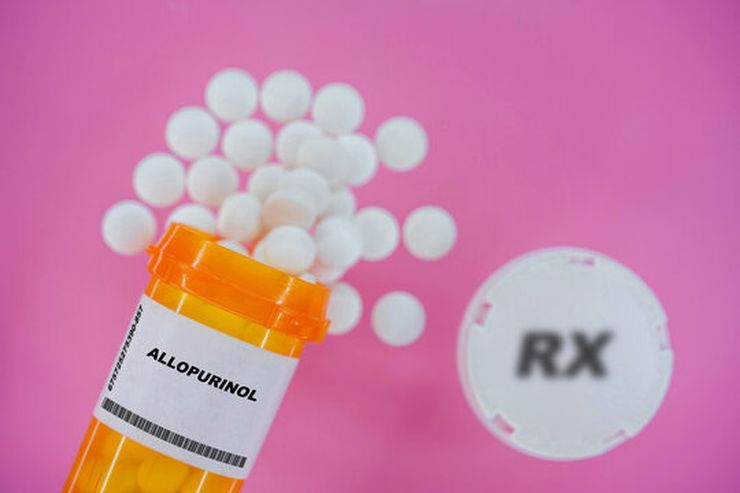
The American College of Rheumatology recommends allopurinol as the first-choice urate-lowering medication for most people with gout. Doctors typically start at a low dose (100 mg daily) and increase gradually until your blood urate hits the target. For most people, that target is below 6 mg/dL. For people with tophi, it’s below 5 mg/dL.
Here’s the thing about allopurinol that makes people want to quit: it takes time. Months, sometimes. And during the first few months, you may actually experience more flares as the crystals start dissolving and shedding. Your doctor will usually prescribe colchicine or a nonsteroidal anti-inflammatory drug (NSAID) during this period to prevent those flares.
This is the point where a lot of people give up. They’re taking a pill that seems to be making things worse, their friend swears by cherry juice, and the idea of “going natural” starts to sound pretty good.
What Happens When You Stop
When you stop taking allopurinol, your uric acid doesn’t stay where it was. It goes back up. Sometimes within days. The crystals that were starting to dissolve stop dissolving and begin accumulating again. New crystals form. The progress you made over months of treatment reverses.
A large study published in 2020 looked at what happens when people discontinue urate-lowering therapy. The findings were clear: stopping medication was associated with a significant increase in gout flares, and the flares tended to come back within weeks to months of stopping.
You can read more about what happens when people stop gout medication in our deep dive on the largest study on stopping gout medication.
The damage isn’t just about flares, either. Between attacks, when you feel completely fine, urate crystals continue to deposit silently in your joints and soft tissues. Over time, this can cause bone erosion, joint deformity, and tophi, those hard lumps under the skin that can become disfiguring. It can also contribute to kidney damage and increase cardiovascular risk.
None of that is something cherry juice can prevent. Cherry juice doesn’t lower uric acid. It doesn’t dissolve crystals. It doesn’t stop the silent progression that happens when your urate is above 6 mg/dL. We explain this in more detail in our article on gout damage between flares.
The “Natural Means Safe” Trap
There’s a powerful appeal to the word “natural.” If something comes from a plant, it feels safer than something that comes from a pharmacy. But the safety comparison isn’t that simple.
Allopurinol has been used since the 1960s. Millions of people have taken it. We know its side effects, its interactions, and its long-term safety profile. When doctors prescribe it, they monitor your blood work and adjust the dose to keep you in a safe range.
Cherry juice, by contrast, can raise blood sugar, which is a real concern for people with diabetes or insulin resistance, conditions that overlap heavily with gout. Commercial cherry juice concentrates are often loaded with added sugar. And because supplements aren’t regulated the same way as medications, the anthocyanin content in tart cherry products varies wildly from brand to brand.
Then there’s the opportunity cost. Every month you spend treating your gout with cherry juice alone is a month your uric acid stays elevated, your crystals keep growing, and your joints keep taking damage. That’s not a theoretical risk. It’s the default outcome of untreated hyperuricemia.
This isn’t just about cherries. The same pattern plays out with celery seed extract, apple cider vinegar, baking soda, turmeric, and a long list of other natural remedies that people try to use as medication replacements. Some have modest anti-inflammatory evidence. None have been shown to reliably lower uric acid to therapeutic levels on their own. We’ve covered this pattern in our guide to natural gout remedies and our review of celery seed extract.
How to Actually Use Cherry Juice
None of this means cherry juice is worthless. It means it’s a supplement, not a treatment. There’s a difference.
If you want to try tart cherry juice alongside your medication, the evidence suggests it may help reduce flare frequency. The 2012 study used about three servings of cherries (or the equivalent in extract) over a two-day period. Some people drink a glass of tart cherry juice daily; others take capsules.
The key word is “alongside.” Not instead of. Not as a bridge while you taper off your medication. Not as a replacement that your doctor doesn’t know about.
A few practical considerations:
- Choose unsweetened tart cherry juice or extract. Many commercial brands add significant amounts of sugar, which can raise uric acid through fructose metabolism.
- If you have diabetes or prediabetes, talk to your doctor first. Tart cherry juice can affect blood glucose.
- Tell your doctor about all the supplements you’re taking. Some natural products can interact with medications in ways you wouldn’t expect.
- If you’re experiencing flares after starting allopurinol, that’s expected. Don’t quit. Talk to your doctor about flare prophylaxis with colchicine or NSAIDs during the first 3 to 6 months.
The Bigger Question: Why Do People Want to Quit?
Most people who try to replace their gout medication with cherry juice aren’t doing it because they love cherries. They’re doing it because they’re frustrated. Allopurinol made them flare up. They don’t like taking a daily pill. They’re worried about long-term side effects. They feel fine and wonder if they still need it.
All of those concerns are valid. But the answer isn’t to stop treatment and hope juice will carry the load. The answer is to talk to your doctor about adjusting your treatment. If allopurinol is causing problems, there are alternatives like febuxostat or uricosuric medications. If you’re flaring during initiation, you need prophylaxis, not abandonment. If you feel fine and wonder if you can stop, the answer is almost certainly not, but your doctor can check your uric acid level and help you understand where you stand.
For a comparison of medication options, see our guide on febuxostat vs dotinurad to understand how different urate-lowering drugs work.
FAQ
Can I drink tart cherry juice while taking allopurinol?
Yes. There is no known dangerous interaction between tart cherry juice and allopurinol. The concern is not mixing them. The concern is replacing one with the other. Cherry juice may reduce flare frequency, but it does not lower uric acid. Allopurinol does. Stopping allopurinol for cherry juice lets your uric acid climb back up, and the gout returns.
How much tart cherry juice should I drink for gout?
The 2012 Boston University study used roughly three servings of cherries (or equivalent extract) over two days. There is no standardized dose. If you try it, choose unsweetened tart cherry juice or extract capsules, and avoid brands with added sugar. Sugar-sweetened juice can raise uric acid through fructose, working against the very thing you’re trying to manage.
Does cherry juice lower uric acid?
Not to a degree that matters for gout treatment. One small 2003 study in healthy women found a minor, temporary drop in urate after cherry consumption, but the effect was too small to reach therapeutic targets. For people with gout, the goal is to get uric acid below 6 mg/dL and keep it there. Cherry juice has not been shown to achieve or maintain that target.
What natural remedies actually work for gout?
Weight loss, hydration, and avoiding high-fructose beverages and alcohol have the strongest evidence among lifestyle measures. Coffee and low-fat dairy are linked to lower uric acid in large observational studies. Cherries have moderate evidence for reducing flare frequency. But none of these are substitutes for urate-lowering medication if your doctor has determined you need it. Natural remedies are add-ons, not standalones.
Why does allopurinol make gout worse at first?
When you start allopurinol, your uric acid drops. That drop can cause existing urate crystals in your joints to destabilize and shed, triggering flares. This is a sign the medication is working, not failing. Doctors typically prescribe low-dose colchicine or NSAIDs for the first 3 to 6 months to prevent these flares. If you’re flaring after starting allopurinol, don’t stop. Call your doctor.
Is it ever safe to stop gout medication?
Rarely, and only under medical supervision with ongoing uric acid monitoring. Most people need urate-lowering therapy long-term. Stopping usually leads to a return of high uric acid and recurrent flares within weeks to months. If you feel fine on medication, that means it’s working, not that you no longer need it.
References
- Zhang Y, Neogi T, Chen C, et al. “Cherry consumption and decreased risk of recurrent gout attacks.” Arthritis & Rheumatism. 2012;64(12):4004-4011.
- FitzGerald JD, Dalbeth N, Mikuls T, et al. “2020 American College of Rheumatology Guideline for the Management of Gout.” Arthritis & Rheumatology. 2020;72(6):879-895.
- Jacob RA, Spinozzi GM, Simon VA, et al. “Consumption of cherries lowers plasma urate in healthy women.” Journal of Nutrition. 2003;133(6):1826-1829.
- National Kidney Foundation. “6 Gout Myths and Misconceptions, Debunked.” May 2026. Accessed August 2026.
- Examine.com. “Tart Cherry Juice: Evidence-Based Analysis.” Updated June 2026. Accessed August 2026.
- Becker MA, Schumacher HR, Wortmann RL, et al. “Febuxostat compared with allopurinol in patients with hyperuricemia and gout.” New England Journal of Medicine. 2005;353(23):2450-2461.
- Dalbeth N, Jones G, Terkeltaub R, et al. “Urate-lowering therapy for treatment of gout: recommendation of an international task force.” Annals of the Rheumatic Diseases. 2014;73(5):860-869.
Reviewed by the GoutSavvy Editorial Team