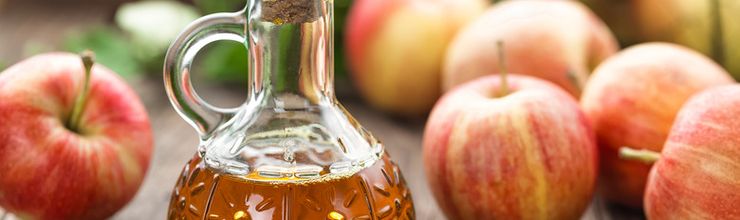
A spoonful of vinegar, 50 million views, and no actual proof
If you have ever typed “how to get rid of gout fast” into your phone at 2 a.m., you have seen the recipe. One or two tablespoons of apple cider vinegar, a glass of water, sometimes a spoonful of honey or a dash of baking soda. Drink it twice a day. Some posts tell you to soak the swollen foot in it instead. The comments are full of people saying it fixed their gout in 48 hours.
I get why people try it. A flare is one of the worst pains a joint can produce, prescription drugs come with side effect lists of their own, and a bottle of vinegar costs three dollars. The problem is simple. No clinical trial has ever shown that apple cider vinegar lowers uric acid, dissolves urate crystals, or stops a gout flare. Not one. On top of that, straight vinegar can damage your teeth and has put people in the hospital.
Let me walk you through where this idea came from, what the research actually says, and what you should do for that foot instead.
Where did the apple cider vinegar story start?
Vinegar is one of the oldest folk medicines around. Roman soldiers drank it. Your grandmother probably gargled it. Apple cider vinegar, the cloudy kind with the stringy “mother” at the bottom, got a second life online as a catch-all tonic for weight loss, blood sugar, and eventually gout.
The gout pitch comes in two flavors. One is alchemy: vinegar is acid, the story goes, so it supposedly alkalizes your body, and an alkaline body cannot grow crystals. The other is a guess about uric acid itself, the idea that acetic acid somehow helps your kidneys flush more of it out. People wave at vinegar studies on blood sugar and weight as if those results automatically applied to your swollen big toe.
None of it holds up, and the chemistry is the first thing that falls apart.
The alkaline theory is bad chemistry
Your blood does not let you vote on its pH. Your lungs and kidneys hold it between 7.35 and 7.45, minute by minute, every day of your life. If your blood pH actually moved enough to matter, you would be in an emergency room, not sipping a home remedy. A tablespoon of vinegar in a glass of water changes that number about as much as a pebble changes the depth of a lake.
Vinegar can slightly change the pH of your urine, sure. But gout crystals sit in your joints, not in your urine. And the relationship between urine pH and uric acid excretion is far more tangled than the videos claim. The 2020 gout guideline from the American College of Rheumatology does not even recommend routine urine alkalinization for most people, because the benefit is not established (PMID: 32391934). The core promise of the vinegar recipe, that drinking acid balances your body chemistry so crystals dissolve, is a story told backward.
What the research actually says
Here is what we have. A 2025 systematic review in the Mediterranean Journal of Rheumatology combed through 27 randomized controlled trials of diet and supplements for gout. Vinegar was not in a single one of them (PMID: 41647273). No PubMed-indexed human trial has tested apple cider vinegar on serum uric acid. No trial tested it on flares. The main guideline doctors follow does not mention it.
The vinegar studies that do exist are about other things. One found vinegar blunted the blood sugar spike after a high-carb meal in people with insulin resistance (PMID: 14694010). A small Japanese study found obese adults who drank a vinegar drink daily lost about two to four pounds more than a control group over 12 weeks, with lower triglycerides (PMID: 19661687). The metabolic effects are real and interesting. But neither study measured uric acid, neither one looked at gout, and a blood sugar study is not evidence that vinegar will touch the crystals in your toe. If any effect exists for gout, it is a slow, indirect trickle through weight and insulin at best.
Compare that with the kitchen items that actually have some data. Cherries were linked to roughly a third fewer recurrent flares in one case-crossover study, though the evidence is observational and a later randomized trial of cherry concentrate came up empty (PMID: 23023818). Vitamin C can lower serum uric acid by about 0.35 mg/dL in pooled trials, which is real but far too small to replace medication (PMID: 21671418). We have covered both before, and neither one is magic. Vinegar does not even reach that bar. For the pantry staples with actual numbers behind them, see our pieces on Dairy Products and Gout: Why Milk May Be Your Secret Weapon and Vitamin C and Gout: What Science Says About Supplements.
So where does all this leave the bottle in your pantry? Keep reading before you take that shot.
Why people swear it works anyway
Because gout does something inconvenient for science. Untreated, most flares peak in about a day and then die down on their own over a week or two as your immune system wins. If you start drinking vinegar on day two, the pain eases on day four, and your brain wires the two events together. It was not the vinegar. It was the calendar.
Confirmation bias does the rest. The recipe also nudges people into doing the things that genuinely help. Mixing vinegar in a big glass of water means you drink more water, and hydration really does help your kidneys clear uric acid. Plenty of people cut beer and pizza the same week they start the tonic. The vinegar gets the credit, and the water and the lifestyle changes do the work. If your vinegar routine is mostly a reason to drink more water, our guide How to Drink Water for Gout: The Right Way gets you the benefit without the acid.
The part nobody posts about: vinegar can hurt you
“Natural” and “harmless” are not synonyms. Vinegar is acid, roughly 5 to 6 percent acetic acid, and people now drink it straight in “shot” form. The costs are real.
Your teeth. A 2021 study in the Journal of Medicinal Food found that adults who drank vinegar daily showed more erosive tooth wear, and vinegar consistently ranks among the drinks that dissolve enamel (PMID: 33297831). Once enamel is gone, it does not grow back.
Your throat. A report in the Journal of the American Dietetic Association documented esophageal injury linked to apple cider vinegar tablets, and case reports have flagged burned throats from undiluted liquid shots (PMID: 15983536). A vinegar pill stuck in the throat made it into the medical literature for a reason.
Your stomach and your meds. Straight vinegar irritates the gut, especially for anyone on acid reflux medicine or living with ulcers. The popular vinegar-plus-baking-soda combo brings its own problem: baking soda in the wrong hands can spike blood pressure and strain weak kidneys, which we covered in The Kitchen Shelf “Cures”: Baking Soda Can Put You in the ER. And if soaking a hot, swollen, skin-stretched toe in acid sounds like a bad idea, that is because it is. Vinegar on inflamed skin adds chemical irritation on top of an injury that already feels burned.
What actually works for a flare
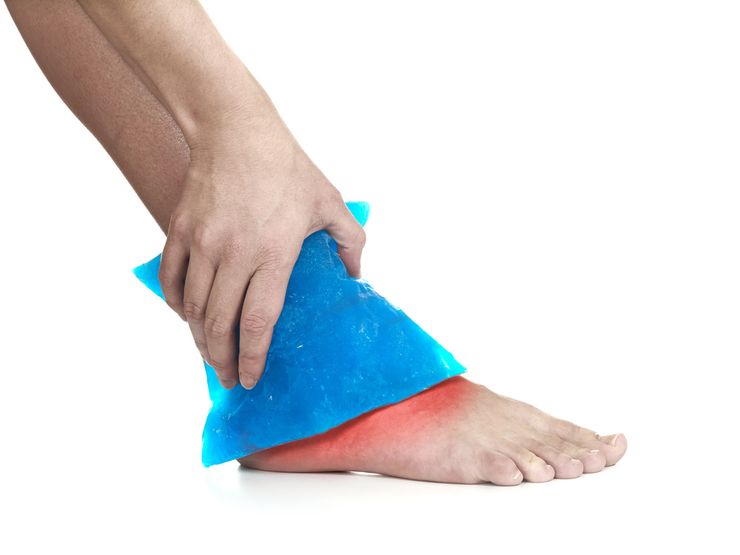
If your toe is throbbing right now, the first 12 hours matter most, and the steps are boring in the best way. Our walkthrough, Your Gout Flare Started 2 Hours Ago: What to Do in the First 12 Hours, covers the timing, but here is the short version. Start an anti-inflammatory early if your doctor has cleared one for you, because waiting costs you the one thing that matters most: hours. Rest the joint, ice it with a thin cloth between the ice and your skin, drink water, and skip the beer and the shellfish until this passes.
The deeper fix is long term. Flares are not caused by what you ate on one bad night. They are caused by years of uric acid crystallizing in the joint, and the reliable answer is getting serum uric acid under 6 mg/dL, under 5 for severe disease, with medication when diet alone does not get you there. Allopurinol has been a first-line choice for decades, titrated slowly with monitoring. It works. Only about 1 in 3 people with gout actually stay on urate-lowering medication, and that gap is why a bottle of vinegar can outperform real medicine on social media. More on that in Only 1 in 3 People With Gout Take Their Medication. Here’s Why That’s a Crisis. If cherry juice is the thing you keep eyeing, read Can Tart Cherry Juice Replace Your Gout Medication? Why Swapping Pills for Juice Backfires before you cancel any prescriptions.
Now, if you genuinely like apple cider vinegar on a salad? Keep it there. One tablespoon, diluted in a full glass of water, through a straw, on a full stomach, probably will not cause trouble for most people. Use it as a condiment and a reason to hydrate. Just do not mistake it for treatment, do not pour it straight, do not soak your foot in it, and skip the tablets. Vinegar belongs on your fries. It does not belong in your medical plan.
Frequently asked questions
Does apple cider vinegar lower uric acid?
No human clinical trial has shown that. No randomized trial tested apple cider vinegar on serum uric acid, no gout guideline recommends it, and a 2025 systematic review of 27 gout diet and supplement trials found no vinegar study at all. Any benefit would be a tiny, indirect effect from weight loss or better insulin response, and vinegar is an inefficient way to get there.
Can vinegar dissolve gout crystals?
There is no evidence for that, and the proposed mechanism does not work. Vinegar cannot change your blood pH, which your lungs and kidneys hold tight around 7.4. Urate crystals dissolve when serum uric acid stays low long term, which is what urate-lowering medication does. Nothing you drink alkalizes crystals out of a joint.
Is it dangerous to drink apple cider vinegar every day?
It can be, if you do it the way the videos suggest. Undiluted daily shots erode tooth enamel and have been linked to throat and esophageal injury, including a documented case tied to vinegar tablets. Straight vinegar also irritates the stomach, especially for people with reflux or ulcers. If you drink it, dilute one tablespoon in a full glass of water, use a straw, and keep it off an empty stomach.
What should I do during a flare instead?
Act early. Start an anti-inflammatory your doctor has approved as soon as the pain begins, rest and ice the joint, and drink plenty of water. Hold off on alcohol, especially beer, and high-purine meals until the flare settles. Then talk to your doctor about a long-term plan to get serum uric acid below 6 mg/dL. Recurrent flares mean crystals are still piling up.
The vinegar seemed to work for me. Why?
Most untreated flares run their course in about a week, so anything you start on day two gets the credit by day five. You also likely drank more water and may have changed your diet or alcohol intake that same week. The vinegar may be a useful ritual for you. The ritual is not the medicine.
References
- FitzGerald JD, Dalbeth N, Mikuls T, et al. “2020 American College of Rheumatology Guideline for the Management of Gout.” Arthritis Care & Research. 2020;72(6):744-760. PMID: 32391934.
- Pardali EC, Gkouvi A, et al. “Effect of Diet and Dietary Supplements on Gout-Related Outcomes: A Systematic Review of Randomised Controlled Trials.” Mediterranean Journal of Rheumatology. 2025. PMID: 41647273.
- Johnston CS, Kim CM, Buller AJ. “Vinegar improves insulin sensitivity to a high-carbohydrate meal in subjects with insulin resistance or type 2 diabetes.” Diabetes Care. 2004;27(1):281-282. PMID: 14694010.
- Kondo T, Kishi M, Fushimi T, et al. “Vinegar intake reduces body weight, body fat mass, and serum triglyceride levels in obese Japanese subjects.” Bioscience, Biotechnology, and Biochemistry. 2009;73(8):1837-1843. PMID: 19661687.
- Anderson S, Gonzalez LA, et al. “Evidence That Daily Vinegar Ingestion May Contribute to Erosive Tooth Wear in Adults.” Journal of Medicinal Food. 2021;24(8):879-884. PMID: 33297831.
- Hill LL, Woodruff LH, Foote JC, Barreto-Alcoba M. “Esophageal injury by apple cider vinegar tablets and subsequent evaluation of products.” Journal of the American Dietetic Association. 2005;105(7):1141-1144. PMID: 15983536.
- Zhang Y, Neogi T, Chen C, et al. “Cherry consumption and decreased risk of recurrent gout attacks.” Arthritis & Rheumatism. 2012;64(12):4004-4011. PMID: 23023818.
- Juraschek SP, Miller ER 3rd, Gelber AC. “Effect of oral vitamin C supplementation on serum uric acid: a meta-analysis of randomized controlled trials.” Arthritis Care & Research. 2011;63(9):1295-1306. PMID: 21671418.
Reviewed by the GoutSavvy Editorial Team