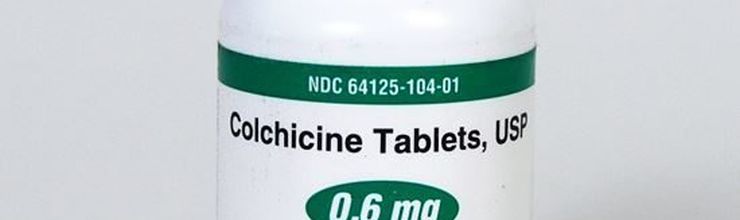
Your doctor hands you a prescription for allopurinol. Then comes a second prescription: colchicine, 0.6 mg every day, for the next six months. The idea is to prevent the gout attacks that often hit when you first start lowering your uric acid.
But what if you skipped the daily pill and just kept a treatment dose on hand, taking it only if you felt a flare coming? Would that work?
That question is causing genuine disagreement among rheumatologists right now. At the British Society for Rheumatology (BSR) 2026 meeting in Birmingham, clinicians debated whether the old rule of automatic six-month prophylaxis still makes sense in an era of low-and-slow allopurinol dosing. Some argued for a “pill in the pocket” approach where people with gout self-treat at the first tingle instead of taking a preventive pill every single day.
Others pushed back hard. Let me walk you through what the evidence actually says, because this is one of those questions where the answer depends heavily on your situation.
Why Starting Allopurinol Can Trigger a Flare in the First Place
When you start taking a urate-lowering drug like allopurinol, your serum uric acid drops. That’s the whole point. But the crystals already sitting in your joints don’t just vanish quietly. As blood urate levels fall, the surface layers of those crystal deposits begin to dissolve. Think of it like chipping ice off a windshield: little fragments break loose, and your immune system notices.
Those exposed crystal fragments get picked up by immune cells called macrophages, which activate something called the NLRP3 inflammasome. That triggers release of interleukin-1 beta (IL-1β), a chemical messenger that recruits neutrophils to the joint. The result: redness, swelling, and the kind of pain that makes a bedsheet feel unbearable.
This is why roughly 40 to 70 percent of people starting allopurinol without any anti-inflammatory cover will have a flare within the first six months, depending on the study you look at. The risk is highest in the first three months and gradually tapers as the crystal burden shrinks.
Here’s the paradox: the drug is working. Your uric acid is coming down. The crystals are dissolving. But you feel worse before you feel better. A lot of people quit allopurinol during this phase, convinced the drug caused their gout. That is the single biggest reason preventive prophylaxis exists: keep people on the medication long enough for it to actually help.
What the Guidelines Say
Major guidelines have historically recommended routine anti-inflammatory prophylaxis when starting urate-lowering therapy (ULT). The 2020 American College of Rheumatology (ACR) guideline strongly recommends co-prescribing colchicine, a nonsteroidal anti-inflammatory drug (NSAID), or prednisone for at least three to six months. The 2016 European Alliance of Associations for Rheumatology (EULAR) recommendations say prophylaxis should be “fully explained and discussed” but recommended for the first six months.
But notice the shift in language over time. The first BSR guideline in 2007 said prophylaxis should be co-prescribed. The 2017 update softened that to “can be considered.” The 2022 UK National Institute for Health and Care Excellence (NICE) guideline went further, advising clinicians to discuss the benefits and risks of prophylaxis rather than automatically prescribing it.
That drift toward shared decision-making is not random. It reflects new evidence from the “start-low, go-slow” dosing era.
The New Zealand Trial That Changed the Conversation
In 2023, a team led by Professor Lisa Stamp at the University of Otago published a randomized, double-blind, placebo-controlled trial in the Annals of the Rheumatic Diseases. They enrolled 200 people with gout who were starting allopurinol using the modern low-and-slow approach: 50 to 100 mg daily, then increasing monthly until uric acid dropped below 6 mg/dL. Half got colchicine 0.5 mg daily for six months. Half got placebo.
The results were nuanced. During the first six months, the colchicine group had significantly fewer flares: an average of 0.35 flares per month versus 0.61 in the placebo group. Placebo did not meet the pre-specified threshold for non-inferiority. In plain terms: daily colchicine did reduce flares, even with gentle dose escalation.
But here is where it gets interesting. After six months, both groups stopped their pills (colchicine or placebo). In months seven through nine, the colchicine group actually had more flares than the placebo group. The researchers called this a rebound effect. By the end of the full 12-month study, there was no overall difference in the total number of flares between the two groups.
“People who take colchicine for six months while on allopurinol have fewer flares than those receiving placebo,” Stamp told Rheumatology Republic. “Therefore, prescribing colchicine in this setting can be beneficial.” But she acknowledged the rebound was unexpected and that the results should inform discussions between doctors and patients about risks and benefits, rather than dictate a one-size-fits-all approach.
A 2025 cost-effectiveness analysis from the same research group went further. It found that six months of colchicine prophylaxis with start-low allopurinol was unlikely to be cost-effective over 12 months, given the higher drug costs and negligible quality-of-life difference. The probability of colchicine being cost-effective was only 1.5 percent at one year.
So Does “Pill in the Pocket” Actually Work?
The “pill in the pocket” concept is simple: instead of taking a low-dose anti-inflammatory every day, you keep a full flare-treatment dose at home and take it at the very first sign of an attack. For colchicine, that means 1.2 mg at symptom onset, then 0.6 mg one hour later (1.8 mg total). The 2016 EULAR guideline specifically endorsed this approach for treating flares early, and the FDA label for colchicine describes it as a valid strategy.
But here is the critical distinction: pill in the pocket is well-established for treating an acute flare fast. What is less clear is whether it can replace daily prophylaxis during ULT initiation.
The evidence gap is real. No large randomized trial has directly compared daily prophylaxis against an on-demand, treat-at-first-symptom strategy in people starting allopurinol. The Stamp trial compared daily colchicine to placebo, not to pill in the pocket. Everyone in both groups was allowed to treat flares as they occurred.
What we do know is this:
If you use the old approach of starting allopurinol at 300 mg right out of the gate, prophylaxis is clearly important. A 2004 study by Borstad and colleagues found that 77 percent of people on placebo had a flare within six months, compared to 33 percent on colchicine. That is a massive difference. But that study used higher starting doses than most doctors use today.
With modern start-low dosing, the gap narrows but does not disappear. In the Stamp trial, 30.8 percent of the placebo group had at least one flare in month six, compared to 22.8 percent in the colchicine group. By month 12, those numbers converged to 15.7 percent and 17.6 percent respectively.
The FORTUNE-1 trial from Japan, published in 2018, tested a stepwise febuxostat dose increase (starting at 10 mg) against a fixed 40 mg dose with colchicine prophylaxis. The stepwise approach without colchicine produced flare rates comparable to fixed-dose febuxostat with colchicine, suggesting that very gentle dose escalation may reduce the need for prophylaxis. But that was febuxostat, not allopurinol, and the study was only 12 weeks long.
Who Should Take Daily Prophylaxis and Who Might Skip It?
Based on the available evidence, daily prophylaxis makes the most sense for people at higher risk of flares during ULT initiation:
You probably should take daily prophylaxis if:
- You have had frequent flares before starting treatment (three or more in the past year).
- You have visible tophi or evidence of joint damage from chronic gout.
- You are starting at a higher allopurinol dose or titrating up quickly.
- You have had a bad experience with a ULT-induced flare before and are worried about sticking with the medication.
- You have difficulty recognizing early flare symptoms and would not reliably self-treat within the critical first 12 hours.
You might discuss a pill-in-the-pocket approach if:
- You are starting at a low dose (50 to 100 mg daily) with slow monthly titration.
- You have infrequent flares and no tophi.
- You are reliable about recognizing early symptoms and keeping medication accessible.
- You have had side effects from daily colchicine, such as persistent diarrhea or abdominal cramping.
- You are motivated to avoid taking an extra daily medication and understand the trade-off.
One thing needs to be crystal clear: if you choose the on-demand route, you must treat within 12 hours of symptom onset. Colchicine works dramatically better when taken early. Wait 36 hours, and the effectiveness drops substantially. NSAIDs like naproxen or indomethacin are also options for the pill-in-pocket approach, provided you do not have kidney disease, heart failure, or a history of gastrointestinal bleeding. A UK head-to-head trial found naproxen and colchicine equally effective for acute flares, with naproxen causing less diarrhea but carrying its own cardiovascular and renal risks.
What About Kidney Disease and Other Complications?
Choosing a prophylaxis strategy gets more complicated when you have other health problems. This is where the blanket guideline recommendation actually matters most, because self-treatment options narrow considerably.
If you have chronic kidney disease (CKD) stage 3 or worse, NSAIDs are generally off the table because they can worsen kidney function. Colchicine requires dose reduction: the FDA label recommends 0.3 mg once daily for prophylaxis in severe renal impairment, and 0.3 mg twice weekly for people on dialysis. A 2026 post-hoc analysis of canakinumab (an IL-1β inhibitor given as a subcutaneous injection) showed promising results for acute flares in people with CKD stage 3 or higher, but it is expensive and typically reserved for refractory cases.
If you take a statin, clarithromycin, cyclosporine, or certain antifungals, colchicine can interact dangerously. Strong CYP3A4 or P-glycoprotein inhibitors combined with colchicine can cause fatal toxicity, especially in people with kidney or liver problems. Your doctor needs to know every medication and supplement you take.
For people who cannot tolerate colchicine or NSAIDs, low-dose prednisone (under 10 mg daily) is a third option, though it carries its own metabolic risks, particularly for people with diabetes or osteoporosis. The BSR has noted there is limited research supporting corticosteroids specifically for flare prophylaxis.
The Honest Answer
Here is where I land after reading through the trials, the guidelines, and the BSR debate. Daily colchicine prophylaxis does reduce flares during the first six months of allopurinol, even with low-and-slow dosing. That is not in dispute. The Stamp trial proved it. For someone who has flared frequently, has tophi, or is nervous about sticking with allopurinol, that extra insurance is worth taking.
But the research also shows that the benefit is modest for many people, that there is a rebound after stopping, and that over 12 months the total flare count may not differ. About a quarter of people starting low-dose allopurinol will not have a flare at all in the first six months, even with no prophylaxis. For them, six months of daily colchicine means swallowing roughly 180 pills for no benefit.
The right call is the one you and your doctor make together, based on your flare history, your kidney function, your other medications, and how confidently you can spot a flare early and treat it within hours. If you go the pill-in-the-pocket route, keep the medication where you can find it at 3 a.m. Know the dose. Do not wait to see if it gets worse.
And whatever you decide about prophylaxis: do not stop taking allopurinol if you get a flare. That is the one mistake that will set back your long-term progress more than anything else. The flare means the drug is working, not that it is hurting you. Treat the flare, stay on the allopurinol, and keep your eye on the target uric acid level.
Frequently Asked Questions
How long do most people need to take colchicine when starting allopurinol?
Most guidelines recommend at least three to six months of anti-inflammatory prophylaxis after starting urate-lowering therapy. If you have tophi, the recommendation extends to six months after reaching your target serum uric acid level. Some people continue longer if flares persist. The key is that prophylaxis should not stop until you have been flare-free for several months while at target uric acid.
Can I just take colchicine only when I feel a gout attack starting?
For treating an acute flare, yes. The “pill in the pocket” approach of taking 1.2 mg at the first sign of a flare followed by 0.6 mg one hour later is well-supported and recommended by EULAR. However, using this on-demand strategy instead of daily prophylaxis during the first months of allopurinol is less well-studied. Discuss it with your doctor, especially if you have risk factors for frequent flares.
What happens if I skip prophylaxis and just start allopurinol?
You have a roughly 40 to 70 percent chance of experiencing a flare within six months, depending on your starting dose and individual risk factors. With low-and-slow dosing, the risk is on the lower end. Many people in the Stamp trial’s placebo group did fine, but nearly a third still flared in month one. The bigger concern is that a flare may convince you to stop allopurinol altogether, which defeats the purpose of treatment.
Is colchicine or naproxen better for flare prevention during ULT initiation?
Both are considered first-line options. Colchicine is the most studied for prophylaxis and works well at 0.6 mg once or twice daily. Low-dose naproxen (250 mg twice daily, with a proton pump inhibitor for GI protection) is an alternative if colchicine causes diarrhea. NSAIDs are not safe for everyone, particularly people with kidney disease, heart failure, or a history of stomach ulcers or bleeding.
Why did I have more gout attacks after I stopped colchicine at six months?
The Stamp trial observed a rebound effect: people who took colchicine for six months had more flares in months seven through nine compared to those who had taken placebo. Researchers are not fully sure why, but it may relate to subclinical crystal remodeling that was suppressed during prophylaxis and surfaced after stopping. This does not happen to everyone, and the effect was temporary.
Does start-low, go-slow allopurinol dosing make prophylaxis unnecessary?
Not exactly. The Stamp trial showed that even with gentle monthly dose escalation, daily colchicine still reduced flares compared to placebo (0.35 vs. 0.61 per month). But the difference was smaller than in older studies using high starting doses. Slow dosing makes prophylaxis less critical, not irrelevant, especially for people with high baseline flare risk.
References
- Stamp LK, Horne A, Mihov B, et al. “Is colchicine prophylaxis required with start-low go-slow allopurinol dose escalation in gout? A non-inferiority randomised double-blind placebo-controlled trial.” Annals of the Rheumatic Diseases. 2023;82(12):1626-1634.
- Pryymachenko Y, Wilson R, Dalbeth N, Abbott JH, Stamp LK. “Cost-Effectiveness of Low-Dose Colchicine Prophylaxis When Starting Allopurinol Using the Start-Low Go-Slow Approach for Gout.” Arthritis Care & Research. 2026;78(3):337-343.
- FitzGerald JD, Dalbeth N, Mikuls T, et al. “2020 American College of Rheumatology Guideline for the Management of Gout.” Arthritis Care & Research. 2020;72(6):744-760.
- Richette P, Doherty M, Pascual E, et al. “2016 updated EULAR evidence-based recommendations for the management of gout.” Annals of the Rheumatic Diseases. 2017;76(1):29-42.
- Borstad GC, Bryant LR, Abel MP, et al. “Colchicine for prophylaxis of acute flares when initiating allopurinol for chronic gouty arthritis.” Journal of Rheumatology. 2004;31(12):2429-2432.
- Yamanaka H, Tamaki S, Ide Y, et al. “Stepwise dose increase of febuxostat is comparable with colchicine prophylaxis for the prevention of gout flares during the initial phase of urate-lowering therapy: results from FORTUNE-1.” Annals of the Rheumatic Diseases. 2018;77(2):270-276.
- National Institute for Health and Care Excellence. “Gout: diagnosis and management.” NICE guideline NG219. 2022.
- Colchicine Tablets Prescribing Information. FDA DailyMed. Updated 2026.
- Roddy E, Clarke M, Reynolds J, et al. “Naproxen versus low-dose colchicine for the treatment of gout flares in primary care: a randomised controlled trial.” Annals of the Rheumatic Diseases. 2020;79:276-282.
Reviewed by the GoutSavvy Editorial Team