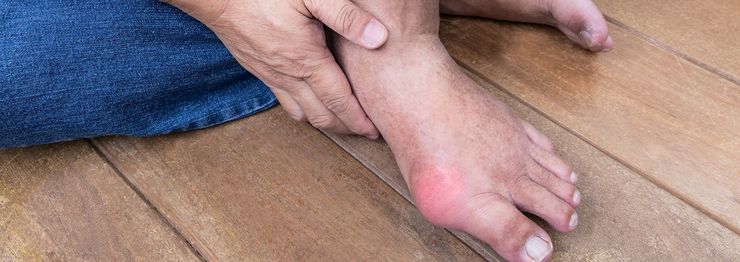
Your kidney function is down to 30 percent. Your big toe feels like someone drove a nail through it. The doctor says no to ibuprofen. Colchicine is risky too. Even a steroid shot comes with caveats. What are you supposed to do when every standard gout treatment is off the table?
This is the reality for a large and growing group of people with gout. Roughly one in four adults with gout also has chronic kidney disease (CKD), and the worse your kidneys get, the fewer acute flare treatments you can safely use. A new analysis of canakinumab, an injectable drug that blocks the inflammation protein interleukin-1 beta (IL-1β), offers something this population rarely hears: data showing it works well specifically in people with impaired kidneys, without adding kidney damage on top.
The CKD Gout Trap
Your kidneys and your gout are locked in a vicious cycle. Damaged kidneys clear uric acid less efficiently, so serum urate climbs and crystals accumulate. Those crystals trigger flares. The drugs used to stop a flare, in turn, can make kidney function worse.
Nonsteroidal anti-inflammatory drugs (NSAIDs) like naproxen and indomethacin reduce blood flow to the kidneys and can tip someone with borderline function into acute kidney injury. Colchicine is cleared by the kidneys and builds up to toxic levels when the estimated glomerular filtration rate (eGFR) drops, especially if you are also taking common interacting medications like clarithromycin. Systemic corticosteroids work but raise blood sugar and blood pressure, problems many people with CKD already deal with.
“SGLT2 inhibitors are one of the rare instances where all the factors align synergistically,” says Dr. Chio Yokose, a rheumatologist at Harvard Medical School and Massachusetts General Hospital. She was talking about diabetes drugs, but the sentiment applies broadly: in CKD gout, almost every other medication pushes uric acid in the wrong direction or damages the organ you are trying to protect. The National Kidney Foundation convened a scientific workshop in February 2026 specifically because the gap between what these patients need and what current guidelines offer is so wide.
If you are navigating both gout and kidney disease, our deep dive on what finally changes when kidneys fail and gout treatment does too walks through the full landscape. This article focuses on one piece of that puzzle that just got a lot more interesting.
What Is Canakinumab?
Canakinumab (brand name Ilaris) is a fully human monoclonal antibody that binds directly to IL-1β, one of the main chemical messengers your immune system releases when urate crystals irritate a joint. Block IL-1β and you block the inflammatory cascade that produces the redness, swelling, and searing pain of a flare.
The U.S. Food and Drug Administration (FDA) approved canakinumab for gout flares in adults for whom NSAIDs and colchicine are contraindicated, not tolerated, or do not work adequately, and in whom repeated courses of corticosteroids are inappropriate. That wording matters: it was designed from the start for the hard-to-treat cases, not as a first-line drug for someone whose kidneys are fine.
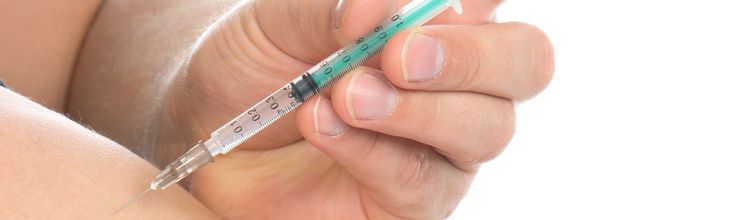
It is given as a single subcutaneous injection under the skin, usually at a dose of 150 mg. One shot. No daily pills for a week. The drug stays in your system for weeks, which turns out to be a major advantage when it comes to preventing the next attack.
The New CKD Data: Pain Relief and a 90% Drop in New Attacks
The study that is generating attention in 2026 is a post-hoc analysis of a 12-week, multicenter, double-blind, active-controlled trial. Researchers compared canakinumab in a pre-filled syringe (CAN-PFS) against triamcinolone acetonide, a corticosteroid injection, in 388 patients experiencing an acute gout flare. Of those, 76 had CKD stage 3 or higher, meaning their eGFR was below 60 mL/min/1.73 m².
Here is what they found in the CKD subgroup:
- Pain relief beat steroids. On a 0 to 100 mm visual analog scale, canakinumab reduced pain significantly more than triamcinolone from 72 hours through day 7. The estimated difference was 14.6 mm in favor of canakinumab (95% CI: -29.0 to -0.1; p < 0.05).
- New attacks dropped by 90%. The hazard ratio for time to first new gout flare was 0.10 (95% CI: 0.01 to 0.78; p ≤ 0.05), meaning patients on canakinumab were one-tenth as likely to have another attack during the 12-week follow-up compared with those who got the steroid shot.
- Safety tracked the overall population. Adverse events occurred in 50% of CAN-PFS patients and 41.7% of triamcinolone patients. Infections were the most common side effect. Serious adverse events were reported in 7 patients total. No deaths occurred during the study.
The 90 percent reduction in recurrent flares is the headline number, and it is worth pausing on. A single shot of canakinumab not only knocked down the current attack faster than a steroid, it kept the next one at bay for months. Steroids do not do that. They suppress the current inflammation and then wear off, leaving you exposed to the next flare.
Why This Matters for Kidney Patients
For someone with healthy kidneys, the choice between canakinumab and a five-day steroid course is mostly about cost and convenience. For someone with CKD, it changes the math substantially.
Canakinumab is not cleared by the kidneys. It is a large antibody molecule broken down by the body’s protein recycling system, the same way other monoclonal antibodies are handled. That means no dose adjustment for renal impairment, no buildup to toxic levels, no risk of worsening the eGFR. Compare that with colchicine, where the label explicitly warns about neuromuscular toxicity in people with kidney dysfunction, or NSAIDs, which carry a boxed warning about kidney injury.
The infection risk is real and should not be glossed over. Blocking IL-1β dials down part of your immune system, and the study did show more infections in the canakinumab group. That is why the drug is not appropriate for someone with an active infection and why doctors screen for things like tuberculosis before starting it. But for a patient whose alternative is repeated steroid courses with their own set of metabolic harms, or uncontrolled flare pain with no good option, the trade-off often looks different.
The other piece of context is cost. Canakinumab is expensive, often running several thousand dollars per dose. Insurance coverage varies, and many plans require documentation that NSAIDs, colchicine, and corticosteroids have all failed or are contraindicated before approving it. If that describes your situation, it is worth asking your rheumatologist about a prior authorization.
Canakinumab vs. Other IL-1 Blockers
Canakinumab is not the only IL-1 inhibitor used for gout. Anakinra (Kineret) is a daily self-injection that blocks the IL-1 receptor rather than IL-1β directly. Rilonacept (Arcalyst) is a weekly injection approved for recurrent pericarditis and cryopyrin-associated periodic syndromes, sometimes used off-label for gout. A newer Chinese IL-1β antibody, anflekitug (Yisaina), was approved in China on August 20, 2026, adding another option, though it is not available in the United States.
What sets canakinumab apart for CKD gout is the body of evidence. It has the most data in acute gout flares specifically, the FDA indication explicitly covers the contraindicated/intolerant/refractory population, and the new CKD subgroup analysis directly supports its use in patients with impaired kidney function. Anakinra has shown promise in small studies but does not carry a gout-specific FDA approval. Rilonacept’s gout development program was discontinued years ago.
If you are wondering how biologic IL-1 inhibitors fit into the broader gout treatment landscape, our overview of the new generation of gout treatments covers the category in more detail.
What to Ask Your Doctor
If you have gout and CKD, and flare after flare leaves you cycling through NSAIDs you should not take and steroids that send your blood sugar soaring, bring canakinumab to your next appointment. Specific questions worth asking:
- Given my kidney function, are NSAIDs and colchicine safe for me? If not, what is the plan for my next flare?
- Am I a candidate for canakinumab based on the FDA criteria (contraindication, intolerance, or inadequate response to standard treatments)?
- What is the infection screening process before starting an IL-1 blocker?
- Would my insurance cover it, and what does the prior authorization process look like?
- How does this fit with my long-term urate-lowering plan? Canakinumab treats flares; it does not lower serum urate. You still need a medication like allopurinol or febuxostat to dissolve crystals over time.
That last point is critical. Canakinumab is a fire extinguisher, not a sprinkler system. It knocks down the blaze of an acute flare and buys you months without another one, but it does not address the underlying hyperuricemia that causes crystals to form in the first place. If you have been nervous about starting or staying on urate-lowering therapy because of flare concerns, our analysis of whether you really need daily prevention pills when starting allopurinol may help frame that conversation.
The Bigger Picture
The CKD subgroup analysis is a post-hoc look at 76 patients. That is a small number, and post-hoc analyses come with caveats about multiple comparisons and residual confounding. The safety signals around infection need to be tracked in larger, longer studies. Canakinumab is not about to become a first-line gout drug for the general population.
But for the specific group it was designed for, people whose kidneys have knocked out the usual options, the data are genuinely useful. A treatment that reduces pain faster than steroids, cuts recurrent flares by 90 percent, and does not require renal dose adjustment fills a gap that patients and clinicians have been struggling with for years. The National Kidney Foundation’s 2026 workshop called for exactly this kind of evidence. The SAVE-Care trial at Massachusetts General Hospital is now testing whether a related approach, empagliflozin, can lower urate directly in people with gout, which could add yet another kidney-friendly tool.
Change comes slowly in gout treatment. For once, it is arriving for the patients who need it most.
Frequently Asked Questions
Is canakinumab safe for people with kidney disease?
Canakinumab is not cleared by the kidneys, so it does not require dose adjustment in people with CKD and does not worsen kidney function. The 2026 subgroup analysis of 76 patients with CKD stage 3 or higher found a safety profile consistent with the overall study population. The main risk is infection, as IL-1β blockade suppresses part of the immune response.
How much does canakinumab cost for a gout flare?
A single 150 mg dose typically costs several thousand dollars in the United States. Coverage varies by insurer. Most plans require documentation that NSAIDs, colchicine, and corticosteroids are contraindicated, not tolerated, or ineffective before approving the drug. Ask your doctor’s office about prior authorization and patient assistance programs through the manufacturer.
How is canakinumab different from taking steroids?
Both reduce inflammation, but canakinumab specifically blocks IL-1β, while steroids broadly suppress the immune system and metabolic pathways. Canakinumab is given as one injection and provides protection against new flares for up to 12 weeks. Steroids raise blood sugar and blood pressure, which is particularly problematic for people with diabetes or CKD. In the CKD subgroup, canakinumab reduced pain more effectively than triamcinolone and cut new attacks by 90 percent.
Can canakinumab replace allopurinol or febuxostat?
No. Canakinumab treats acute flares and prevents them in the short term. It does not lower serum uric acid or dissolve existing urate crystals. If you have recurrent gout, you still need urate-lowering therapy such as allopurinol or febuxostat to address the root cause. Canakinumab can make it easier to tolerate the early months of urate-lowering treatment when flares are more common.
What are the side effects of canakinumab?
The most common adverse events are infections, including upper respiratory tract infections and urinary tract infections. Injection site reactions can occur. The drug should not be started during an active infection. Doctors typically screen for tuberculosis and other chronic infections before treatment. Serious infections are uncommon but require prompt medical attention.
How long does one canakinumab injection last?
A single 150 mg subcutaneous injection provides therapeutic levels for approximately 8 to 12 weeks due to the drug’s long half-life (roughly 23 to 26 days). In clinical trials, one dose significantly reduced the risk of new gout flares over the full 12-week observation period compared with a steroid injection.
References
- Schlesinger N, et al. “Canakinumab pre-filled syringe in patients with acute gouty arthritis and chronic kidney disease stage ≥3: a post-hoc analysis of a randomized, active-controlled study.” Clinical Rheumatology. 2026. (CAN-PFS vs triamcinolone acetonide; 388 patients, 76 with CKD ≥3; VAS pain difference -14.6 mm; HR for new flare 0.10.)
- Schlesinger N, et al. “Canakinumab for acute gouty arthritis in patients with limited treatment options: results from two randomised, multicentre, active-controlled, double-blind trials and their initial extensions.” Annals of the Rheumatic Diseases. 2012;71(11):1839-1848. PMID: 22586169.
- So A, et al. “Canakinumab for the treatment of acute flares in difficult-to-treat gouty arthritis: results of a multicenter, phase II, dose-ranging study.” Arthritis & Rheumatism. 2010;62(10):3064-3076. PMID: 20533554.
- National Kidney Foundation. “NKF Scientific Workshop Identifies Major Gaps in Gout Treatment and Chronic Kidney Disease Care.” PR Newswire. June 26, 2026. Link.
- Yokose C, et al. “SGLT2 inhibitors and gout: urate-lowering and anti-inflammatory effects.” The Rheumatologist. June 27, 2026. Link.
- McCormick N, et al. “Gout-related medication use after initiating sodium-glucose cotransporter-2 inhibitors in patients with gout and type 2 diabetes: population-based target trial emulation studies.” Diabetes Care. 2026;49(3):460-470. PMID: 41615420.
- U.S. Food and Drug Administration. “Ilaris (canakinumab) prescribing information.” Novartis Pharmaceuticals. Revised 2024. FDA-approved indication for gout flares in adults with contraindications, intolerance, or inadequate response to NSAIDs and colchicine.
- Schlesinger N, et al. “Efficacy and safety of canakinumab in patients with acute gout and comorbidities: a pooled analysis of two randomized trials.” Clinical and Experimental Rheumatology. 2014;32(4):527-534. PMID: 24943738.
- Sundy JS, et al. “Canakinumab vs triamcinolone acetonide in patients with acute gouty arthritis and comorbidities: a randomized trial.” Journal of Clinical Rheumatology. 2013;19(4):188-195. (Cardiovascular and metabolic subgroup analyses.)
- Fernandes AD, et al. “SAVE-Care Trial: SGLT2 Inhibitors as Novel Gout Care.” NCT06674109. Mass General Brigham / NIH. Phase 4 RCT enrolling; empagliflozin 10 mg vs placebo in people with gout and hyperuricemia. Link.
Reviewed by the GoutSavvy Editorial Team