Here’s the Weird Thing About Gout and Your Bones
You’ve probably heard that uric acid is the villain. It crystallizes in your joints, triggers agonizing flares, and slowly damages tissue. That part is true. But here’s what catches people off guard: for years, researchers thought high uric acid might actually protect your bones.
A meta-analysis of 19 studies with over 55,000 participants found that people with higher uric acid levels tended to have higher bone mineral density at the spine, hip, and femoral neck (the narrow part of the thigh bone near the hip joint). Each standard deviation increase in uric acid was linked to a 17% reduction in new fractures. Uric acid, it turned out, acts as a powerful antioxidant in your bloodstream, scavenging free radicals that would otherwise degrade bone tissue.
So high uric acid is good for bones? Not so fast.
That same protective effect only holds when uric acid stays in the “high but not gout” range. Once you cross into clinical gout, with crystals depositing in joints and chronic inflammation setting in, the story flips. A nationwide Taiwanese study of over 43,000 people with gout found that gout increased fracture risk by 17%, with spine fractures jumping 34% and ankle/foot fractures up 19%. A 2026 Korean study was even more alarming: newly diagnosed people with gout had 5.5 times the fracture risk of people without gout.
The paradox is real, and it matters. If you have gout, your bones may be quietly getting weaker, even if you haven’t broken anything yet. Here’s what the research actually says about why this happens and what you can do about it.
But I Thought Uric Acid Protected Bones?
This is where things get genuinely confusing, so let’s break it down.
Uric acid has a split personality. Outside your cells, in the bloodstream, it works as an antioxidant. Think of it like rustproofing for your body. It neutralizes free radicals that would otherwise chew through bone tissue. At normal-to-slightly-elevated levels, this antioxidant effect seems to help maintain bone density.
But inside your cells? Completely different story. When uric acid gets taken up by cells, it does the opposite. It generates harmful oxygen molecules inside the cell (oxidative stress), triggers inflammatory signals, and directly stimulates osteoclasts, the cells whose job is to break down bone. At the same time, it suppresses osteoblasts, the cells that build new bone. It’s like hiring a demolition crew and firing the construction team.
On top of that, uric acid interferes with vitamin D activation. When your vitamin D drops, your body compensates by pumping out more parathyroid hormone. And parathyroid hormone tells your bones to release calcium into the blood, which means even more bone loss. It’s a cascade that feeds on itself.
So the picture looks like this: slightly elevated uric acid without inflammation might be mildly protective. But gout is not just “high uric acid.” Gout means crystals are forming, your immune system is reacting, and chronic inflammation is simmering in the background. That inflammation is what tips the balance from protection to destruction. A 2023 meta-analysis of 10 studies with over 1.6 million participants confirmed that gout is significantly associated with osteoporosis (25% increased risk), even though the fracture data across all populations was mixed.
What Is Gout Actually Doing to Your Bone?
Let’s get specific about the mechanism, because “bone loss” is vague and unhelpful.
When monosodium urate (MSU) crystals deposit in and around your joints, they don’t just sit there. Your immune system sees them as foreign invaders and launches an inflammatory response. A 2026 review in Biomedical Reports laid out exactly how this plays out:
1. Osteoclasts go into overdrive. The inflammation triggered by MSU crystals activates RANKL, a protein that tells osteoclasts to mature and start dissolving bone. More RANKL means more bone breakdown, plain and simple.
2. Osteoblasts get shut down. The same inflammatory signals that wake up osteoclasts also suppress osteoblasts, the cells responsible for building new bone. So you’re losing bone faster and replacing it slower. That’s the definition of bone loss.
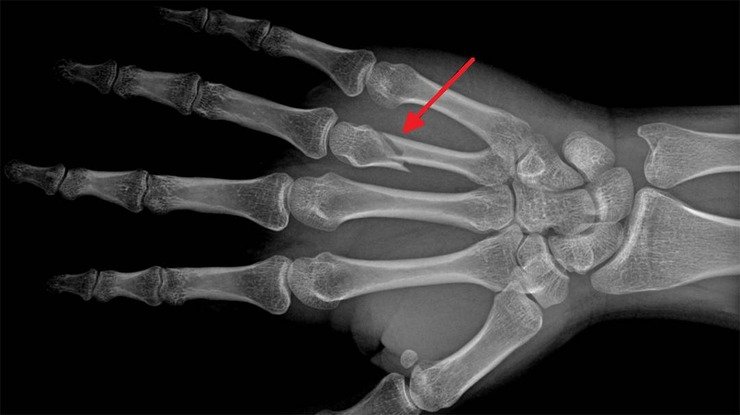
3. Tophi eat directly into bone. If you’ve had gout long enough to develop tophi, those lumpy deposits of urate crystals physically erode bone. Imaging studies show “punched-out” lesions where tophi have dissolved bone tissue. This is not subtle damage. It’s structural destruction.
4. Chondrocytes get caught in the crossfire. The cartilage cells that cushion your joints also take a hit from the inflammatory mediators released around MSU crystals. So you’re not just losing bone, you’re losing the cartilage that protects what’s left.
This is the same process that drives the silent joint damage that happens between flares. The inflammation doesn’t stop when the pain stops. It just drops below your pain threshold and keeps working.
Which Bones Are Most at Risk?
The Taiwanese cohort study, which followed 43,647 people with gout for 11 years, broke down fracture risk by location. Here’s what they found compared to people without gout:
- Spine fractures: 34% higher risk (adjusted hazard ratio [aHR] 1.34)
- Ankle and foot fractures: 19% higher risk (aHR 1.19)
- Upper limb fractures: 14% higher risk (aHR 1.14)
- Leg and knee fractures: 8% higher risk (aHR 1.08)
Spine and foot fractures topping the list makes sense. Your spine carries your entire body weight, and your feet are where gout crystals deposit most heavily. The chronic inflammation around those joints weakens the surrounding bone over time.
Women face an especially steep risk. The Nurses’ Health Study, which followed over 103,000 women for up to 22 years, found that women with a history of gout had a 38% higher risk of hip fracture (relative risk [RR] 1.38, 95% confidence interval [CI] 1.14-1.68). Hip fractures in older adults are serious business. About 1 in 3 adults over 50 dies within a year of a hip fracture. If you’re a postmenopausal woman with gout, this is not a theoretical risk.
And the more flares you have, the more inflammation your bones endure. Each flare is another round of osteoclast activation and osteoblast suppression. The damage compounds.
Can Gout Medication Actually Protect Your Bones?
This is the part where the news gets better. Multiple studies suggest that staying on urate-lowering therapy doesn’t just prevent flares, it may also protect your skeleton.
In the Taiwanese study, people with gout who took allopurinol had a 28% lower fracture risk than those who didn’t (aHR 0.72, 95% CI 0.67-0.78). And the longer they stayed on it, the better the protection. Patients who took allopurinol for at least 180 defined daily doses saw their fracture risk drop by 58% (aHR 0.42). Benzbromarone, a different type of gout medication that helps the kidneys excrete uric acid, showed a similar pattern, with long-term users seeing a 54% reduction.
The 2026 Korean study drove this point home even harder. They tracked medication adherence using the Medication Possession Ratio (MPR), which basically measures how reliably you fill your prescriptions. Here’s what they found:
- Low adherence (MPR below 0.3): fracture risk 5.91 times higher than non-gout controls.
- High adherence (MPR above 0.8): fracture risk 4.77 times higher, still elevated but significantly lower.
The trend was clear and statistically significant (P for trend below 0.001). Better adherence meant lower fracture risk, across every subgroup they checked. Age, sex, comorbidities, it didn’t matter. The pattern held.
The researchers noted that only 16% of patients maintained high adherence. That’s a staggering number. Eighty-four percent of people with gout in this study were not taking their medication reliably enough to get the maximum bone-protective benefit.
The mechanism makes sense. Urate-lowering therapy reduces crystal deposition, which means less chronic inflammation, which means less RANKL activation, which means less osteoclast-driven bone destruction. You’re not just treating the gout. You’re cutting off the inflammatory fuel supply that’s eating your bones.
Whether you’re on allopurinol or febuxostat, the key seems to be consistency. Starting and stopping doesn’t give your bones a chance to recover. The protective effect builds over months and years of sustained uric acid control.
What About Vitamin D and Other Bone Protectors?
Since uric acid interferes with vitamin D activation, it’s worth asking whether vitamin D supplementation helps people with gout specifically. The evidence here is suggestive but not definitive.
The Taiwanese study mentioned that vitamin D supplementation could play a role in preventing inflammation-related bone loss in gout. Vitamin D not only supports bone mineralization directly but also has immune-modulating and anti-inflammatory properties that could counteract the bone-damaging effects of chronic gout inflammation.
For people with gout, checking vitamin D levels makes sense as part of a bone health strategy. If your levels are low, and you have gout, you’re dealing with a double hit to your skeleton: inflammation-driven bone loss plus inadequate vitamin D for bone formation.
Weight-bearing exercise also matters, though you need to be smart about it during flares. Between flares, low-impact activities like walking, cycling, and resistance training stimulate bone formation. During a flare, rest the affected joint. Pushing through gout pain doesn’t make you tough, it makes you more likely to damage already compromised bone.
What Should You Actually Do?
If you have gout, here’s the practical takeaway:
1. Stay on your medication. This is the single most important thing you can do for your bones. The data is crystal clear: consistent urate-lowering therapy reduces fracture risk. Skipping doses to “give your kidneys a break” or stopping because you feel fine is actively harming your skeleton.
2. Get your vitamin D checked. If you have gout, you’re already at a disadvantage when it comes to vitamin D activation. Don’t add low vitamin D to the pile. A simple blood test can tell you where you stand.
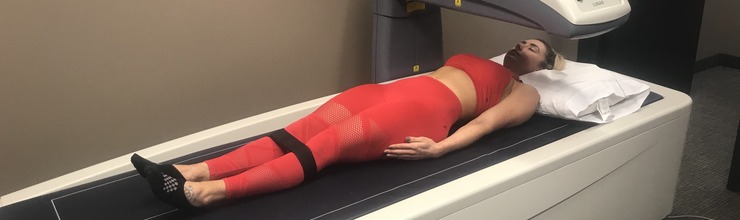
3. Ask about a bone density scan. If you’ve had gout for several years, especially if you’re a postmenopausal woman or over 60, talk to your doctor about a dual-energy X-ray absorptiometry (DEXA) scan. This is the gold standard for measuring bone mineral density, and it can catch bone loss before a fracture does.
4. Don’t ignore the connection between gout and kidney disease. Your kidneys play a key role in both uric acid excretion and vitamin D activation. Kidney disease and gout feed each other, and both feed bone loss. Managing one without the other leaves a gap.
5. Keep moving between flares. Bone responds to mechanical stress. When you walk, lift, or cycle, your bones get the signal to maintain density. People with gout who are sedentary lose bone faster than active ones, all else being equal.
The Bottom Line
The uric acid paradox is real, but it’s not contradictory. Uric acid in your bloodstream, at moderate levels, acts as an antioxidant that may help maintain bone density. But gout is not just high uric acid. It’s a chronic inflammatory disease driven by crystal deposition, and that inflammation actively destroys bone through multiple pathways.
The good news is that the same treatment that controls your gout, consistent urate-lowering therapy, also appears to protect your bones. The bad news is that most people with gout aren’t taking their medication reliably enough to get that benefit.
If you have gout, your bones are part of the conversation whether you like it or not. The inflammation that wrecks your joints doesn’t stop there. It’s working on your skeleton too, quietly, every day you leave your uric acid uncontrolled.
Frequently Asked Questions
Does having gout mean I’ll get osteoporosis?
No. Gout increases your risk of osteoporosis by about 25% according to a 2023 meta-analysis, but that’s a relative risk, not a guarantee. Many people with gout maintain healthy bone density, especially those who keep their uric acid controlled with medication, exercise regularly, and have adequate vitamin D levels.
Should I take calcium supplements if I have gout?
Calcium supplementation may be appropriate if your dietary intake is low, but it’s worth discussing with your doctor first. Some calcium supplements can affect kidney stone risk, and people with gout already have elevated kidney stone risk. Food sources of calcium, like low-fat dairy products, are generally the safest option and have the added benefit of being associated with lower uric acid levels.
Which gout medication is best for bone health?
The research so far has focused on allopurinol and benzbromarone, both of which showed bone-protective effects with long-term use. There’s no direct head-to-head comparison of all urate-lowering drugs for bone outcomes. The most important factor is not which medication you take, but whether you take it consistently enough to keep your uric acid below 6 mg/dL.
Can bone loss from gout be reversed?
Partial reversal is possible with sustained uric acid control and proper bone health management. Studies show that long-term allopurinol adherence is associated with significantly lower fracture risk, suggesting that reducing inflammation allows bone to recover. However, severe structural damage from tophi, like punched-out bone lesions, may not fully heal. This is why early and consistent treatment matters.
Is fracture risk higher during a gout flare?
Acute flares may temporarily increase fall risk due to pain and impaired mobility, but the bone damage that drives long-term fracture risk comes from chronic, low-grade inflammation between flares. A single flare won’t dissolve your bones. But years of uncontrolled gout, with or without frequent flares, will slowly degrade bone density through persistent inflammatory signaling.
References
- Tzeng YH, Chen SY, Lai HW, et al. Gout increases risk of fracture: A nationwide population-based cohort study. Medicine. 2016;95(34):e4669. PMCID: PMC5400337
- Kim SC, Paik JM, Liu J, et al. Gout and risk of fracture in women: A prospective cohort study. Arthritis Rheumatol. 2017;69(2):422-428. PMID: 27589491
- Liu Y, Feng J, Ji P, et al. Association between gout and the risk of osteoporosis and fractures: A meta-analysis. Z Rheumatol. 2023. PMID: 37759097
- Li H, et al. Mechanisms of monosodium urate crystal-induced bone destruction in gouty arthritis. Biomedical Reports. 2026. DOI: 10.3892/br.2026.2134
- Dennison EM, Boonen S, Balogh A, et al. Is gout requiring allopurinol use associated with an excess risk of osteoporotic fracture? Arch Osteoporos. 2017. PMCID: PMC5384630
- Bano G, Trevisan C, et al. Hyperuricemia protects against low bone mineral density, osteoporosis and fractures: A systematic review and meta-analysis. Osteoporos Int. 2016. ResearchGate
- Kim JW, et al. Gout, newly diagnosed allopurinol adherence, and fracture risk: A nationwide cohort study. Clinical Rheumatology. 2026. Published July 2026
- Chao Y, et al. Gout is not associated with the risk of fracture: A meta-analysis. J Orthop Surg Res. 2019. PMCID: PMC6712626
- Lin X, et al. The paradoxical role of uric acid in osteoporosis. Nutrients. 2019. PMCID: PMC6769742
- NICE. Gout: diagnosis and management. Evidence reviews for urate-lowering therapies. UK National Institute for Health and Care Excellence. NBK589579
Reviewed by the GoutSavvy Editorial Team