The 3 AM Ambush: What Actually Happens Inside Your Joint
You know the drill. You go to bed feeling fine. Somewhere around 3 in the morning, your big toe wakes you up. Within an hour, the pain is so bad you can’t stand a bedsheet touching it.
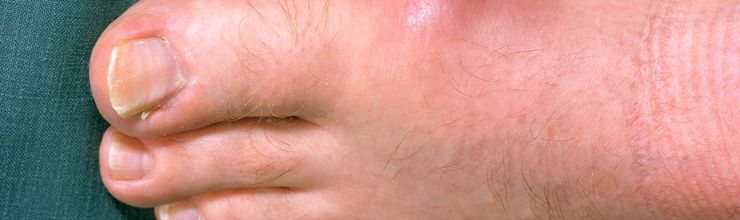
But have you ever wondered why it happens so fast? One hour you’re sleeping peacefully. The next, your joint looks like a red balloon and feels like someone is grinding glass inside it.
The answer isn’t just “high uric acid.” Plenty of people walk around with uric acid above 7 mg/dL and don’t feel a thing. The real question is what flips the switch from “silent crystals sitting in your joint” to “your immune system going into overdrive.”
That switch has a name. It’s called the NLRP3 inflammasome. And once you understand how it works, everything about your gout, from why flares hit at night to why colchicine causes diarrhea, suddenly makes sense.
Meet NLRP3: The Tiny Alarm System Inside Your Immune Cells
Think of NLRP3 as a fire alarm inside your immune cells. Most of the time, it’s switched off. But when it detects something dangerous, it doesn’t just ring a bell. It calls in the entire fire department, the police, and the national guard all at once.
Here’s how it works.
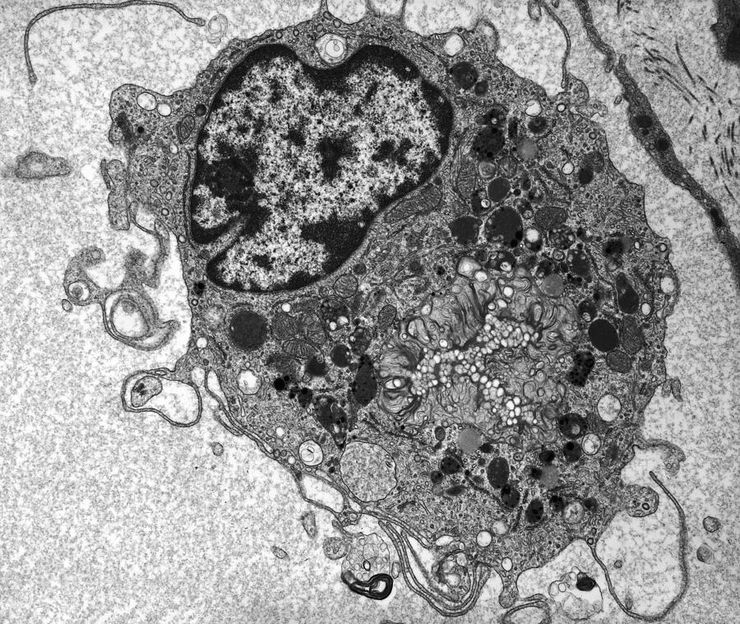
Uric acid crystals, called monosodium urate or MSU, can sit quietly in your joints for months or even years. You don’t feel a thing. But something tips them off. Maybe your body temperature drops a degree at night. Maybe you got dehydrated. Maybe you had a steak dinner and a few beers. Whatever the trigger, some crystals shed from the main deposit and get swallowed by immune cells called macrophages.
This is where NLRP3 comes in.
When a macrophage gobbles up a uric acid crystal, it’s like swallowing a needle. The crystal punctures the cell’s internal recycling system, which scientists call the lysosome. NLRP3 senses this damage and does two things.
First, it assembles into a structure called an inflammasome. Picture a wheel with spokes. NLRP3 forms the hub and recruits other proteins to build the spokes. At the center of this wheel sits an enzyme called caspase-1.
Second, caspase-1 goes to work. It chops up a dormant protein called pro-IL-1β into its active form, IL-1β. And interleukin-1 beta (IL-1β) is the match that lights the entire fire.
Why Gout Pain Hits Harder Than Other Arthritis
IL-1β is one of the most powerful inflammatory signals your body produces. When it floods into your joint, it triggers a chain reaction that happens with terrifying speed.
IL-1β tells your blood vessels to dilate, which is why your joint turns red and warm. It calls in neutrophils, the shock troops of your immune system, by the thousands. These cells release even more inflammatory chemicals, which call in even more neutrophils. Within 12 to 24 hours, your joint is packed with inflammatory fluid and immune cells.
This is why gout pain peaks so quickly compared to other types of arthritis. Osteoarthritis creeps up over years. Rheumatoid arthritis builds over weeks. But gout goes from zero to unbearable in a matter of hours.
And the pain itself isn’t just from swelling. Those immune cells are releasing enzymes that dissolve tissue. The uric acid crystals are sharp enough to physically damage cells on contact. Your nervous system gets bombarded with inflammatory signals that crank pain sensitivity to maximum.
This is why people describe gout as the worst pain they’ve ever felt. Research has shown that people with gout routinely rate their pain higher than kidney stones, fractured bones, or childbirth.
Colchicine Works, But It’s Like Killing a Fly With a Sledgehammer
Here’s something most people don’t know. Colchicine, one of the oldest gout drugs still in use, actually works by interfering with NLRP3.
Colchicine binds to tubulin, a protein that cells use to build their internal skeleton. Without a functioning skeleton, the macrophage can’t properly assemble the NLRP3 inflammasome. The wheel doesn’t get built, caspase-1 stays inactive, and IL-1β doesn’t get released.
Pretty clever, right? But there’s a catch. Colchicine doesn’t just block NLRP3. It blocks all kinds of cellular processes that depend on tubulin, including cell division, nerve signaling, and gut function. That’s why it causes diarrhea, nausea, and muscle weakness. You’re not just turning off the fire alarm. You’re cutting the power to the entire building.
Nonsteroidal anti-inflammatory drugs (NSAIDs) work even further downstream. They block prostaglandins, which are produced after IL-1β has already done its damage. It’s like trying to mop up the water while the faucet is still running.
This is why researchers have spent the last decade looking for something better. Something that specifically targets NLRP3 without all the collateral damage.
The New Wave: Drugs That Shut Down NLRP3 Directly
The first NLRP3 inhibitor tested in humans for gout was a drug called dapansutrile. In a Phase 2a trial, researchers found that at doses of 300 to 2,000 mg daily, more than half of people with acute gout achieved at least 50% pain reduction within 72 hours. No serious side effects. No diarrhea.
That was back in 2019. Since then, the field has exploded.
A 2026 study in the European Journal of Medicinal Chemistry described a new compound called M48 that blocks NLRP3 with remarkable precision. In mouse models of gout, it reduced inflammation better than indomethacin, a standard NSAID, and matched colchicine for pain relief. The difference? It didn’t carry the gut toxicity that makes colchicine so hard to tolerate.
As of 2026, at least six NLRP3 inhibitors are in clinical trials across multiple companies. Some are being tested specifically for gout. Others target cardiovascular disease, Parkinson’s, and metabolic conditions where NLRP3 also plays a role. The reason so many companies are piling in is simple: NLRP3 sits at the root of so many inflammatory diseases that blocking it could treat several conditions at once.
But here’s what actually matters for you.
What This Means for You Right Now
You don’t need to wait for NLRP3 inhibitors to hit the pharmacy. Understanding how this mechanism works changes three things about how you manage gout today.
First, it explains why timing matters. The NLRP3 inflammasome needs two signals to activate. The first is a priming signal, which can come from high-fat meals, alcohol, sleep deprivation, or even stress. The second is the crystal itself. If you can reduce the priming signal by managing your diet, sleep, and hydration, you make it harder for NLRP3 to switch on in the first place. Understanding your gout triggers is the first step.
Second, it explains why colchicine works best when taken early. Colchicine interferes with NLRP3 assembly. Once the inflammasome is built and IL-1β is flooding your joint, colchicine can’t undo that damage. It can only prevent new inflammasomes from forming. This is why doctors tell you to take colchicine at the very first sign of a flare. You’re racing to block NLRP3 before the wheel gets built. Our colchicine dosage guide walks you through exactly how to use it.
Third, it explains why urate-lowering therapy is the real long game. No uric acid crystals means no NLRP3 activation. Anti-inflammatory drugs are a band-aid. Lowering your uric acid below 6 mg/dL actually dissolves the crystals that feed NLRP3 in the first place. If you want to stop gout attacks before they start, this guide breaks down the full flare-fighting toolkit. And remember, silent crystal deposits can still damage your joints even when you’re not having a flare.
The bottom line? Gout pain isn’t random. It’s a specific biological process with a specific trigger. And every year, we’re getting closer to drugs that can block that trigger at the source, without the side effects that make current options so miserable.
Frequently Asked Questions
Can I block NLRP3 through diet?
Not directly. But certain foods can reduce the priming signal that NLRP3 needs. Anti-inflammatory foods like cherries, coffee, and low-fat dairy may help lower the baseline inflammation that makes NLRP3 easier to trigger. The research here is still early, but a Mediterranean-style eating pattern appears to reduce systemic inflammation, which could theoretically raise the threshold for NLRP3 activation.
Why does colchicine cause diarrhea if it targets NLRP3?
Colchicine doesn’t selectively target NLRP3. It binds to tubulin, a structural protein used by cells throughout your body. The cells lining your intestine use tubulin for cell division and nutrient absorption. When colchicine disrupts that, you get diarrhea. This is exactly why NLRP3-specific inhibitors are so exciting. They could offer colchicine-level pain relief without shutting down your gut.
Are NLRP3 inhibitors available right now?
Not yet. Dapansutrile reached Phase 2/3 trials but has not received Food and Drug Administration (FDA) approval. Several other NLRP3 inhibitors are in Phase 2 trials as of 2026. The timeline for approval depends on trial results, but it could be 2 to 3 years before a targeted NLRP3 inhibitor is available by prescription.
If NLRP3 drives inflammation, why not just take IL-1β inhibitors?
IL-1β inhibitors like canakinumab (an injected biologic drug) do exist and are approved for gout treatment. But they work downstream of NLRP3, blocking the cytokine after it’s been released. NLRP3 inhibitors would work upstream, preventing IL-1β from being produced in the first place. This could mean faster relief and fewer downstream inflammatory signals cascading through your joint.
Does everyone with high uric acid have NLRP3 activation?
No. Studies suggest only about 30 to 36% of people with high uric acid (hyperuricemia) ever develop clinical gout. NLRP3 activation requires a specific sequence: crystal deposition, crystal shedding, macrophages engulfing the crystals, and inflammasome assembly. Many people carry uric acid crystals silently for years without ever triggering NLRP3. Why some people’s NLRP3 switches on and others’ doesn’t is still an active area of research.
References
1. Ahn EY, So MW. The pathogenesis of gout. J Rheum Dis. 2026;32(1):8-22. doi:10.4078/jrd.2026.32.1.8.
2. Cao D, Pu H, Yuan X, et al. The interplay between NLRP3 inflammasome and metabolic signals in gouty arthritis. Front Immunol. 2026;17:1761121. doi:10.3389/fimmu.2026.1761121.
3. Dalbeth N, et al. Gout and NLRP3 inflammasome biology. In: Gout and NLRP3 Inflammasome Biology. PMC12479186. 2026.
4. Kong Y, Su M, Jiang C, et al. Rational design of an NLRP3 inhibitor with superior efficacy and safety for gout therapy. Eur J Med Chem. 2026;305:118578. doi:10.1016/j.ejmech.2026.118578.
5. Jansen T, Kluck V, Janssen M, et al. The first Phase 2a proof-of-concept study of a selective NLRP3 inflammasome inhibitor, dapansutrile (OLT1177), in acute gout. Arthritis Rheumatol. 2019;71(suppl 10). Abstract 2838.
6. NLRP3 inflammasome inhibitors: global competitive market analysis 2026. Eureka PatSnap. May 2026.
7. Martinon F, Petrilli V, Mayor A, Tardivel A, Tschopp J. Gout-associated uric acid crystals activate the NLRP3 inflammasome. Nature. 2006;440(7081):237-241. doi:10.1038/nature04516.
Reviewed by the GoutSavvy Editorial Team