If you just tossed a bag of fresh spinach into the trash because someone told you it causes gout, this one is for you.
The advice sounds logical enough. Spinach has purines. Purines become uric acid. Uric acid forms the sharp crystals that make a gout flare feel like someone drove a stake through your toe. So why take the risk?
Here is the problem with that chain of reasoning. It treats every purine the same, and the body clearly does not. After 20 years of studies tracking hundreds of thousands of people, the verdict on purine-rich vegetables is pretty one sided: they do not raise your chance of gout, and people who eat them do not walk around with higher uric acid.
Where Did the “Avoid Spinach” Rule Come From?
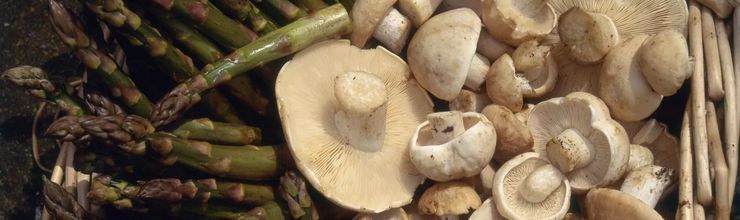
Older gout diets worked like this. Foods were ranked by purine content, and anything over a cutoff landed on the forbidden list. Organ meats, anchovies, sardines, beer, and spinach all ended up in the same bucket. Some lists added asparagus, mushrooms, cauliflower, and peas for good measure.
It was a tidy system. It just never asked whether plant purines actually behaved like animal purines once you ate them. That question got answered in a big way in 2004.
The Study That Changed the Advice
Researchers followed 47,150 men with no history of gout for 12 years, logging their diets every four years and confirming every new case of gout that came up. By the end, 730 men had developed the disease.1
The pattern was not what the old food lists predicted.
Men eating the most meat had a relative risk of gout of 1.41 compared with men eating the least. Seafood was a bit worse at 1.51. Dairy pointed the other way, with the highest intake tied to a risk of just 0.56.
And the purine-rich vegetables? No increase at all. Not a small one. None. The authors put it plainly in their conclusion: moderate intake of purine-rich vegetables was not associated with an increased risk of gout.1
That finding has held up every time someone has looked again.
Four More Studies, Same Answer
A study in Scotland measured uric acid directly in the blood of 2,076 people. More purine-rich vegetables on the food frequency questionnaire did not line up with higher plasma urate. The p value was 0.38, which is a statistician’s way of saying there was nothing there. The authors went further than most, writing that limiting purine-rich vegetables to lower uric acid may simply be ineffectual.2
The Shanghai Men’s Health Study surveyed 3,978 Chinese men aged 40 to 74. Seafood tracked with hyperuricemia, and soy foods showed a hint of a protective effect. Purine-rich vegetables again showed no association with high uric acid.3
When the American College of Rheumatology (ACR) wrote its current gout guideline in 2020, the panel reviewed the same body of evidence and did not recommend cutting out vegetables.4 The guideline still conditionally advises limiting overall purine intake, because the animal kind genuinely matters, but vegetables are not the target.
Why Don’t Plant Purines Count the Same Way?
No single reason explains it fully. A few things together probably do.
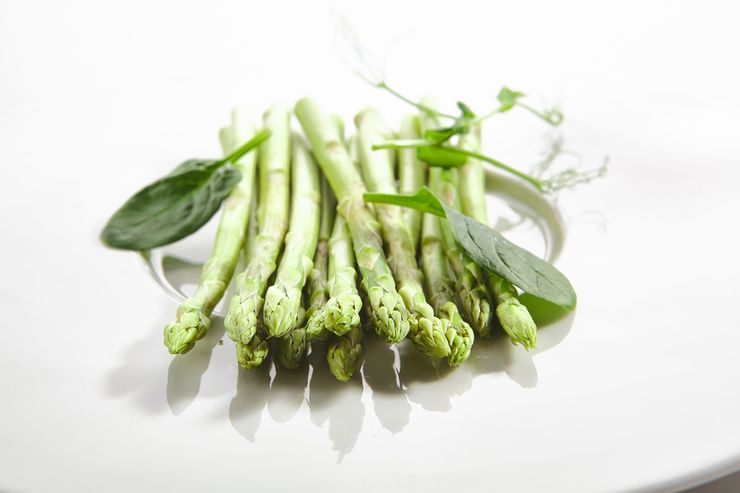
The amounts are much smaller. A Japanese lab measured purines in 270 foods using high-performance liquid chromatography and found that the purine content in vegetables was typically three to four times lower than in meat.5 A serving of asparagus tips came in at about 55 mg of purines per 100 g. Mature spinach leaves measured around 51 mg. Broccoli was 70 mg, cauliflower 57 mg, and common raw shiitake mushrooms about 21 mg. Compare that with chicken liver at 312 mg or a sardine at 210 mg, and you see the scale problem immediately.
The purine types differ. Vegetables contain mostly adenine and guanine bound up in nucleic acids. Meats and fish contain a lot of hypoxanthine, which feeding studies have found pushes serum uric acid up harder than the other bases. Guanine is the weak one in the group; studies that fed people guanine-rich foods did not see much movement in serum or urinary uric acid.5
Plant foods come with other things that help. The same vegetables carry vitamin C, fiber, folate, potassium, and magnesium. The overall eating pattern may matter more than the ingredient list. That is not guesswork. When researchers scored 44,444 men on how closely their diets matched the Dietary Approaches to Stop Hypertension (DASH) pattern, which is heavy on vegetables, fruit, legumes, and low-fat dairy, men with the highest scores had a gout risk of 0.68 over 26 years compared with men with the lowest scores. Men eating the most Western-style pattern, full of red meat and sweets, sat at 1.42.6
Add it up and the “purine is purine” view does not survive contact with the data.
Wait, Didn’t a Study Say Purines Quintuple Flare Risk?
Yes, and this is where people get confused. A case-crossover study of 633 people with gout compared what they ate in the two days before a flare with two-day control periods. People in the highest quintile of total purine intake had an odds ratio of 4.76 for a recurrent attack, nearly five times the lowest quintile.7
But read the fine print. When the researchers split purines by source, animal purines climbed to an odds ratio of 2.41 at the top. Plant purines only reached 1.39, and that result barely crossed the significance line at p = 0.04. Even there, the top plant quintile reflects people eating large quantities of all purine-rich plant foods combined, not a normal plate of spinach.
The study’s own conclusion pointed to foods of animal origin as the thing worth cutting back.7
So Can I Finally Eat Spinach?
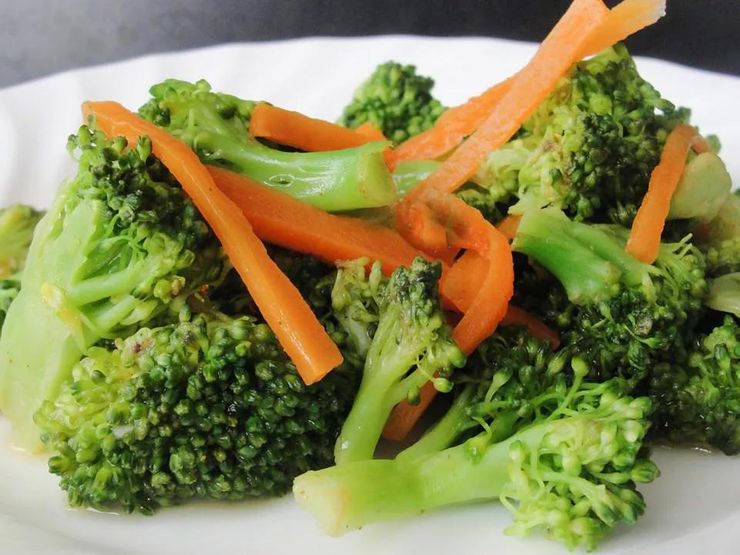
Yes. Sautée it, steam it, or throw it in a soup. Asparagus, mushrooms, broccoli, cauliflower, peas, and the rest of the formerly blacklisted vegetables are on the table too.
A few practical notes, so this doesn’t turn into a free-for-all:
- Watch the cooking method more than the vegetable. A mountain of spinach sautéed in bacon fat or butter is still a load of saturated fat and calories, and weight gain is a genuine gout risk.
- Don’t chase supplements instead of food. The ACR conditionally recommends against adding vitamin C pills for gout, based on small trials in people who already have the disease.4 In one of them, 500 mg of vitamin C a day for 8 weeks lowered serum urate by just 0.23 mg/dL, while allopurinol lowered it by 1.9 mg/dL.8 Vegetables are worth eating. Pills that pretend to be vegetables are a different story.
- If a specific food genuinely seems to set off your flares every single time, keep a simple diary for a few weeks and take it to your doctor. Individual reactions vary, and anecdotes you collect about your own body are useful data (the same debate surrounds tomatoes, which about 1 in 5 people blame). The blanket “never eat spinach” rule is not.
Where Your Attention Actually Pays Off
The dietary moves with real evidence behind them are boring and familiar. Cut back on red meat and organ meats. Go easy on shellfish, sardines, and anchovies. Limit beer and liquor. Skip the sugary drinks, which are tied to gout even independent of weight. Eat low-fat dairy, which was associated with roughly a 44% lower risk at the highest intake in the 2004 study.1 And if you have recurrent flares, talk with your doctor about urate-lowering treatment instead of trying to diet your way out alone. Diet alone typically moves uric acid by only about 1 mg/dL; medication can take it to the ACR target of under 6 mg/dL.4
The spinach can come home from the grocery store. The bacon double cheeseburger is still the thing to worry about.
Frequently Asked Questions
Is spinach really safe if I have gout?
Yes. In a 12-year study of 47,150 men, purine-rich vegetable intake showed no association with developing gout, even though meat and seafood clearly did.1 Spinach contains roughly 51 mg of purines per 100 g in mature leaves, a small number compared with most meats.5
Do mushrooms trigger gout flares?
There is no good evidence that they do. Raw shiitake measured about 21 mg of purines per 100 g, and most common mushrooms land between about 7 and 99 mg depending on variety.5 Dried mushrooms concentrate purines, but you also use far less of them. In the population studies, mushroom intake did not raise gout risk or blood uric acid.
Why did my doctor tell me to avoid asparagus?
That advice comes from older gout diets that ranked foods only by purine content. Asparagus tips contain around 55 mg of purines per 100 g, and later research found purine-rich vegetables do not raise gout risk.1,5 Many clinicians have simply not updated the handout they give people.
Are dried vegetables or seaweed a problem?
Dried foods show high purine numbers per 100 g because the water weight is gone, which concentrates everything. Dried wakame and nori look alarming on a table, but a normal recipe uses only a few grams. The Japanese analysis noted this and did not classify dried ingredients that get rehydrated as practical risk foods.5
Should I take vitamin C supplements instead?
No, not for gout. The ACR guideline conditionally recommends against adding vitamin C for people with gout,4 and the main trial in people who already had gout found a clinically insignificant drop of 0.23 mg/dL after 8 weeks of 500 mg a day.8 Get your vitamin C from actual vegetables and fruit, where it comes packaged with everything else.
If vegetables are safe, what foods actually raise gout risk?
Red meat, organ meats, seafood (especially shellfish, sardines, and anchovies), beer, liquor, and sugar-sweetened drinks have the strongest evidence. In the 633-person flare study, the highest animal-purine intake carried an odds ratio of 2.41 for a recurrent attack, while the highest plant-purine intake reached only 1.39.7
References
- Choi HK, Atkinson K, Karlson EW, Willett W, Curhan G. “Purine-rich foods, dairy and protein intake, and the risk of gout in men.” N Engl J Med. 2004;350(11):1093-1103. doi:10.1056/NEJMoa035700. PMID: 15014182
- Zgaga L, Theodoratou E, Kyle J, Farrington SM, Agakov F, Tenesa A, et al. “The association of dietary intake of purine-rich vegetables, sugar-sweetened beverages and dairy with plasma urate, in a cross-sectional study.” PLoS One. 2012;7(6):e38123. doi:10.1371/journal.pone.0038123. PMID: 22701608
- Villegas R, Xiang YB, Elasy T, Xu WH, Cai H, Cai Q, et al. “Purine-rich foods, protein intake, and the prevalence of hyperuricemia: the Shanghai Men’s Health Study.” Nutr Metab Cardiovasc Dis. 2012;22(5):409-416. doi:10.1016/j.numecd.2010.07.012. PMID: 21277179
- FitzGerald JD, Dalbeth N, Mikuls T, Brignardello-Petersen R, Guyatt G, Abeles AM, et al. “2020 American College of Rheumatology Guideline for the Management of Gout.” Arthritis Rheumatol. 2020;72(6):879-895. doi:10.1002/art.41247. PMID: 32390306
- Kaneko K, Aoyagi Y, Fukuuchi T, Inazawa K, Yamaoka N. “Total purine and purine base content of common foodstuffs for facilitating nutritional therapy for gout and hyperuricemia.” Biol Pharm Bull. 2014;37(5):709-721. doi:10.1248/bpb.b13-00967. PMID: 24553148
- Rai SK, Fung TT, Lu N, Keller SF, Curhan GC, Choi HK. “The Dietary Approaches to Stop Hypertension (DASH) diet, Western diet, and risk of gout in men: prospective cohort study.” BMJ. 2017;357:j1794. doi:10.1136/bmj.j1794. PMID: 28487277
- Zhang Y, Chen C, Choi H, Chaisson C, Hunter D, Niu J, Neogi T. “Purine-rich foods intake and recurrent gout attacks.” Ann Rheum Dis. 2012;71(9):1448-1453. doi:10.1136/annrheumdis-2011-201215. PMID: 22648933
- Stamp LK, O’Donnell JL, Frampton C, Drake JM, Zhang M, Chapman PT. “Clinically insignificant effect of supplemental vitamin C on serum urate in patients with gout: a pilot randomized controlled trial.” Arthritis Rheum. 2013;65(6):1636-1642. doi:10.1002/art.37925. PMID: 23681955
Reviewed by the GoutSavvy Editorial Team