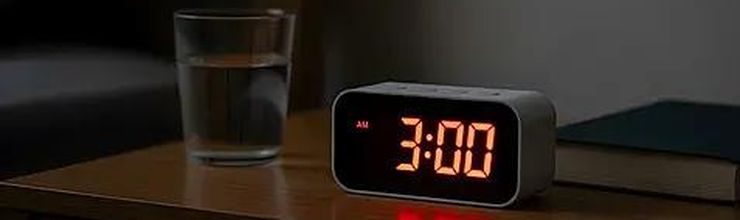
You went to bed fine. At two or three in the morning, you are awake, and the base of your big toe is hot, swollen, and so tender that the sheet feels like a slab of concrete. You did not stub it. You may not even have drunk that much. So why did this pick the middle of the night?
It picked the same hour most attacks pick. Researchers followed 724 people with gout for a year and logged every flare as it happened, and the pattern was unmistakable: attacks were 2.36 times more likely to start between midnight and 8 a.m. than during the day. Half of all flares in the study began in that eight-hour window. Your 3 a.m. toe fire is not bad luck. It is biology. And once you see the handful of things that happen to your body while you sleep, the pattern makes a lot of sense.
The good news is that each one points to something you can actually do. Our guide to the first 12 hours of a flare covers what to do the moment you wake up, so here we focus on why the night does this and how to stack the odds back in your favor.
The Numbers: Night Flares Are the Norm, Not the Exception
The study, led by Hyon Choi and published in Arthritis & Rheumatology, used a clever design called a case-crossover study. People reported each flare online close to the time it started, 1,433 attacks in all over twelve months. The team split the day into three eight-hour blocks. In all, 733 attacks began overnight (midnight to 7:59 a.m.), 310 during the day (8 a.m. to 3:59 p.m.), and 390 in the evening (4 p.m. to 11:59 p.m.).
Do the per-hour math and overnight risk came in at 2.36 times the daytime rate. Evening sat in between, at 1.26 times. Before anyone blames the beer or the steak dinner: the pattern held in people who drank no alcohol, in people eating the lowest amount of purines, in people taking allopurinol, and in people taking diuretics. Men and women, older and younger, heavier and slimmer, all showed roughly the same curve. The night itself was the trigger.
Roughly 92 percent of the attacks hit the lower extremities, mostly the big toe. That detail matters, because it is the first clue to what is going on.
Reason One: Your Joints Cool Down Overnight
Core body temperature sits around 37.5 C (99.5 F) in the late afternoon and drifts down to about 36.4 C (97.5 F) between 2 and 6 a.m. Your toes run cooler still. They are the last stop on the blood-delivery route, and they lose heat under thin covers all night.
Uric acid chemistry cares about temperature. Lab work going back decades shows that monosodium urate, the needle-shaped crystal behind gout, dissolves less readily as temperature falls. One classic set of measurements found urate about 40 percent less soluble at 26 C than at 37 C, and synovial fluid, the liquid inside the joint, is a slightly weaker solvent for urate than blood plasma to begin with. Blood uric acid above 6.8 mg/dL is near the saturation line at core temperature, and that line is easier to cross in a joint running several degrees cooler.
Overnight, then, the coolest joint in the coolest hour becomes the easiest place for fresh crystals to form, or for old deposits to shed tiny shards into the joint and set off an attack. This is a big part of why gout favors the big toe, not your shoulder.
Reason Two: You Get Quietly Dehydrated While You Sleep
You drink nothing for seven or eight hours, and you keep losing water with every breath and through mild sweating. Your blood volume dips a touch, and everything dissolved in it, uric acid included, becomes a little more concentrated. Lying flat also changes how fluid moves around the joints, a local version of the same problem.
A salty dinner, an evening of beer, or a long hot day puts you behind before you even climb into bed. Our piece on how to drink water for gout covers the practical side. The short version: keep urine pale through the evening and have a glass of water before bed rather than going in thirsty. Skip chugging a liter at 11 p.m. on purpose, since waking twice to urinate wrecks the sleep you are trying to protect.
Reason Three: Your Built-In Anti-Inflammatory Hits Bottom
Cortisol is one of your body’s own inflammation controllers, and it runs on a strict daily schedule. Levels reach their lowest point between roughly midnight and 4 a.m., then climb toward morning. Rheumatologists have linked that same overnight dip to the morning stiffness common in rheumatoid arthritis. For gout, the timing is worse: when urate crystals irritate a joint in the small hours, your natural brake on inflammation is at its weakest, so the immune response runs further before anything reins it in.
That also explains why attacks that begin at night often peak around breakfast. The inflammation got a running head start before your chemistry came back online.
Reason Four: The Joint Sits Still for Hours
Moving keeps blood and joint fluid circulating. Asleep, your big toe and ankle barely move, blood flow to the feet slows, and crystals that formed during the day sit in place instead of being swept along. A joint that took a full day of minor wear, walking, stairs, a tight shoe, then goes cold and motionless for eight hours, gets a long, quiet window for crystals and immune cells to collide.
The Hidden Driver: Sleep Apnea
For some people the night brings an extra problem they do not know they have. In obstructive sleep apnea, the airway collapses over and over during sleep. Oxygen dips for seconds at a time, dozens or even hundreds of times a night. Those dips force cells to burn through ATP, the molecule that stores energy, and ATP is built from purines, the same building blocks that become uric acid. More turnover means more uric acid produced, and repeated oxygen stress also dulls how well the kidney clears it. You make more and excrete less, all night, every night.
The numbers are hard to ignore. An analysis drawing on more than 130 healthcare networks found that people with sleep apnea had 2.65 times the odds of having gout, and the association stayed significant after matching for kidney disease, heart failure, and diuretic use. A 2022 meta-analysis of treatment trials found that a continuous positive airway pressure (CPAP) machine lowered blood uric acid by about 0.35 mg/dL on average. We went deeper on the mechanism in our article on the nighttime link between sleep apnea and gout.
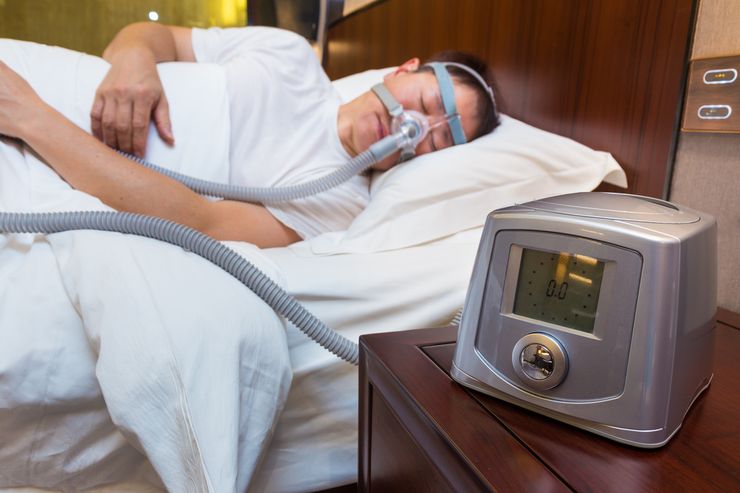
If you snore loudly, wake gasping, grind through the day exhausted despite a full night in bed, or carry extra weight around the neck, tell your doctor. A sleep study is one of the few gout-adjacent tests that also helps your heart and blood pressure.
When It Wakes You Anyway: The 3 A.M. Playbook
Prevention is the main game, but flares will occasionally break through. When one does, the playbook is short:
- Treat early. The first 12 to 24 hours matter more than anything else. Take the flare medicine your clinician gave you, a nonsteroidal anti-inflammatory drug (NSAID) such as naproxen or indomethacin, or colchicine, exactly as instructed. Waiting until morning can add days to an attack.
- Keep taking your daily urate-lowering pill. Do not stop allopurinol or febuxostat in the middle of a flare, and do not start one for the first time without medical guidance, because moving uric acid quickly can lengthen the attack. We explained why a normal uric acid reading during a flare means little in a separate piece.
- Get the weight off the joint. Lie back, prop the foot on pillows above heart level, and tent the sheet over the toe with a pillow or a foot cradle.
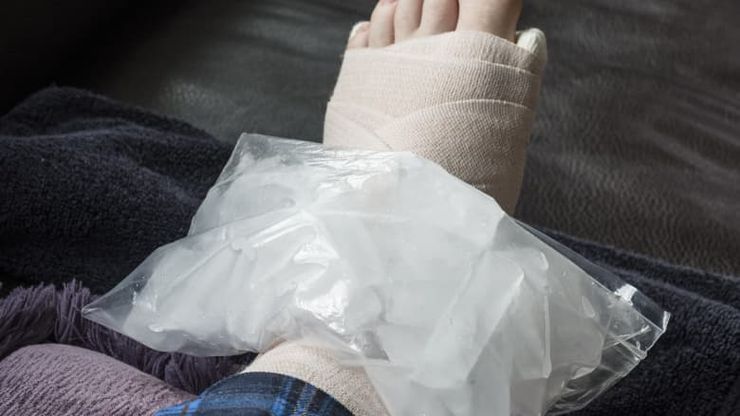
- Use cold, not heat. An ice pack in a thin towel for 15 to 20 minutes, repeated through the first day, knocks swelling back. Heat does the opposite to a joint that is actively inflamed.
- Sip water and skip the beer and the late-night leftovers. Diet will not fix tonight’s pain, but alcohol can make it worse.
Two situations need urgent care rather than home treatment: a first flare that has never been confirmed, since a hot swollen joint can also be an infection, and any hot joint with fever, chills, or feeling genuinely ill. Septic arthritis does not wait for office hours. If a known flare is simply not improving after 48 hours of correct treatment, call your clinician rather than doubling doses yourself.
Six Small Moves That Lower the Nighttime Odds
- Keep a rescue plan at the bedside. Ask your clinician now whether colchicine or an NSAID belongs in the house and exactly how to take it, so a 3 a.m. flare does not become a 9 a.m. start on treatment.
- Hydrate steadily through the evening. Regular intake across the day plus one glass of water before bed beats one big late load.
- Move dinner and drinks earlier. Alcohol with an evening meal pushes uric acid up through the night, and beer is the worst drink of the bunch by a wide margin. Our breakdown of what alcohol does to uric acid has the numbers.
- Keep your feet warm. Warm socks and adequate bedding blunt the overnight cooling that favors crystals. Skip tight socks that leave marks, since squeezing the foot all night is no help.
- Treat the uric acid, not just the flares. Daily urate-lowering therapy that keeps blood uric acid below 6 mg/dL shrinks the crystal deposit itself over months, which removes the ammunition these night attacks fire with. Untreated, a flare often runs 3 to 14 days; our day-by-day timeline shows what to expect.
- Get screened for apnea. Loud snoring, witnessed gasping, and heavy daytime sleepiness deserve a sleep study, especially when flares keep arriving before dawn despite everything else.
Gout is not a night owl by preference. It is a temperature, hydration, hormone, and sometimes breathing problem, and all four peak while you sleep. Fix what you can at the source, keep your flare medicine within arm’s reach, and those 3 a.m. fire drills get rarer.
Frequently Asked Questions
Why do gout attacks so often wake me up?
Four things line up overnight: your toe cools down, which helps urate crystallize; you become mildly dehydrated, which concentrates uric acid; your anti-inflammatory cortisol hits its lowest level after midnight; and the joint stays still for hours. In the Choi study, flares were 2.36 times more likely to begin between midnight and 8 a.m. than during the day.
Does it matter what time I take my gout medicine?
For daily urate-lowering pills such as allopurinol, consistency matters more than the exact hour, and you should not change your schedule without asking your prescriber. The researchers who mapped the nighttime pattern did note that short-acting flare-prevention medicine timed for the evening might plausibly cover the overnight risk window better, but that idea has not been tested in a trial. Bring it up at your next visit instead of experimenting at 3 a.m.
Will wearing socks to bed prevent a night flare?
It will not stop an attack on its own, but keeping the feet warm works with the chemistry: cooler peripheral joints are where crystals form most readily. Loose, warm socks are a reasonable, zero-cost addition. Tight socks that constrict the foot are not.
Can sleep apnea really contribute to gout?
Yes, through a plausible and measured pathway. Repeated nighttime oxygen dips speed purine turnover into uric acid and reduce how well the kidney clears it. Large database studies link apnea with substantially higher gout odds, and meta-analysis of CPAP trials found treatment lowered uric acid by around 0.35 mg/dL. CPAP is not a substitute for gout medication, but untreated apnea can work against it.
I woke up with a red, hot toe and no fever. Is it definitely gout?
Not from symptoms alone, even though that pattern is the classic one. Gout, a joint infection, and an injury can look similar early on. A first episode warrants an appointment, and crystal-clear diagnosis comes from testing a small sample of joint fluid. Fever, chills, spreading redness, or feeling very unwell with a hot joint means urgent care the same day.
Should I take colchicine before bed “just in case”?
Only on a plan your clinician wrote in advance. Some people on a standing flare-prophylaxis dose do take it at a set evening time, but colchicine has real interactions, notably with the antibiotic clarithromycin, and tighter dosing rules in kidney disease. A rescue plan you understand before the flare is exactly the right move; self-starting extra pills is not.
References
- Choi HK, Niu J, Neogi T, et al. “Nocturnal Risk of Gout Attacks.” Arthritis Rheumatol. 2015;67(2):555-560. doi:10.1002/art.38917. PubMed Central: PMC4360969.
- Loeb JN. “The Influence of Temperature on the Solubility of Monosodium Urate.” Arthritis Rheum. 1972;15(2):189-192. doi:10.1002/art.1780150209.
- Kippen I, Klinenberg JR, Weinberger A, Wilcox WR. “Factors Affecting Urate Solubility In Vitro.” Ann Rheum Dis. 1974;33(4):313-317.
- Dorner RW, Weiss TD, Moore TL. “Plasma and Synovial Fluid as Solvents for Monosodium Urate.” Ann Rheum Dis. 1981;40(1):70-74.
- “Obstructive Sleep Apnea: A Contributing Factor in Gout.” Cureus. 2024. PubMed Central: PMC10858747.
- Wang K, et al. “Effect of Continuous Positive Airway Pressure on Uric Acid in Patients With Obstructive Sleep Apnea: A Meta-Analysis.” Front Endocrinol (Lausanne). 2022;13:843520.
- FitzGerald JD, Dalbeth N, Mikuls T, et al. “2020 American College of Rheumatology Guideline for the Management of Gout.” Arthritis Rheumatol. 2020;72(6):879-895.
Reviewed by the GoutSavvy Editorial Team