Pseudogout vs Gout: Why the Wrong Crystal Could Mean the Wrong Treatment for Years
You wake up in the middle of the night. Your knee is on fire: swollen, red, throbbing with pain so intense that the bedsheet touching it feels like sandpaper. If you’ve had gout before, you’d probably assume this is another flare. Your doctor might agree.
But what if it’s not gout at all?
There’s another crystal-induced arthritis that mimics gout almost perfectly. It’s called pseudogout, and it’s the third most common form of inflammatory arthritis worldwide. The pain feels the same. The swelling looks the same. Even doctors get fooled, sometimes for years.
Here’s the problem: pseudogout is caused by a different crystal, stems from different underlying conditions, and calls for a different long-term strategy. If you’re treating pseudogout as if it were gout, you could be missing the real issue.
The Crystal That Isn’t Uric Acid
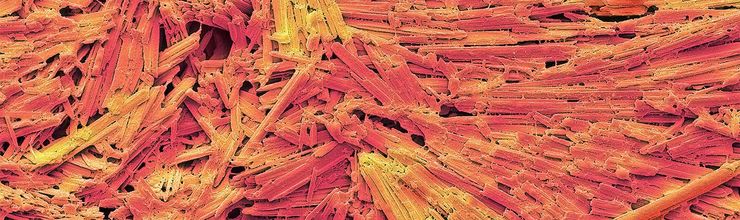
Gout happens when monosodium urate crystals build up in your joints. Think of them as microscopic needles: sharp, thin, and painfully effective at triggering your immune system. These crystals form when uric acid levels in your blood stay too high for too long.
Pseudogout, officially called calcium pyrophosphate deposition disease (CPPD), is caused by a different type of crystal. These are calcium pyrophosphate crystals: blocky, rhomboid-shaped structures that form inside joint cartilage rather than from blood chemistry.
The acute attacks look so similar that pseudogout was literally named “false gout.” But the root cause is a different story.
How to Tell Them Apart Without a Microscope
Only a lab test can definitively distinguish the two. But there are clues.
Which joint? Gout loves the big toe. The first metatarsophalangeal joint (the base of your big toe) gets hit in about half of first attacks. Pseudogout prefers the knee. Rheumatologists often say “the knee is to pseudogout what the big toe is to gout.” Wrists and shoulders are also more common in CPPD.
How long does it last? A typical gout flare peaks within 24 to 48 hours and fades within one to two weeks, even without treatment. Pseudogout attacks can drag on for weeks, sometimes months.
Age of onset. Gout often strikes men in their 30s to 50s, and women mostly after menopause. Pseudogout is predominantly a disease of older adults. Its prevalence roughly doubles every decade after age 50, and nearly half of people over 84 have some degree of CPP crystal deposition in their joints.
Triggers. Gout flares are often linked to diet, alcohol, dehydration, or starting urate-lowering medication. Pseudogout attacks can be triggered by joint trauma, surgery, or even medical procedures like angiography. Sometimes they seem to come out of nowhere.
The Only Test That Actually Works
Here’s the uncomfortable truth: you cannot definitively tell gout from pseudogout by symptoms alone. Even blood tests can mislead you. About 20% of people with CPPD also have hyperuricemia (high uric acid), so a high uric acid reading doesn’t prove your joint pain is gout.
The gold standard is synovial fluid analysis. A doctor inserts a needle into the swollen joint, draws out fluid, and examines it under a polarizing microscope. Urate crystals are needle-shaped and negatively birefringent (they bend light one way). CPP crystals are rhomboid-shaped and positively birefringent (they bend light the opposite way).
If you’ve been diagnosed with gout based only on symptoms and a blood test, with no joint fluid ever analyzed, there’s a real chance the diagnosis could be wrong. A content analysis of questions posted on Reddit’s gout community found that diagnostic uncertainty was the single most common question category, accounting for over 22% of all questions. Many people are walking around with a gout label they haven’t verified.
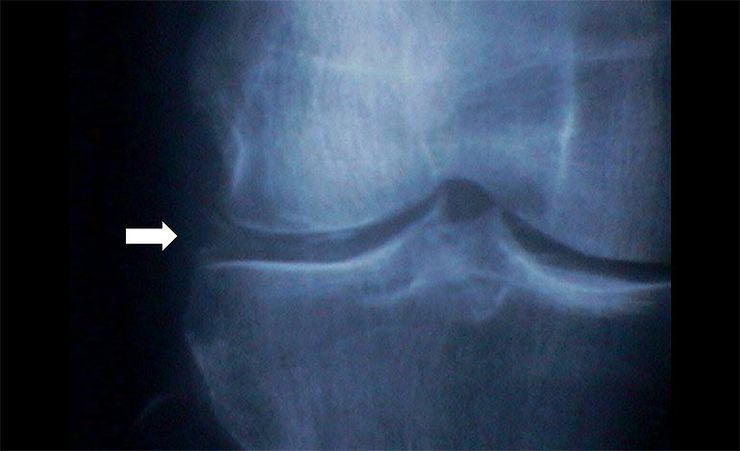
X-rays can help, too. In CPPD, calcium deposits in cartilage (called chondrocalcinosis) are often visible on plain radiographs, especially in the knees, wrists, and pubic symphysis. But the absence of chondrocalcinosis on X-ray doesn’t rule out CPPD.
Why the Difference Matters
You might be thinking: “They both hurt, and the acute treatment is basically the same, so who cares?”
Fair point. The acute treatment is similar: NSAIDs, colchicine, and corticosteroids work for both conditions. But the long-term picture is a different story.
Gout is treatable at its root. Urate-lowering therapy with medications like allopurinol or febuxostat can reduce uric acid production and dissolve existing crystal deposits over time. With proper medication and monitoring, gout flares can be prevented.
Pseudogout has no equivalent. There is currently no medication that dissolves calcium pyrophosphate crystals. Once they’re deposited in your cartilage, they stay. Treatment focuses on managing flare-ups and addressing underlying metabolic conditions that might be driving crystal formation.
This means that if you’re taking allopurinol for what’s actually pseudogout, you’re taking a medication that does nothing for your real condition. You might endure side effects for years with zero benefit. And the actual cause of your joint pain could be quietly causing damage elsewhere in your body.
The Hidden Conditions Behind Pseudogout
Unlike gout, which is primarily driven by uric acid metabolism, pseudogout is often linked to specific metabolic disorders. These conditions can and should be treated separately.
Hyperparathyroidism is one of the most common. Overactive parathyroid glands raise calcium levels throughout the body, which promotes CPP crystal formation. Treating the parathyroid issue (sometimes through surgery) can reduce pseudogout attacks.
Hemochromatosis (iron overload) is another major association. Excess iron promotes CPP crystal formation and can cause severe joint damage if left untreated. This is a genetic condition that, once identified, can be managed through regular blood removal (phlebotomy). Missing this diagnosis has serious consequences beyond joints: untreated hemochromatosis damages the liver, heart, and pancreas.
Hypomagnesemia (low magnesium) is a third key player. Magnesium helps regulate pyrophosphate metabolism, and low levels are linked to more frequent CPPD flares. Magnesium supplementation can reduce attack frequency in some people.
Anyone diagnosed with pseudogout should be screened for these conditions. Checking serum calcium, magnesium, thyroid function, and iron panels is standard medical practice, not optional.
When Both Diseases Show Up at Once
Here’s a twist: gout and pseudogout can coexist in the same joint. Research shows that about 20% of people with CPPD also have hyperuricemia, and roughly a quarter of those will eventually develop gout.
In rare cases, both types of crystals have been found in the same synovial fluid sample. You might genuinely have both conditions, each requiring separate treatment. This is another reason why proper diagnostic testing matters: it can catch what blood tests alone would miss.
What to Do If You Suspect Misdiagnosis
If you’ve been diagnosed with gout but something doesn’t add up (your attacks last longer than typical gout flares, they mostly affect your knees or wrists instead of your toe, or your uric acid medication doesn’t seem to help), consider asking your doctor about CPPD.
Specifically, ask:
- Has synovial fluid ever been drawn from my joint and examined under a microscope?
- Could I be tested for chondrocalcinosis with X-rays?
- Should I be screened for hyperparathyroidism, hemochromatosis, or low magnesium?
A rheumatologist is the specialist most qualified to differentiate between these conditions. If you’re being managed by a primary care physician and your flares aren’t responding to standard gout treatment, a rheumatology referral is worth requesting.
The Bottom Line
Gout and pseudogout are the two most common crystal-induced joint diseases, and they can be nearly impossible to tell apart without lab testing. But they have different causes, different long-term implications, and different treatment strategies.
If you’re one of the many people diagnosed with gout based on symptoms alone, it’s worth asking whether that diagnosis has ever been confirmed with joint fluid analysis. Because if it’s actually pseudogout, no amount of urate-lowering medication will fix the problem. And the real underlying condition could be quietly causing damage elsewhere in your body.
FAQ
1. Can pseudogout turn into gout?
No, one disease doesn’t transform into the other. However, both conditions can coexist in the same person. About 20% of people with CPPD also have hyperuricemia, and some develop gout independently. Having both conditions at the same time is possible but requires separate management strategies.
2. Does diet affect pseudogout the way it affects gout?
Not really. Gout flares are strongly linked to dietary purines, alcohol, and fructose. Pseudogout is driven by calcium pyrophosphate crystals, which aren’t directly influenced by what you eat. However, maintaining healthy magnesium levels through diet may help reduce CPPD flare frequency in some people.
3. Can pseudogout damage joints permanently?
Yes. Repeated pseudogout attacks can cause chronic joint damage, including cartilage degradation and bone cysts. In severe cases, CPPD can cause destructive arthropathy that resembles Charcot joint (a condition usually seen with diabetes-related nerve damage). This is why proper diagnosis and flare prevention matter.
4. Is there a blood test for pseudogout?
No. Unlike gout, which can be partially assessed through serum uric acid levels, there’s no blood test that directly diagnoses CPPD. The definitive diagnosis requires identifying CPP crystals in synovial fluid or detecting chondrocalcinosis on X-rays. Blood tests are useful for screening the metabolic conditions (hyperparathyroidism, hemochromatosis, hypomagnesemia) that often accompany pseudogout.
5. Can I take allopurinol if I have pseudogout?
Allopurinol lowers uric acid and has no effect on calcium pyrophosphate crystals. If you have pseudogout without gout, allopurinol won’t help. If you have both conditions, you’d need allopurinol for the gout component and separate management (NSAIDs, colchicine, corticosteroid injections) for the pseudogout component.
References
- Rosenthal AK, Ryan LM. Calcium Pyrophosphate Deposition Disease. N Engl J Med. 2016;374(26):2575-2584.
- Zhang W, Doherty M, Pascual E, et al. EULAR recommendations for calcium pyrophosphate deposition. Part I: Terminology and diagnosis. Ann Rheum Dis. 2011;70(4):563-570.
- Kleiber Balderrama C, Rosenthal AK, Lans D, Singh JA, Bartels CM. Calcium Pyrophosphate Deposition Disease and Associated Medical Comorbidities: A National Cross-Sectional Study of US Veterans. Arthritis Care Res. 2017;69(9):1400-1406.
- Rho YH, Zhu Y, Zhang Y, Reginato AM, Choi HK. Risk factors for pseudogout in the general population. Rheumatology. 2012;51(11):2070-2074.
- Tedeschi SK, Kumar S, Costenbader KH. Calcium Pyrophosphate Deposition Disease. In: StatPearls. Treasure Island, FL: StatPearls Publishing; 2025.
- Abhishek A. Calcium pyrophosphate deposition disease: clinical manifestations, diagnosis, management. Curr Rheumatol Rep. 2018;20(7):43.
- Dalbeth N, Merriman TR, Stamp LK. Gout. Lancet. 2016;388(10055):2039-2052.
Reviewed by the GoutSavvy Editorial Team