You take your allopurinol every morning. You watched what you ate, cut back on beer, dropped twenty pounds. And still, your uric acid sits above 7. The flares keep coming. Tophi are growing on your knuckles and elbows, hard little lumps under the skin that won’t go away. Your doctor has tried bumping the dose, switching you to febuxostat, adding probenecid. Nothing sticks.
If that sounds like your life, you are one of roughly 200,000 people in the United States living with what doctors call uncontrolled gout. A new treatment could be heading your way soon. Its name is NASP, and the data behind it are worth paying attention to.
What Uncontrolled Gout Actually Means
First, a quick definition. Uncontrolled gout is not a single bad flare. It is chronic, persistent elevation of serum uric acid above 6 mg/dL even though you are taking oral urate-lowering therapy. Your pills aren’t getting the job done, and the disease keeps progressing: flares, tophi, joint damage, sometimes kidney stones.
Roughly 2 percent of people with gout fall into this category. That sounds small until you realize over 9 million Americans carry a gout diagnosis. The math yields a population the size of a small city, and for decades, their options have been painfully limited.
Standard oral medications, like allopurinol and febuxostat, work by blocking xanthine oxidase, the enzyme your body uses to make uric acid. Uricosuric drugs such as dotinurad help your kidneys flush more uric acid out. These approaches work for most people. They do not work for everyone, and some people cannot tolerate them due to side effects or kidney problems.
Enter the uricases.
What Is NASP, Exactly?
NASP stands for nanoencapsulated sirolimus plus pegadricase. It used to be called SEL-212 during clinical development. Sobi, the company behind it, submitted a Biologics License Application to the U.S. Food and Drug Administration (FDA) in 2025. The FDA set a target decision date of June 27, 2026. As of this writing, approval is pending.
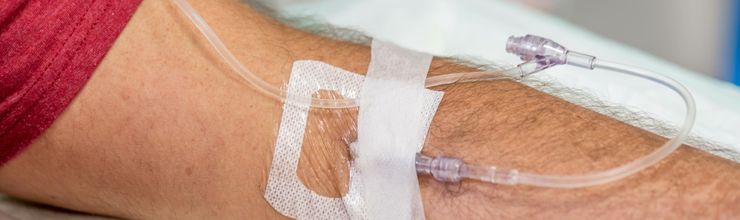
The treatment comes as two separate intravenous infusions given back to back, once every four weeks.
Pegadricase is a pegylated uricase. Uricase is an enzyme most mammals carry but humans lost through evolution. It converts uric acid into allantoin, a compound roughly ten times more soluble in water. Your kidneys can then flush it out easily. Pegloticase (brand name Krystexxa), the only other uricase approved for gout, works on the same principle and has been available since 2010.
So why not just use pegloticase? Because the immune system tends to attack it. Up to half of people treated with pegloticase develop anti-drug antibodies that neutralize the enzyme, causing the drug to stop working. These antibodies can also trigger serious infusion reactions, including anaphylaxis in about 5 percent of patients. That is why the label now recommends co-administering methotrexate, an immunosuppressant with its own side-effect burden.
Nanoencapsulated sirolimus (NAS) is the second piece, and it is what makes NASP different. Sirolimus, also known as rapamycin, is an immunosuppressant with a long history in organ transplantation. Here it is wrapped inside biodegradable nanoparticles made of polylactic acid and polyethylene glycol. These particles are designed to be swallowed by specific immune cells, where they release sirolimus and coax the immune system into tolerating the pegadricase rather than attacking it.
Think of it as a diplomatic package. The nanoparticle is the envelope, sirolimus is the letter asking your immune system to stand down, and pegadricase is the actual work crew that arrives afterward to clean up the uric acid.
The DISSOLVE Trials: What the Data Show
NASP was tested in two identically designed phase 3 randomized, double-blind, placebo-controlled trials: DISSOLVE I (conducted in the United States) and DISSOLVE II (a global study). Together they enrolled 265 adults with uncontrolled gout. Participants were randomized 1:1:1 to high-dose NASP, low-dose NASP, or placebo.
High dose meant 0.15 mg/kg of nanoencapsulated sirolimus followed by 0.2 mg/kg of pegadricase. Low dose used 0.10 mg/kg of sirolimus with the same pegadricase dose. Infusions came every four weeks for a total of six doses over 24 weeks.
The primary endpoint was specific: the proportion of patients whose serum uric acid stayed below 6 mg/dL for at least 80 percent of the time during the final month of treatment (weeks 21 through 24).
The pooled response rates were 51 percent for high-dose NASP, 43 percent for low-dose NASP, and 8 percent for placebo. Both active doses beat placebo by statistically significant margins.
But the uric acid number alone does not tell the whole story.

Tophi Actually Shrank
Tophi are the visible, hard deposits of urate crystals that build up under the skin and around joints in long-standing gout. Oral therapy can dissolve them, but it often takes years. In a post-hoc analysis of the DISSOLVE data presented at the American College of Rheumatology (ACR) Convergence 2025 meeting, NASP produced meaningful tophus reduction in just six months.
Among participants who had tophi at baseline and received all six doses, complete tophus resolution by week 24 occurred in:
- 49 percent on high-dose NASP
- 70 percent on low-dose NASP
- 5 percent on placebo
Partial or better response (at least 50 percent reduction in tophus area) was seen in 82 to 88 percent of NASP-treated patients versus 51 percent on placebo.
Those numbers are striking. If you have been living with visible lumps on your hands or elbows for years, the possibility of them vanishing within half a year is not trivial.
The Speed Is Unlike Oral Medication
One thing that separates uricase therapy from pills is how fast it works. After the very first NASP infusion, mean serum uric acid dropped by roughly 97 percent within one hour. Levels went from a baseline around 8 to 9 mg/dL down to approximately 0.2 mg/dL. That is not a typo.
Among patients who stayed on treatment through the 48-week extension of DISSOLVE I, uric acid remained below 2 mg/dL the entire time. In placebo patients, it stayed near baseline.
Does going that low matter? The saturation threshold for uric acid is about 6.8 mg/dL. Above it, new crystals form. Below it, existing crystals begin to dissolve. Dropping to under 2 mg/dL is aggressive, but it creates a strong concentration gradient that pulls urate out of tissue deposits faster. The trade-off: very low uric acid may carry its own risks over the very long term, which is why researchers continue to monitor patients in extension studies.
Gout Flares Decreased Over Time
Here is a paradox anyone starting urate-lowering therapy knows: flares often get worse before they get better. As crystals dissolve, they can shed microscopic fragments that trigger fresh attacks. NASP was no different in the early weeks. During the first month, flares occurred in 15.8 percent of high-dose patients and 43.8 percent of low-dose patients, compared with 28 percent on placebo.
Then the curve flipped. By weeks 21 to 24, the flare rate dropped to 5.3 percent on high dose and 12.5 percent on low dose, while placebo stayed at 28 percent. In the extension phase, during weeks 45 to 48, zero high-dose patients and 7.7 percent of low-dose patients had a flare, compared with 22.7 percent on placebo.
Doctors typically prescribe a prophylaxis, such as colchicine or an NSAID, during the first three to six months of any urate-lowering therapy to smooth out this early bump. Expect the same approach if NASP reaches your clinic.
How Does It Compare to Pegloticase?
A phase 2 trial called COMPARE directly tested NASP against pegloticase in 151 adults with refractory gout. NASP was given once monthly; pegloticase was given twice monthly, which is the standard schedule.
The proportion of patients maintaining uric acid below 6 mg/dL for at least 80 percent of the time was numerically higher with NASP (53 percent) than pegloticase (46 percent), though the difference did not reach statistical significance. NASP produced deeper percentage reductions in uric acid at both three and six months. Infusion-related reaction rates were comparable: 15.7 percent with NASP versus 11.5 percent with pegloticase.
The practical difference comes down to convenience. Once-monthly infusions versus twice-monthly means fewer trips to the infusion center, fewer co-pays, and less exposure to pre-infusion medications over a year. For people who respond to NASP, that is a meaningful reduction in treatment burden.
Safety: What to Watch For
NASP was generally well tolerated across the trials. Most adverse events were mild to moderate. There were, however, some specific concerns worth knowing about.
Infusion reactions occurred in about 3.4 to 4.5 percent of patients, mostly within the first three infusions. They typically resolved by slowing or pausing the infusion and giving symptomatic treatment. Two cases of anaphylaxis were reported across the program, which sounds alarming but is consistent with the broader biologic infusion landscape.
Stomatitis, meaning mouth sores or inflammation of the oral lining, showed up in roughly 3.4 to 9.2 percent of NASP patients depending on dose, versus zero on placebo. This is a known side effect of sirolimus. It was generally manageable.
Gout flares were the most common adverse event overall, especially early on. As discussed, this is expected with any rapid urate-lowering approach and tends to decrease over time.
Serious adverse events were balanced across groups, and no drug-related deaths occurred during the clinical trial period.
Who Is This Treatment Actually For?
NASP is not for everyone with gout. It is designed for a narrow population: adults whose uric acid remains above target despite oral therapy, or who cannot tolerate oral medications due to contraindications or side effects. If allopurinol or febuxostat controls your uric acid just fine, an intravenous infusion every four weeks is overkill.
The likely candidates include people with:
- Recurrent flares despite maximally tolerated oral urate-lowering therapy
- Visible tophaceous disease that is not resolving on pills
- Chronic kidney disease that limits the use of allopurinol or febuxostat
- Contraindications to both major oral drug classes
If that is you, the message is: hang in there. A new option is moving through the regulatory pipeline. If approved, it would join pegloticase as the second uricase-based therapy and the first to use a nanoparticle immune-tolerance approach rather than broad immunosuppression with methotrexate.
For context on how far gout treatment has come, it was only a few years ago that stopping gout medication was something patients commonly tried because their options felt so limited. The pipeline is deeper now than it has ever been.
The Bigger Picture
Uncontrolled gout is more than a joint problem. Persistently high uric acid is linked to cardiovascular disease, kidney damage, and metabolic dysfunction. Tophi can erode bone and destroy joints. Flares can cost days of work and wreck sleep and mood. Studies using the 36-Item Short Form Survey (SF-36) quality-of-life instrument found that NASP produced meaningful improvements in both physical and mental component scores after six months, along with reductions in pain and disability scores.
So the stakes go beyond comfort. Bringing uric acid under control can change the trajectory of the disease.
What NASP represents is a shift in how uncontrolled gout can be approached. Instead of piling on more oral pills with limited incremental benefit, an infusion can rapidly drive uric acid to extremely low levels while a built-in immune-tolerance mechanism helps the treatment keep working. If the FDA gives the green light, rheumatologists will have a tool they have not had before: a monthly uricase infusion that does not require concurrent methotrexate for most patients.
Approval is not guaranteed. The PDUFA date has passed as of this writing, and final labeling and post-marketing requirements will shape how it is used. But the phase 3 data are published in a peer-reviewed journal, and the tophus-resolution numbers are hard to ignore.
If you have been struggling with uncontrolled gout, this is one to bring up at your next rheumatology appointment. Ask whether you might be a candidate once it becomes available. Ask about the infusion schedule, the prophylaxis protocol for early flares, and how it would interact with your current medications. The best gout treatment is the one you can actually stick with, and for some people, a monthly infusion will beat a daily pill that never quite gets the job done.
Frequently Asked Questions
When will NASP be available for gout?
NASP (nanoencapsulated sirolimus plus pegadricase) was under FDA review with a target decision date of June 27, 2026. As of publication, final approval status and launch timing should be confirmed through the FDA or the manufacturer, Sobi. If approved, it would likely become available in specialty infusion centers in the months following approval.
How is NASP different from pegloticase (Krystexxa)?
Both are uricase enzymes that break down uric acid into a more soluble compound called allantoin. The key difference is that NASP includes nanoencapsulated sirolimus, which trains the immune system to tolerate the uricase rather than attack it. Pegloticase is given twice monthly, while NASP is given once every four weeks. NASP also does not require routine co-administration of methotrexate, which current pegloticase labeling recommends.
Does NASP cure gout?
No treatment cures gout. NASP is a long-term therapy that controls uric acid while it is being administered. In the DISSOLVE extension study, patients who stopped treatment saw their uric acid rise back toward baseline. If approved, NASP would likely be used as ongoing maintenance therapy, similar to how oral urate-lowering medications are taken indefinitely.
What are the most common side effects of NASP?
The most frequent adverse events in clinical trials were gout flares (especially during the first three months as crystals dissolve), infusion reactions, and stomatitis (mouth sores linked to the sirolimus component). Most events were mild to moderate. Infusion reactions occurred in roughly 3 to 5 percent of patients and were more common during the first few infusions.
Will my insurance cover NASP if it is approved?
Specialty infused biologics are typically covered by medical benefits rather than pharmacy benefits, but coverage varies by plan. Because NASP is intended for uncontrolled gout, a narrower population than general gout, insurers may require documentation that oral therapies have failed or are contraindicated. Specific coverage policies will not be available until after FDA approval and launch.
Can I switch from allopurinol directly to NASP?
That decision belongs to your rheumatologist. In the DISSOLVE trials, participants had uncontrolled gout despite oral therapy, meaning they had already tried standard treatments without success. NASP is not a first-line option. If your current medication controls your uric acid and you have no tolerability issues, there is no reason to switch.
References
- Baraf HSB, Khanna PP, Petronijevic M, et al. “Efficacy and Safety of Nanoencapsulated Sirolimus plus Pegadricase: Results from the Randomized, Placebo-Controlled Phase 3 Trials.” Arthritis & Rheumatology. 2025;77(suppl 9). PMID: 42351343.
- Sobi. “FDA Accepts Biologics License Application for Sobi’s NASP for Patients with Uncontrolled Gout.” Press release. September 10, 2025. sobi.com.
- Baraf H, Khanna P, Lioté F, et al. “Reduction in Tophi Observed in Patients with Uncontrolled Gout Treated with NASP: Results from Phase 3 DISSOLVE Studies.” Abstract presented at ACR Convergence 2025; October 28, 2025; Chicago, IL.
- Kivitz A, Singhal A, Patel A, et al. “Nanoencapsulated Sirolimus plus Pegadricase (NASP) Demonstrates Long Term Efficacy and Safety in Patients with Uncontrolled Gout: Results from the 24-week Double-blind Extension of the Phase 3 DISSOLVE I Study.” Poster presented at ACR Convergence 2025; October 2025; Chicago, IL.
- Khanna P, et al. “Nanoencapsulated Sirolimus Plus Pegadricase Reduced Disease Burden in Patients With Uncontrolled Gout: Results From the Phase 3 DISSOLVE Trials Post Hoc Analysis.” Oral presentation, ACR Convergence 2025.
- Baraf HSB, et al. “SEL-212 (pegadricase plus rapamycin-containing nanoparticle, ImmTOR) versus pegloticase for refractory gout: the COMPARE head-to-head, randomized controlled phase 2 trial.” Rheumatology. 2024;63(4):1058-1067. PMC10986798.
- Strand V, Khanna P, Kivitz A, et al. “Improvements in Patient-Reported Outcomes After Treatment with SEL-212 in Adults with Refractory Gout: Results from Two Randomized Phase 3 Trials.” Abstract presented at ACR Convergence 2024; November 16, 2024; Washington, DC.
- Selecta Biosciences and Sobi. “Phase 3 DISSOLVE Program of SEL-212 in Chronic Refractory Gout Meets Primary Endpoint.” Press release. March 21, 2023.
Reviewed by the GoutSavvy Editorial Team