
That Antibiotic You Took Might Have Woken Up Your Gout
You went to the dentist, got a tooth pulled, and left with a week of clindamycin. A few days later, your big toe is on fire. The timing seems like a coincidence. Your dentist says antibiotics don’t cause gout. Your primary care doctor isn’t sure either.
But a body of research led by Stanford University’s Dylan Dodd, MD, PhD, and presented at EULAR 2026 in London, suggests the connection is real. Some antibiotics wipe out the gut bacteria that quietly break down roughly a third of your body’s uric acid. Kill those bacteria, and your uric acid can spike fast enough to trigger an attack.
This isn’t another story about diet or alcohol. It’s about a hidden system most people with gout have never heard of, and a common medication that can break it.
Your Gut Is a Second Kidney for Uric Acid
Most people think uric acid only leaves the body through urine. That’s mostly true. The kidneys filter about two-thirds of daily uric acid production. The remaining third gets dumped into the intestinal tract, where something surprising happens: bacteria eat it.
Researchers first noticed this in the 1950s and 1960s. They gave healthy volunteers radiolabeled uric acid and collected urine for two weeks. Only about two-thirds of the label came back in urine. The rest showed up as labeled carbon dioxide in exhaled breath, which meant the body was breaking uric acid down somewhere other than the kidneys (Sorensen, 1965).
That somewhere was the gut. When the same volunteers took antibiotics to wipe out their gut microbiome, the labeled CO2 dropped sharply. In people with kidney disease, who already struggle to clear uric acid through urine, the intestinal route picked up even more of the slack, accounting for up to 80% of labeled uric acid elimination.
For decades, nobody knew exactly how gut bacteria pulled this off. Dodd’s lab at Stanford finally figured it out.
The 2,8-Dioxopurine Pathway: What Gut Bacteria Actually Do
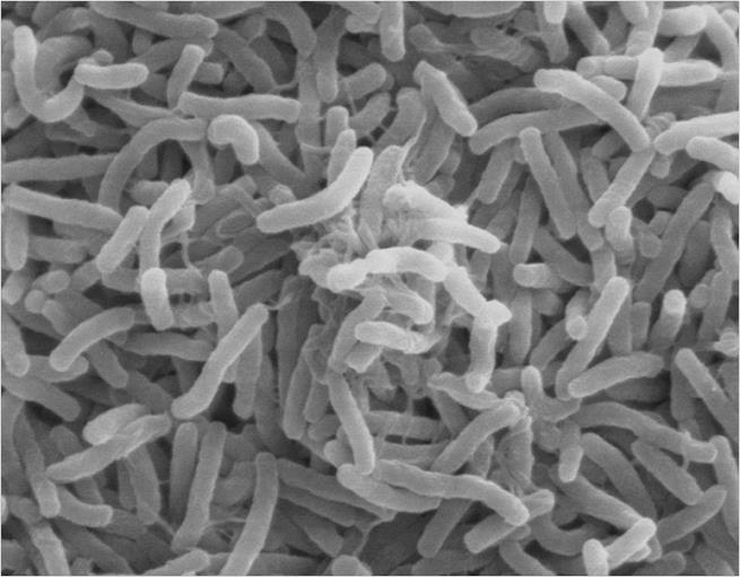
Dodd’s team screened over 200 species of gut bacteria and found that roughly one in five can degrade uric acid. The capacity is common among Firmicutes but largely absent in Bacteroidetes, two of the most dominant phyla in the human gut.
Using stable-isotope tracing and RNA sequencing, the researchers identified a shared gene cluster across these bacteria. Through gene knockouts and metabolomic analysis, they reconstructed a previously unknown seven-enzyme pathway they named the 2,8-dioxopurine pathway (Liu et al., 2025).
Here’s the simplified version. A selenium-dependent enzyme related to xanthine dehydrogenase converts uric acid into a compound called 2,8-dioxopurine. From there, six more enzymes break it down further into pyruvate and short-chain fatty acids. In a test tube, this process chews through roughly 50% of available uric acid within an hour. The bacteria even generate ATP as a byproduct, giving them a genuine energy incentive to keep doing it.
That incentive matters. In gnotobiotic mouse experiments, bacteria with the intact pathway outcompeted mutant strains lacking the key dehydrogenase by roughly 1,000-fold within two weeks. These bacteria want to eat your uric acid. It’s lunch.
What Happens When Antibiotics Kill Those Bacteria
The mouse data are striking. Uricase-knockout mice, which lack the enzyme humans also lost during evolution, were given a course of antibiotics. Within three days, their plasma urate levels shot up to eight times the solubility limit, and they showed signs of acute kidney injury (Liu et al., 2023).
Eight times. That’s not a minor fluctuation. That’s a system collapsing because its backup route just got wiped out.
Not all antibiotics are equally problematic. The key distinction is whether the drug covers anaerobic bacteria, the type that predominantly carry the uric acid-degrading pathway. Clindamycin, a commonly prescribed antibiotic for dental infections and skin abscesses, has broad anaerobic coverage. Trimethoprim/sulfamethoxazole (TMP/SMX, sold as Bactrim or Septra) targets mostly aerobic bacteria.
Dodd’s team used electronic health records from Stanford Health Care, collected between 2015 and 2019, to compare the two. They looked at over 7,500 adults who took at least five days of oral clindamycin against over 23,000 who took TMP/SMX. After propensity score matching to balance age, sex, and comorbidities, the clindamycin group had a 30% higher risk of receiving a new gout diagnosis (hazard ratio 1.3, 95% CI 1.1 to 1.54) (Liu et al., 2023).
A larger target-trial emulation presented at ACR Convergence 2024 reinforced the finding and sharpened it. Among 306,058 matched pairs, clindamycin was associated with a 61% higher rate of gout flares compared to TMP/SMX in the general population (adjusted rate ratio 1.61, 95% CI 1.37 to 1.89). But in people with chronic kidney disease, the numbers were far worse: a 271% increase, with 37.2 flares per 1,000 person-years versus 10.3 for TMP/SMX (adjusted rate ratio 3.71, 95% CI 2.17 to 6.34) (ACR Abstracts, 2024).
That interaction makes biological sense. People with CKD already lean heavily on the intestinal route because their kidneys can’t keep up. Take away the gut bacteria, and there’s nowhere left for uric acid to go.
Which Antibiotics Should You Worry About?
The research specifically flags antibiotics with broad anaerobic coverage. Clindamycin is the most studied example. Others that can suppress anaerobic gut bacteria include amoxicillin-clavulanate (Augmentin), metronidazole (Flagyl), and some broad-spectrum cephalosporins and fluoroquinolones.
But this does not mean you should refuse antibiotics when you need them. Untreated infections are dangerous, and the risk of a gout flare has to be weighed against the risk of letting a bacterial infection spread. The practical takeaway is awareness.
If you have gout, especially if you also have kidney disease, and a doctor prescribes an antibiotic with anaerobic coverage, mention your gout history. Ask whether a narrower-spectrum option would work for your infection. You cannot always avoid clindamycin, but in some cases a different antibiotic with less anaerobic impact may be equally effective.
And if you do need to take one? Stay on your urate-lowering medication. Make sure you’re hydrated. Watch for early flare symptoms in the days and weeks after the course. If you feel that familiar tingle in a joint, talk to your doctor about flare prophylaxis early rather than waiting for full-blown pain.
Antibiotics Don’t Treat Gout
One more thing worth saying clearly: gout is not an infection. Uric acid crystals trigger a sterile inflammatory response. Antibiotics do nothing for a gout flare itself. If a swollen joint is being treated with antibiotics alone, without anti-inflammatory medication like colchicine, a nonsteroidal anti-inflammatory drug (NSAID), or a steroid, something is wrong with the plan.
This comes up more often than you might think. An acutely red, hot joint can look like cellulitis, and sometimes the two conditions overlap. But if there is no confirmed bacterial infection, antibiotics won’t help the pain and could make the underlying uric acid problem worse.
You can read more about how to distinguish gout from lookalikes in our piece on pseudogout vs gout, and about why low-dose aspirin can also raise uric acid through a completely different mechanism.
The Future: Probiotics That Eat Uric Acid
The flip side of this research is more hopeful. If gut bacteria can break down uric acid, and some people don’t have enough of them, could you replace them?
Dodd’s team engineered a strain of E. coli Nissle, a probiotic bacterium, to carry the uric acid-degrading gene cluster. When given to uricase-deficient mice with high uric acid, the engineered bacteria significantly lowered serum urate and reduced kidney injury (Liu et al., 2023). Separate work published in Life Metabolism reported similar results with a probiotic formulation called CBT2.0, and even identified a metabolite called yanthine that was elevated in the serum of people with gout, suggesting it could serve as a biomarker (Liu et al., 2024).
None of this is ready for your pharmacy shelf yet. Live biotherapeutic products, engineered bacteria, and targeted microbial supplements are still in early stages. But the direction is clear. The gut microbiome is not a passive bystander in gout. It actively processes uric acid, and disrupting it has measurable consequences.
If you’ve had a gout flare that seemed to come out of nowhere, think back to the weeks before. A dental procedure. A sinus infection. A round of antibiotics you barely thought about. The connection may not be a coincidence after all.
For more on what raises uric acid beyond the usual suspects, check out our coverage of heartburn medications and gout risk and gout treatment when kidneys fail.
References
- Liu Y, Jarman JB, Low YS, et al. “A widely distributed gene cluster compensates for uricase loss in hominids.” Cell. 2023;186(16):3400-3413.e20. PMC10421625.
- Liu Y, Zhou Z, Jarman JB, et al. “Gut bacteria degrade purines via the 2,8-dioxopurine pathway.” Nature Microbiology. 2025;10(9):2291-2305. PMC12666987.
- Sorensen LB. “Role of the intestinal tract in the elimination of uric acid.” Arthritis & Rheumatism. 1965;8(5):694-706.
- Liebowitz J. “The Gut’s Hidden Role in Gout.” The Rheumatologist. August 11, 2026. Link.
- “Exposure to Anaerobic Antibiotics and Risk of Gout Flares: Target Trial Emulation for the Potential Role of the Gut Microbiome in Gout and Chronic Kidney Disease.” ACR Abstracts. 2024. Link.
- “The Gut Microbiome in Hyperuricemia and Gout.” PMC. 2025. PMC12276925.
- “A reductive uric acid degradation pathway in anaerobic bacteria.” Life Metabolism. 2025;4(6):loaf031. PDF.
Frequently Asked Questions
Can antibiotics really trigger a gout flare?
Research from Stanford and presented at EULAR 2026 suggests that antibiotics targeting anaerobic bacteria, such as clindamycin, can wipe out gut bacteria that break down uric acid. In mouse studies, this caused uric acid to spike to eight times the solubility limit within three days. In human health records, clindamycin was associated with a 30% higher risk of new gout diagnosis and, in a larger study, a 61% higher flare rate compared to an antibiotic that does not target anaerobes.
Which antibiotics are most likely to cause this problem?
The research focuses on clindamycin because it has broad anaerobic coverage. Other antibiotics that can suppress anaerobic gut bacteria include amoxicillin-clavulanate (Augmentin), metronidazole (Flagyl), and some broad-spectrum cephalosporins and fluoroquinolones. Antibiotics that primarily target aerobic bacteria, such as trimethoprim/sulfamethoxazole (Bactrim), showed a smaller association in the studies.
I have gout and my dentist prescribed clindamycin. What should I do?
Do not skip a needed antibiotic. Tell your dentist or prescribing doctor that you have gout and ask if a narrower-spectrum antibiotic would work for your infection. Stay on your urate-lowering medication, drink plenty of water, and watch for early flare signs in the weeks after the course. If you feel a flare coming on, contact your doctor promptly.
Is the risk higher if I have kidney disease?
Yes. A large target-trial emulation found that people with chronic kidney disease had over 3.7 times the rate of gout flares after taking clindamycin compared to TMP/SMX. People with CKD rely more heavily on gut bacteria for uric acid clearance because their kidneys are already functioning below capacity.
Will probiotics help prevent gout flares?
Engineered probiotic bacteria that carry uric acid-degrading genes have shown promise in mouse studies, lowering serum urate and reducing kidney injury. However, these are still experimental and not available as clinical treatments. Off-the-shelf probiotics have not been proven to lower uric acid or prevent flares in humans.
Do antibiotics treat a gout attack?
No. Gout is a sterile inflammatory reaction to uric acid crystals, not a bacterial infection. Antibiotics do not relieve gout pain. A gout flare is treated with anti-inflammatory medications such as colchicine, NSAIDs, or corticosteroids. If antibiotics are prescribed without anti-inflammatory treatment for what appears to be gout, ask your doctor to confirm whether an infection is actually present.
Reviewed by the GoutSavvy Editorial Team