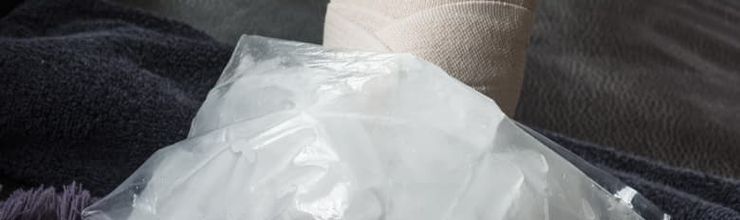
It is 2 a.m. Your big toe is red, swollen, and so hot you can feel the heat through the sheet. One person in the house says, “Put ice on it.” Someone online swears by a hot Epsom salt soak. Both ideas sound reasonable. Only one of them is a good idea right now, and a lot of people pick the wrong one at the exact worst time.
This is one of the most common questions on gout forums every week: heat or ice? The short answer is ice, with a cloth between the pack and your skin, for about 15 to 20 minutes at a time. Heat during an active flare can make the swelling and the throbbing worse. The longer answer, including why cold works, how often to apply it, and when a hot soak is not crazy, is worth getting right, because this is the one treatment you can start in the first ten minutes, before any pharmacy opens.
Why Heat Feels Good for Ten Minutes and Then Makes Things Worse
Warmth relaxes muscles and feels soothing for the first few minutes, which is why so many people trust it. What it does inside an inflamed joint is the problem. Heat opens up blood vessels near the skin. More blood flows into tissue that is already flooded with inflammatory cells. Your joint gets warmer, and warm tissue swells more and throbs harder.
This is not just a theory. Researchers in the Netherlands put temperature probes inside the knee joints of 42 healthy volunteers and watched what happened after different hot and cold treatments. Ice chips dropped the temperature inside the joint from about 31.9°C (89.4°F) to 22.5°C (72.5°F). A warm wax treatment raised the joint temperature by 3.5°C (6.3°F). The authors wrote plainly that superficial heat packs may cause harm in inflamed joints by driving up the temperature inside them.
There is a second, older reason cold matters for gout specifically. Uric acid in your body forms monosodium urate crystals, and how well those crystals stay dissolved depends on temperature. Cold tissue holds less dissolved urate. A classic 1972 lab study by Loeb measured this directly, and it helps explain why gout loves the coolest parts of the body, toes, ears, and fingertips, and why flares so often start in the big toe on a cold night. If you are thinking, “Wait, wouldn’t ice then make more crystals?” fair question. The crystals that started this flare are already there. A cold pack at the skin surface slows the blood flow and the immune fireworks around those crystals for a short, controlled time. It is not the same thing as living with cold, poorly circulated feet for hours.
The real-world comparison was published in 2025. A randomized trial in India split 2,400 people with acute gout into hot fomentation at 38 to 42°C (100 to 108°F) or cold fomentation at 5 to 10°C (41 to 50°F), twice a day for 20 minutes over five days, both on top of standard treatment. By day five, pain scores had fallen 68% in the cold group versus 26% in the heat group. Swelling dropped 25% against 5%. Here is the number that should make you put the foot basin away: 35% of people using hot packs had their flare get worse, compared with 2% in the cold group.
One honest caveat. That trial appeared in the Journal of Orthopaedic Case Reports, which is not one of the big rheumatology journals, so I would not build my whole evening around those exact percentages. The direction of the finding is what matters, and it lines up with the temperature-probe study, the lab chemistry, and what the only gout-specific ice trial found more than 20 years earlier.
What the Only Gout-Specific Ice Study Actually Found
The study everyone cites was small, and you should know that. In 2002, rheumatologists in New Jersey enrolled 19 people during acute flares and randomized them to standard medication, prednisone plus colchicine, with or without topical ice packs, then followed them for a week.
The ice group reported a mean pain reduction of 7.75 cm on a 10 cm scale. The control group reported 4.42 cm. The difference was statistically significant at p = 0.021. Ice did not clearly beat the control on joint circumference or fluid volume, which the authors admitted, and 19 people is a small trial. A Cochrane lifestyle review later graded the evidence as low quality, noting ice added about 3.33 cm of pain relief on top of the medicines, a 33% extra reduction, but came from that single trial.
So the honest summary is this: ice is not a miracle, and the evidence base is modest. It is free, it is in your freezer, it carries almost no risk when done correctly, and every scrap of data points the same way. The 2020 American College of Rheumatology (ACR) guideline lists ice as a conditional adjunctive measure to first-line flare medication, which is guideline-speak for “reasonable to add, just don’t mistake it for the actual treatment.”
And that distinction matters. Ice supports your medication. It does not replace it.
How to Ice a Gout Flare the Right Way
Here is the exact routine, the way physical therapists hand it out:
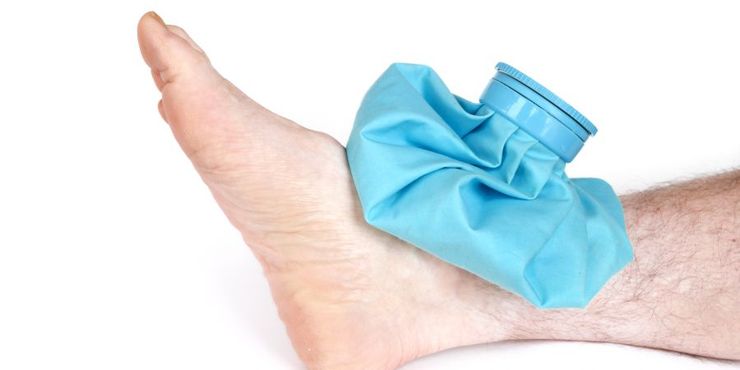
- Grab a bag of frozen peas, a gel pack, or a bag of crushed ice. Frozen peas are oddly perfect, because they bend around a toe or an ankle.
- Wrap the pack in one thin layer of kitchen towel or a t-shirt. Bare ice against skin is how people get frostnip or skin burns, especially after 20 minutes.
- Hold it against the most swollen spot for 15 to 20 minutes.
- Take it off for at least 20 to 30 minutes so the skin can warm back up. Then repeat.
- In the first day, when pain peaks, people typically do 3 to 5 sessions spread across waking hours. You do not need to wake yourself up to ice.
- Prop the foot up above the level of your heart while you do it. Elevation fights swelling mechanically, and it costs nothing.
- Loosen or remove socks, sheets, and anything pressing on the joint. A pile of pillows keeps the covers off the toe at night.
Two groups need to be more careful with cold. If you have diabetes with reduced feeling in your feet, peripheral artery disease, or any nerve damage, you may not feel the warning signs of cold injury, so check the skin every few minutes and ask your clinician about timing first. If your skin is broken over the joint, skip direct ice and get medical attention, because a hot, red, swollen joint with broken skin can be an infection rather than, or on top of, gout.
What About the Hot Bath, the Epsom Salts, and the Heating Pad?
Epsom salt is magnesium sulfate. The soothing part of an Epsom soak is the warm water and the weightlessness of the foot in the basin, not the salt. How much magnesium actually crosses intact skin is debated, and no good gout trial shows the salt lowers uric acid or shortens a flare. During an active flare, the hot water itself is the risk, per everything above.
That does not mean heat is banned forever. Once the fire is out, in the days after a flare, when the joint is stiff and sore rather than red and burning, warmth can help loosen things up. A lukewarm foot soak or a low heating-pad setting for 15 minutes at that stage usually feels fine. The rule is simple: red, hot, and swollen means cold; stiff, achy, and cool-looking means warmth is an option. When in doubt in the first 48 hours, choose ice.
Skip the massage too, even though hands seem to find their way to a sore joint. Pressing and rubbing an acutely inflamed joint tends to make it angrier, and the 2025 trial specifically flagged massage alongside heat as a bad combination during flares.
Ice Is the Sidekick. Start the Real Treatment Early.
While the ice pack is doing its first 20 minutes, the clock on medication is running. The three first-line flare treatments are nonsteroidal anti-inflammatory drugs (NSAIDs) such as naproxen or indomethacin, colchicine, and corticosteroids. The ACR strongly recommends using one of these three to treat flares, and every flare trial starts treatment early, because the drugs work far better in the first day or two than after a delay.
The numbers make the point. A 2021 Cochrane review of colchicine, pooling four trials, found low-dose colchicine produced treatment success, meaning at least half the pain gone, in 418 out of 1,000 people at 32 to 36 hours, versus 172 out of 1,000 on placebo, roughly 2.4 times the success rate, with the low dose causing about the same side effects as placebo. The NSAID Cochrane review the same year found 11 of 15 people on an NSAID had at least half their pain reduced at 24 hours, versus 4 of 15 on placebo. High-dose colchicine, the old every-hour-until-diarrhea routine, worked no better than low dose and caused far more stomach problems, which is why nobody who is up to date prescribes that way anymore.
If you have a flare plan from your doctor with pills already in the house, that plan is what you start now. Ice goes on while the medication kicks in. If you have kidney disease, take blood thinners, have a history of stomach bleeding, or are pregnant, do not self-start an NSAID, and ask ahead of time which flare medicine is safe for you. We covered why over-the-counter ibuprofen often fails at gout doses in a separate piece, and the first 12 hours of a flare deserve their own playbook too.
One more thing people get wrong: do not stop your allopurinol or febuxostat during a flare. Keep taking your daily urate-lowering pill on schedule. Starting and stopping it shifts uric acid levels around and can drag the attack out. Urate-lowering therapy is the long game that prevents the next flare; the NSAID, colchicine, or corticosteroid, plus ice, handles this one. More on that in our piece on why your gout medication seems not to work.
When Home Treatment Is Not Enough
Cold packs and medication are for gout. A hot joint can also be a septic joint, a serious infection inside the joint capsule, and the two can look nearly identical at the bedside. If this is your first-ever flare and nothing has ever been confirmed, get seen and have joint fluid checked if the doctor thinks it is needed. Go to urgent care the same day if you have fever or chills, the redness is spreading quickly, you feel genuinely ill, the pain is unbearable despite starting treatment early, or you have broken skin over the joint. If it is a known flare but it is not turning the corner after 48 hours of correct treatment, or it has not mostly settled in a week, call your clinician rather than stacking more pills on top.
Ice, elevation, rest, early medication, and knowing the infection warning signs. That is the whole move tonight. Skip the hot soak until the swelling has cooled off, and save the Epsom salts for the stiff-joint cleanup days afterward.
Frequently Asked Questions
Is ice or heat better for a gout flare?
Ice. During an active flare, when the joint is red, hot, and swollen, cold packs reduce blood flow and swelling and numb pain, while heat opens blood vessels and often makes the throbbing worse. In a 2025 randomized trial of 2,400 people, 35% using hot fomentation had their symptoms worsen, compared with 2% using cold. Heat is only worth considering after the flare settles, for residual stiffness.
How long should I leave ice on a gouty toe?
15 to 20 minutes at a time, with the pack wrapped in a thin towel, followed by at least 20 to 30 minutes off. Three to five sessions during the first day is typical. Do not sleep with an ice pack against your skin, and do not put bare ice directly on it.
Will an Epsom salt bath help my gout?
Not during a flare. The warm water may feel relaxing for a few minutes, but heat tends to increase swelling in an actively inflamed joint, and there is no good evidence Epsom salt lowers uric acid or shortens an attack. A lukewarm soak for stiffness a few days after the flare has calmed is a different story and is usually fine.
Can ice alone stop a gout attack?
Unlikely. In the only gout-specific ice trial, ice was used on top of prednisone and colchicine and added roughly a third more pain relief than medication alone. The ACR calls ice an adjunct, not a treatment by itself. Start your prescribed flare medicine, an NSAID, colchicine, or a corticosteroid, as early as you can, ideally in the first day, and use ice to support it.
Should people with diabetes ice a gout flare?
Carefully, and ideally after checking with your clinician. Diabetes can reduce sensation in the feet, which makes cold injury harder to notice. Keep the towel layer on, limit sessions to 15 minutes, inspect the skin between sessions, and stop if it becomes painful, numb, or discolored.
Why does gout attack my coldest body parts at night?
Urate crystals form more easily at lower temperatures, which is why the big toe, ankles, ears, and fingers are classic spots, and why overnight cooling and mild dehydration often line up with a 3 a.m. wake-up. Keeping the feet comfortably warm in bed while you are on urate-lowering treatment is reasonable; applying heat once a flare has already started is not.
References
- Schlesinger N, Detry MA, Holland BK, Baker DG, Beutler AM, Rull M, Hoffman BI, Schumacher HR Jr. “Local Ice Therapy During Bouts of Acute Gouty Arthritis.” J Rheumatol. 2002;29(2):331-334. PMID: 11838852.
- Mehra S, Mehra K, Mehra NK, Kale SY, Manchanda BV. “Data Insights on the Risks of Local Heat and Massage in Gouty Arthritis Treatment.” J Orthop Case Rep. 2025;15(1):260-265. doi:10.13107/jocr.2025.v15.i01.5194. PMID: 39801867.
- Oosterveld FG, Rasker JJ, Jacobs JW, Overmars HJ. “The Effect of Local Heat and Cold Therapy on the Intraarticular and Skin Surface Temperature of the Knee.” Arthritis Rheum. 1992;35(2):146-151. doi:10.1002/art.1780350204. PMID: 1734903.
- Loeb JN. “The Influence of Temperature on the Solubility of Monosodium Urate.” Arthritis Rheum. 1972;15(2):189-192. doi:10.1002/art.1780150209. PMID: 5027604.
- FitzGerald JD, Dalbeth N, Mikuls T, et al. “2020 American College of Rheumatology Guideline for the Management of Gout.” Arthritis Care Res (Hoboken). 2020;72(6):744-760. doi:10.1002/acr.24180. PMID: 32391934.
- McKenzie BJ, Wechalekar MD, Johnston RV, Schlesinger N, Buchbinder R. “Colchicine for Acute Gout.” Cochrane Database Syst Rev. 2021;8(8):CD006190. doi:10.1002/14651858.CD006190.pub3. PMID: 34438469.
- van Durme CM, Wechalekar MD, Landewé RB, Pardo Pardo J, Cyril S, van der Heijde D, Buchbinder R. “Non-Steroidal Anti-Inflammatory Drugs for Acute Gout.” Cochrane Database Syst Rev. 2021;12(12):CD010120. doi:10.1002/14651858.CD010120.pub3. PMID: 34882311.
- Moi JH, Sriranganathan MK, Edwards CJ, Buchbinder R. “Lifestyle Interventions for Acute Gout.” Cochrane Database Syst Rev. 2013;2013(11):CD010519. doi:10.1002/14651858.CD010519.pub2. PMID: 24186771.
Reviewed by the GoutSavvy Editorial Team