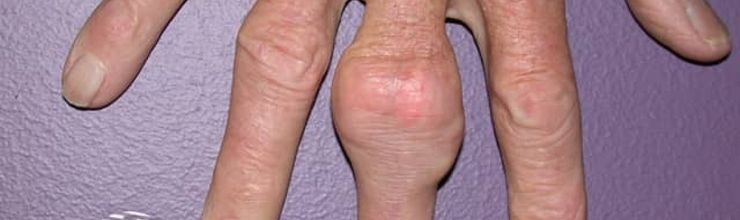
The lumps show up slowly. First a hard knot on the side of a toe. Then one along a finger. Then a bump on the elbow that makes sleeves fit wrong. Your doctor calls them tophi (say it like “TOE-fye”), and the explanation is sobering: years of uric acid building up around the joints and turning into chalky deposits. For most people, the treatment that reliably shrinks those lumps has been an intravenous drug, given in a clinic every two weeks. That may be about to change.
In May 2026, the Swedish drugmaker Sobi released results from a large late-stage trial of a once-a-day pill called pozdeutinurad (its research name is AR882). The numbers were strong enough that the company is moving toward asking regulators for approval. What got the attention of rheumatologists, though, was not just the uric acid lowering. It was the smaller study that came before it, in which the pill appeared to make visible gout lumps disappear in a meaningful share of people who took it for a year.
Here is what the data actually says, what it does not say yet, and whether this pill matters for you.
What This Pill Actually Does
To understand pozdeutinurad, you need a quick picture of how uric acid leaves the body. Your kidneys filter uric acid out of your blood, and then a transporter protein called URAT1, short for urate transporter 1, pulls a good chunk of it right back in. URAT1 is the reason two thirds of people with gout run high uric acid in the first place: their bodies under-excrete it rather than overproduce it.
Pozdeutinurad blocks URAT1. Block that gate, and the kidney lets more uric acid escape into the urine instead of recycling it into the blood. Drugs that work this way are called uricosurics, and the idea is not new. What is new is the design. Pozdeutinurad was built from a chemistry scaffold derived from a metabolite of benzbromarone, an older uricosuric, then refined for high selectivity for URAT1 and a long half-life, so one small dose each day keeps working around the clock. It is the same drug class as dotinurad, a pill already approved in Japan, which we compared with febuxostat in our breakdown of which gout medication might be right for you.
The Phase 3 Numbers: REDUCE 2
The trial that made news in May is called REDUCE 2. It enrolled more than 800 adults with gout whose disease was not well controlled on existing treatment, and assigned them to one of three groups: pozdeutinurad 75 mg, pozdeutinurad 50 mg, or a placebo, taken once daily for a year. Nobody knew who got what until the study ended.
The headline result, measured at month six, was the share of people whose blood uric acid fell below 6 mg/dL, the level guidelines treat as the main treatment target.
- 75 mg dose: 69.2 percent hit the target, compared with 8.1 percent on placebo.
- 50 mg dose: 56.6 percent hit the target.
- The difference against placebo was highly statistically significant at both doses.
To put that in perspective, the placebo number tells you how few people reach target without effective treatment. Roughly seven out of ten people on the higher dose got there with a pill. Sobi reported that the drug was generally well tolerated, with no new safety signals beyond what earlier studies had shown. Full results, including the detailed side-effect breakdown, are expected to be presented at a major rheumatology meeting in late 2026. A second trial, REDUCE 1, finished enrolling last year and will report its own results in the second half of 2026.
If that 69 percent figure sounds high for a gout medication, it is worth knowing why so many people struggle on the older pills. The commonest reason allopurinol “fails” is not that the drug is weak. It is that the dose gets started low, to avoid flares, and never gets raised far enough. We walked through that gap, and how to talk to your doctor about it, in our piece on why your gout medication seems not to work.
The Part About the Lumps
Lowering uric acid is the means to an end. The end that people with long-standing gout actually care about is the tophi, because those lumps hurt, limit motion, and can quietly erode bone. The uric acid in a tophus follows the same chemistry as salt in warm water: keep blood uric acid low enough, below about 6 mg/dL, and over months the deposits dissolve back out.
Until now, the fastest and most reliable way to dissolve a heavy tophus burden has been pegloticase, sold as Krystexxa, an enzyme given by infusion every two weeks. It works dramatically in many people, but it is expensive, requires an infusion clinic, and can trigger infusion reactions, so it is usually reserved for severe, treatment-resistant gout. We covered the newer infusion option in our piece on the monthly infusion being studied for uncontrolled gout.
Which brings us back to the pill. In a smaller Phase 2 study focused specifically on people with visible tophi, researchers tracked 42 adults for up to 18 months, measuring the lumps with calipers and scanning the urate crystal burden with dual-energy CT. After 12 months, among people whose previous medication had failed them:
- 43 percent on 75 mg alone had at least one target tophus disappear completely.
- That figure rose to 57 percent when the pill was combined with allopurinol.
- The measured volume of urate crystals in the body fell by roughly 17 to 20 cubic centimeters in those groups.
That last number matters more than it sounds. In the comparison groups, crystal volume barely moved, a fraction of one cubic centimeter. A daily pill, taken at home, shrinking tophi in roughly half the people who took it for a year, is the kind of result that changes who can actually access tophus treatment. Surgery still has a place for the worst cases, the infected or ulcerated lumps, or the ones that have already destroyed a joint, and we covered that decision in our article on when medication shrinks tophi and when surgery is needed. But a lot of people who currently face a choice between infusions and living with the lumps would suddenly have a third option.
How It Compares to What You Take Now
Pozdeutinurad will not replace allopurinol. Allopurinol, which works by slowing uric acid production, remains the cheap, well-studied first choice recommended by the American College of Rheumatology and the European League Against Rheumatism. Most people with gout should be on it, or on febuxostat if allopurinol does not work or cannot be tolerated.
Pozdeutinurad is aimed at the people those two drugs do not fully serve: the ones who cannot reach target on the production-blocking pills, the ones with kidney-related limits on their medication choices, and the ones carrying visible tophi who are not candidates for, or do not want, infusions. That gap is real. Large audits have found that only about half of people on urate-lowering treatment ever reach the 6 mg/dL target.
It also joins a suddenly crowded field. This summer, a Korean URAT1 inhibitor called epaminurad reported Phase 3 results in which it outperformed febuxostat at getting people to target, a story we covered in detail here. Dotinurad, the Japanese drug in the same class, is in late-stage trials in the United States. For people with gout, this is the rare kind of competition that works in their favor: more oral options, more bargaining power with insurers, and more chances to find a drug that fits.
The Fine Print Nobody Should Skip
Three things are worth keeping in mind before anyone gets excited at their next appointment.
Kidney stones come with the territory. When a drug pushes more uric acid out through the urine, that uric acid can concentrate and form stones. This is a class effect for uricosurics, not a surprise specific to this pill. Doctors managing these drugs usually keep an eye on urine, push hydration, and sometimes add medication to make the urine less acidic. If you have a history of kidney stones, say so early. The gout and kidney-stone connection is worth understanding on its own, which we covered in our piece on the link your doctor may not mention.
Starting it can trigger flares. Any medication that drops uric acid quickly can shake loose crystals from deposits and set off an attack in the first months. That is not a reason to avoid treatment. It is why guidelines pair newly started urate-lowering drugs with a few months of flare protection such as low-dose colchicine, and why you should never start, stop, or change a dose on your own.
It is not a drug you can pick up yet. As of September 2026, pozdeutinurad is still investigational. It has not been approved in the United States, Europe, or anywhere else. Sobi has said the May results lay the groundwork for regulatory submissions, but realistically, a pill at a pharmacy counter is a 2027 event at the earliest, and the second Phase 3 trial still has to read out. “Promising” is the correct word. “Available” is not yet.
What to Do With This Today
If your gout is well controlled on the medication you take, none of this changes your plan. Keep taking it, keep the dose at the level that holds your uric acid under target, and do not chase a future drug you cannot have.
If you are the person this pill is being built for, the one with tophi, frequent flares, or uric acid that will not budge despite treatment, there are two moves worth making now. First, ask for an actual uric acid number at your next visit and find out whether you are below 6 mg/dL, or below 5 if you have visible lumps. If you do not know the number, you cannot know whether your current treatment is working. Second, ask your doctor or a rheumatologist whether you are a candidate for the treatments that already exist, including the infusions, rather than waiting. You may have options you have not been offered.

The story here is genuinely encouraging. For years, people watching tophi grow on their hands and feet were told the only strong answer was a visit to an infusion chair every two weeks, assuming they could even get access. A daily pill that gets close to that result, taken at home with a glass of water, would be one of the more practical advances this disease has seen in a long time. It is not approved yet, and the full safety data has not landed. But for the first time, the end of that IV-only road appears to have a turn in it.
Frequently Asked Questions
What is pozdeutinurad, and is it the same as AR882?
They are the same drug. AR882 was the research code used during development; pozdeutinurad is the generic name the company now uses. It is a once-daily oral medication that blocks the URAT1 transporter in the kidney, helping the body dump more uric acid into the urine. It is made by Sobi, which acquired the developer, Arthrosi Therapeutics, in 2026.
How well did it work in the Phase 3 trial?
In the REDUCE 2 trial of more than 800 adults, 69.2 percent of people taking 75 mg and 56.6 percent taking 50 mg reached the target blood uric acid of under 6 mg/dL at six months, compared with 8.1 percent on placebo. The drug was reported as generally well tolerated, with detailed safety results due at a late-2026 medical meeting.
Can this pill actually dissolve gout tophi?
In a smaller Phase 2 study of people with visible tophi, 43 percent taking 75 mg alone, and 57 percent taking it with allopurinol, had at least one target lump completely resolve by 12 months. Scans also showed large drops in the total volume of urate crystals. The Phase 3 program enrolled people with tophi specifically, so more definitive data is coming, but the early signal is one of the strongest seen with an oral drug.
What are the likely side effects and risks?
Early studies reported no new serious safety signals and no kidney or liver warnings, though the full Phase 3 data is not yet public. As a uricosuric, the class carries two known risks: kidney stones from extra uric acid passing through the urine, and gout flares in the first months as uric acid drops and crystals mobilize. Doctors usually manage both with hydration, urine monitoring, and short-term flare-prevention medication.
When will pozdeutinurad be available?
Not yet. It is investigational as of September 2026 and has no approval in any country. Sobi plans to use the REDUCE 2 results for regulatory submissions, with a second Phase 3 trial reporting in the second half of 2026. An approval, if it comes, would realistically put the drug in pharmacies in 2027 at the earliest.
Should I stop my allopurinol and switch to this when it comes out?
No, and you should not switch any urate medication without your doctor. Allopurinol remains the recommended first treatment and works for most people when titrated to the right dose. Pozdeutinurad is positioned mainly for people who cannot reach target on existing pills, have kidney-related limits, or carry tophi severe enough to warrant stronger treatment. Any change also requires flare protection to avoid triggering attacks.
References
- Sobi. “Positive topline results from the late-stage Phase 3 REDUCE 2 study of pozdeutinurad in gout.” Sobi press release, May 21, 2026. sobi.com.
- “Efficacy of Pozdeutinurad (AR882) in Treatment Naive and Suboptimally Treated Gouty Arthritis with Tophi.” ACR Convergence abstracts, American College of Rheumatology. acrabstracts.org.
- Arthrosi Therapeutics. Pipeline: Pozdeutinurad (AR882) Phase 2a and Phase 2b results. arthrosi.com.
- Keenan RT, Shen Z, Yan S, Yeh LT, Pillinger MH. “How URAT1 inhibitors can shape the future of chronic gout treatment: a narrative review of uricosurics past and present.” Exploration of Musculoskeletal Diseases. 2024;2:529-554. doi:10.37349/emd.2024.00077.
- Richette P, Doherty M, Pascual E, et al. “2016 updated EULAR evidence-based recommendations for the management of gout.” Annals of the Rheumatic Diseases. 2017;76(1):29-42. doi:10.1136/annrheumdis-2016-209707.
- FitzGerald JD, Dalbeth N, Mikuls T, et al. “2020 American College of Rheumatology guideline for the management of gout.” Arthritis Care & Research. 2020;72(6):744-760. doi:10.1002/acr.24180.
- Sundy JS, Baraf HS, Yood RA, et al. “Efficacy and tolerability of pegloticase for the treatment of chronic gout in patients refractory to conventional treatment: two randomized controlled trials.” JAMA. 2011;306(7):711-720. doi:10.1001/jama.2011.1169.
Reviewed by the GoutSavvy Editorial Team