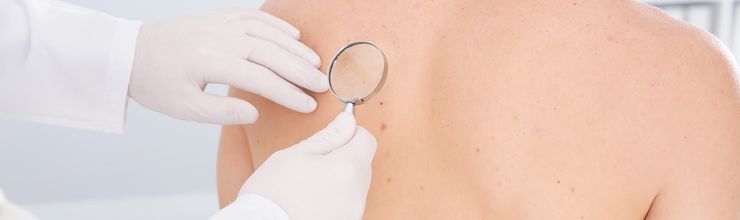
You started allopurinol three weeks ago. Your toe finally behaved at dinner. This morning you button your shirt and notice it: a rash across your chest and back. Maybe it’s nothing. Maybe it’s the dry weather. You keep telling yourself that while you scroll your phone.
Here is the hard part, and it’s not advice you’ll find on the warning sheet taped to the pharmacy bag: when a rash appears on allopurinol, especially in the first couple of months, you don’t get to just wait and see. That tiny-looking skin reaction is one of the few things a gout medication can do that lands people in the hospital.
The One Side Effect That Actually Kills
Allopurinol (sold in the U.S. under the brand name Zyloprim) is a good drug. For most people with gout it is the safest, cheapest, best-studied urate-lowering medication on the market, the first thing nearly every guideline reaches for [1,2]. Roughly 95 out of every 100 people who take it have no serious trouble with it at all [3].
The catch is what happens to the other handful. Around 1 in 1,000 people starting allopurinol develop a severe hypersensitivity reaction, and in the people unlucky enough to get the full-blown syndrome, about 1 in 5 do not survive it [3,6]. A nationwide analysis of every published case found an all-cause death rate of 14% across the reaction spectrum, and almost every death traced back to the same early warning sign: a rash that got ignored [3].
This is the single most dangerous thing about a drug that otherwise behaves itself. Flares hurt, but they do not kill you. Kidney stones hurt, but they are fixable, which is why we explained that whole side of the disease in Gout and Kidney Stones: The Hidden Connection Your Doctor Might Not Tell You About. A spreading rash with a fever on allopurinol is a medical emergency, full stop.
Two Kinds of Rash, and Why the Difference Matters
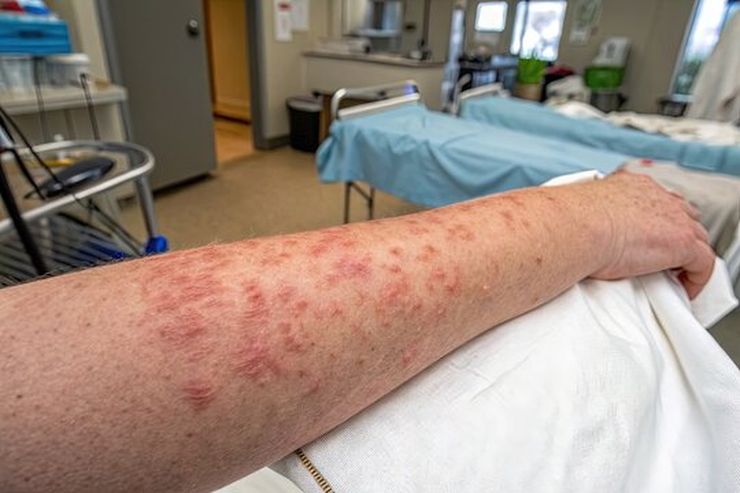
Most allopurinol rashes are mild. A mild rash usually shows up in the first weeks as flat or slightly raised red spots, often on the trunk and arms, sometimes itchy, with nothing else going on. No fever, no mouth sores, no swollen face. These reactions are common, frequently settle on their own or after a dose adjustment, and some people restart the drug later without a problem [1,6].
The dangerous kind has names you have probably never heard: severe cutaneous adverse reactions, shortened to SCAR by doctors. Under that umbrella sit three conditions.
Stevens-Johnson syndrome (SJS) and its deadlier cousin toxic epidermal necrolysis (TEN) start with a rash and a flu-like malaise, then blister. The top layer of skin literally separates and peels away, often beginning around the mouth and eyes. Mucous membranes inside the mouth, nose, and eyes erode. In TEN, large sheets of skin detach, which is why people with it end up treated in burn units.
Drug reaction with eosinophilia and systemic symptoms (DRESS) is slower and sneakier. The rash arrives two to six weeks after the first pill, paired with fever, swollen lymph nodes, and a face that puffs up. The damage is happening inside: liver, kidneys, and sometimes the heart get inflamed, and a person can look like they “just have a virus” right up until their liver tests spike dangerously high [3,4].
What unites all three is the early skin sign. The rash is not a footnote to these syndromes. It is usually the first chapter.
Stop Reading and Act If You See Any of These
The red flags below mean the same thing regardless of how mild they feel individually. If any one of them shows up while you are taking allopurinol, stop the medication and get medical care the same day. Two or more together means an emergency department, not a Monday appointment.
1. Fever with a new rash. A rash plus any temperature, even a low one, plus flu-like exhaustion is the classic opening move of both DRESS and SJS [3,4].
2. Blisters, or skin that peels off when rubbed. Any blistering on the trunk, or skin that sloughs, is TEN territory. Don’t wait for it to spread.
3. Sores in your mouth, nose, eyes, or genitals. Painful redness or ulcers on the lips or inside the cheeks, red burning eyes, trouble swallowing from a raw throat. Mucous membrane involvement is what separates an ordinary drug rash from SJS [4].
4. A swollen face or puffy eyelids. Facial swelling showing up alongside a new rash is a hallmark DRESS finding [3].
5. The rash spreading fast, turning purple, or hurting instead of itching. A rash that advances visibly over hours, or one that is tender or burns rather than itches, is a warning pattern. Target-shaped or bruise-colored spots also belong on this list.
6. Yellow eyes, dark urine, or shortness of breath. Jaundice, tea-colored urine, swelling in the legs, or breathlessness after a rash suggests the liver or kidneys are already involved.
One thing that surprises people: you can’t blame the dose size. The review of 901 published cases found no solid link between a higher maintenance dose and worse reactions [3]. The dose you start on matters far more than the dose you end up taking, which gets to the next point.
Why Some People React and Others Don’t
Back in 2005, researchers in Taiwan found something that changed allopurinol prescribing forever: every one of the 51 people with allopurinol-related SCAR they studied carried a specific gene marker called HLA-B*5801. Among people who tolerated the drug, only about 15% carried it [4]. A carrier of that marker has odds of the severe reaction hundreds of times higher than a non-carrier; a pooled analysis puts the increase around 97-fold [8,9].
HLA markers are inherited, so risk runs with ancestry. The marker shows up in roughly 6 to 7% of people with Chinese ancestry, around 6% of people with Thai or Korean background, and roughly 1 to 2% of people of European descent [4,8,9]. That does not mean Western patients are safe. The largest U.S. study of allopurinol SCAR, published in 2018, found the reaction happened across every ethnic group, and that chronic kidney disease plus higher allopurinol doses were strong independent risk factors regardless of background [9].
Two other factors stack the deck. About 90% of reactions begin within the first 60 days of the pill [3], which is why the first two months demand the most attention. And kidney problems roughly double the danger: when the kidneys clear the drug slowly, the active metabolite piles up in the blood. A common mistake that drives reactions is starting every patient at 300 mg regardless of kidney function; the safe approach starts low and climbs [2,5].
What You Should Actually Do
If you have no rash: take the medication as prescribed, starting at a low dose, and know your kidney numbers. Guidelines recommend beginning at 100 mg daily, or even 50 mg if kidney function is reduced, then raising the dose every few weeks while checking uric acid blood tests [1,2]. Don’t accept a starting dose of 300 mg without discussing kidney function. If you have Chinese, Thai, Korean, or related ancestry and the option of a quick genetic test exists, ask about HLA-B*5801 screening before starting. In Taiwan, a national program that screened over 2,900 new users found zero SCAR cases in carriers who avoided the drug, and a roughly 97% drop in expected severe reactions overall [7]. The 2020 U.S. gout guideline recommends considering the test for people of Southeast Asian and African American backgrounds in particular, because carrier rates run higher in those groups [1].
If a mild rash appears: call the prescriber the same day, not at your next visit in three weeks. The standard guidance is to stop allopurinol until a clinician can look at the rash, because the safest way to tell “mild” from “early SCAR” isn’t always obvious at home [1,6]. Don’t self-treat the rash with leftover steroids or antihistamines while keeping the pill going; hiding the skin sign does nothing to stop internal organ inflammation.
If you see any of the red flags above: stop the medication now, bring the bottle to the emergency department, and say the words “allopurinol reaction” at check-in. Hours matter in SJS and DRESS; early stopping is the step most consistently linked to survival [3,6].
If you’ve reacted before: do not restart allopurinol on your own. A person who has had a severe reaction is usually switched to a different urate-lowering medication altogether, since re-challenging after SJS or DRESS can repeat the reaction faster and worse. We compared the main options in Allopurinol vs Febuxostat: Which Urate-Lowering Medication Is Right for You?. A slow desensitization process exists for mild-only rashes under specialist supervision, but it is not a home project [8].
The Rest of the Side Effect List, in Plain Language
Because the rash gets all the attention, people miss the routine stuff. Mild and common side effects include an upset stomach, loose stools, headache, and a weird taste in the mouth. These are usually minor and often fade within weeks.
Two interactions deserve real attention. Allopurinol makes azathioprine (Imuran) and mercaptopurine (Purinethol), immune-suppressing drugs used in transplant and bowel disease, far more dangerous, so those combinations require dose cuts and specialist oversight. Allopurinol can also raise the blood-thinning effect of warfarin (Coumadin) in some people, meaning blood-thinner patients need closer monitoring when it starts. If you take a water pill for blood pressure, mention it: diuretics both raise uric acid and appeared in nearly half of allopurinol reaction histories, a double reason to review the full medication list [3]. We covered how those pills quietly feed flares in The Hidden Gout Trigger in Your Medicine Cabinet.
And don’t confuse a flare for a drug reaction. Starting allopurinol often triggers gout attacks in the first months as crystals loosen. That is the joint pain you already know. It is not a reason to stop the medication, unlike a rash, and it’s one of the reasons low-dose colchicine (Colcrys) is commonly given as cover when therapy begins. We walked through that whole strategy in Do You Really Need a Daily Pill to Prevent Gout Flares When Starting Allopurinol?
None of this is meant to scare anyone off a medication that quietly prevents joint destruction, kidney stones, and tophi for millions. The point is narrower and simpler: allopurinol asks one thing from you. For the first few months, check your skin, and if a rash shows up with anything else, pick up the phone or head to the ER. That single habit is what separates a medication switch from a life-threatening event.
Common Questions
How common is a rash from allopurinol?
Mild skin reactions happen in roughly 2% of people who take allopurinol. Severe reactions like SJS, TEN, or DRESS are much rarer, around 0.1 to 0.4% of users, but they carry a high death rate when they do occur, so every rash deserves attention [3,6].
Can a rash from allopurinol appear months after starting it?
About 90% of severe reactions begin within the first 60 days, and most mild rashes show up within weeks [3]. Reactions starting after six months of uneventful use are uncommon but possible, especially after a dose increase, so a new rash at any point still warrants a call to your prescriber.
If I get a mild rash, can I just take an antihistamine and keep going?
No. Hiding the rash doesn’t address what may be happening underneath. The recommended move is to stop allopurinol and contact the prescribing clinician, because early severe reactions can look modest at first [1,6]. Mild rashes sometimes resolve, and a carefully supervised restart or a medication switch can follow.
Does the rash mean I can never take allopurinol again?
Not always. A mild, isolated rash that a doctor confirms is not part of SCAR may allow for a slow, supervised re-challenge. After a severe reaction like DRESS or SJS, clinicians typically treat allopurinol as permanently off-limits and use a different urate-lowering drug instead [1,8].
Should I get genetic testing before taking allopurinol?
It’s worth discussing if you have Chinese, Thai, Korean, other Southeast Asian, or African American ancestry, groups where HLA-B*5801 carrier rates are higher and guidelines suggest considering testing [1,7]. Testing is inexpensive in many clinics, and Taiwan’s national screening program nearly eliminated severe reactions among people who tested positive and avoided the drug [7].
What’s the difference between a gout flare and an allopurinol reaction?
A flare is joint pain, swelling, and redness localized to a joint, often the big toe, and it is expected during the first months of therapy. An allergic or hypersensitivity reaction is a body-wide skin eruption, often with fever or flu-like symptoms. A flare is not a reason to stop allopurinol; a rash with systemic symptoms absolutely is.
References
- FitzGerald JD, Dalbeth N, Mikuls T, et al. 2020 American College of Rheumatology Guideline for the Management of Gout. Arthritis Care Res (Hoboken). 2020;72(6):744-760. doi:10.1002/acr.24180. PMID: 32391934.
- Khanna D, Fitzgerald JD, Khanna PP, et al. 2012 American College of Rheumatology guidelines for management of gout. Part 1: systematic nonpharmacologic and pharmacologic therapeutic approaches to hyperuricemia. Arthritis Care Res (Hoboken). 2012;64(10):1431-1446. doi:10.1002/acr.21772. PMID: 23024028.
- Ramasamy SN, Korb-Wells CS, Kannangara DR, et al. Allopurinol hypersensitivity: a systematic review of all published cases, 1950-2012. Drug Saf. 2013;36(10):953-980. doi:10.1007/s40264-013-0084-0. PMID: 23873481.
- Hung SI, Chung WH, Liou LB, et al. HLA-B*5801 allele as a genetic marker for severe cutaneous adverse reactions caused by allopurinol. Proc Natl Acad Sci U S A. 2005;102(11):4134-4139. doi:10.1073/pnas.0409500102. PMID: 15743917.
- Stamp LK, Taylor WJ, Jones PB, et al. Starting dose is a risk factor for allopurinol hypersensitivity syndrome: a proposed safe starting dose of allopurinol. Arthritis Rheum. 2012;64(8):2529-2536. doi:10.1002/art.34488. PMID: 22488501.
- Stamp LK, Day RO, Yun J. Allopurinol hypersensitivity: investigating the cause and minimizing the risk. Nat Rev Rheumatol. 2016;12(4):235-242. doi:10.1038/nrrheum.2015.132. PMID: 26416594.
- Ko TM, Tsai CY, Chen SY, et al. Use of HLA-B*58:01 genotyping to prevent allopurinol induced severe cutaneous adverse reactions in Taiwan: national prospective cohort study. BMJ. 2015;351:h4848. doi:10.1136/bmj.h4848. PMID: 26399967.
- Saito Y, Stamp LK, Caudle KE, et al. Clinical Pharmacogenetics Implementation Consortium (CPIC) guidelines for human leukocyte antigen B (HLA-B) genotype and allopurinol dosing: 2015 update. Clin Pharmacol Ther. 2016;99(1):36-37. doi:10.1002/cpt.161. PMID: 26094938.
- Keller SF, Lu N, Blumenthal KG, et al. Racial/ethnic variation and risk factors for allopurinol-associated severe cutaneous adverse reactions: a cohort study. Ann Rheum Dis. 2018;77(8):1187-1193. doi:10.1136/annrheumdis-2017-212905. PMID: 29653927.
Reviewed by the GoutSavvy Editorial Team