
Scroll through any gout forum and you will find him. The guy who stopped his flare with a bottle of vitamin C tablets. “1,000 mg a day, never had an attack since,” he writes, and underneath, fifty people ask what brand he bought.
It sounds too easy, and usually it is. But here is the strange part: vitamin C is one of the few supplements on that forum shelf with real randomized trial data behind it, not just cherry-juice testimonials. The numbers are genuinely interesting. They also stop working the moment you test them on people who already have gout. Let me walk you through what the studies actually found.
What 500 mg a Day Did in a Real Randomized Trial
In 2005, researchers at Johns Hopkins ran the kind of study supplement brands usually avoid: a double-blind, placebo-controlled randomized trial. They enrolled 184 nonsmokers and gave half of them 500 mg of vitamin C every day for two months. The other half got identical-looking placebo tablets.
After eight weeks, the vitamin C group saw their serum uric acid fall by an average of 0.5 mg/dL. The placebo group barely moved, at +0.09 mg/dL. The difference was not subtle (p < 0.0001), and it held up across age, sex, weight, and even diuretic use. The people who started with the highest uric acid, above roughly 7 mg/dL, got the biggest drop: about 1.0 mg/dL. The same trial found a small rise in estimated kidney filtration rate, which hints vitamin C may help the kidneys flush urate out rather than just tinker with production.
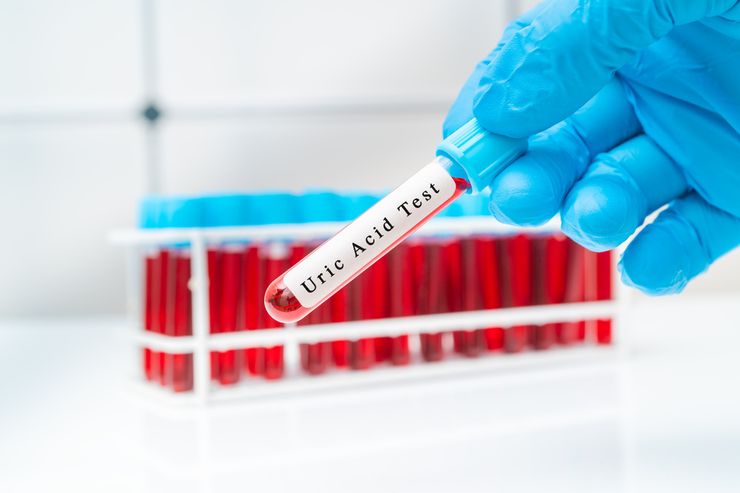
Half a milligram per deciliter is not nothing. If your uric acid hovers around 7, a 0.5 drop gets you meaningfully closer to the 6.0 target where crystals stop forming. It is also nowhere near what allopurinol (brand name Zyloprim) does, a gap that becomes important in a minute.
Thirteen Trials, One Pooled Answer
Six years later, the same research group pooled every vitamin C and uric acid randomized trial they could find: 13 studies, 556 people, a median dose of 500 mg a day over a median of 30 days. The combined effect was a uric acid reduction of 0.35 mg/dL (95% confidence interval, -0.66 to -0.03). Real, modest, and statistically significant. They also flagged substantial variation between trials, which is honest science-speak for “your mileage may differ.”
A 2025 network meta-analysis out of Beijing reviewed 30 supplement trials covering almost 45,000 patients and found the same pattern in a subgroup analysis: 500 mg of vitamin C beat conventional treatment alone by about 21.7 µmol/L, roughly 0.36 mg/dL. The safety profile across these trials looked clean, at least for uric acid outcomes.
So the short-term bloodwork story is consistent. Vitamin C nudges uric acid down, and food-level and low supplemental doses appear to do most of the work.
The 20-Year Study of 46,994 Men
Lower uric acid on paper is one thing. Fewer actual gout attacks is the question that matters.
Harvard researchers tracked 46,994 men with no history of gout from 1986 to 2006, checking their diet every four years. Over those two decades, 1,317 men developed gout. The men taking in at least 1,500 mg of total vitamin C a day had a relative risk of 0.55 compared with men under 250 mg. Every extra 500 mg of daily vitamin C tracked with a 17% lower risk. An earlier analysis from the same cohort found hyperuricemia, meaning uric acid above 6 mg/dL, was 66% less common in men eating the most vitamin C, and the association plateaued around 400 to 500 mg a day, which is roughly an orange and a bell pepper, not a pharmacy run.
Before you order the kilo-bottle, read the fine print. These were observational food-frequency questionnaires. Men who eat well and take supplements also tend to weigh less, drink less beer, and see doctors more often. The authors adjusted for what they could measure, but they could not measure everything. Association is not a guarantee.
Then Came the Test That Flattened the Curve
Every trial above was done on people who did not yet have gout. In 2013, a team in New Zealand finally ran the experiment that matters for you: 40 patients with established gout and uric acid above 6 mg/dL were randomly assigned to get either 500 mg of vitamin C a day for eight weeks or a urate-lowering drug. It remains the only randomized trial that handed vitamin C pills directly to patients who already had gout.
The results were sobering. Vitamin C lowered uric acid by just 0.23 mg/dL. Allopurinol, prescribed at a modest dose in the comparison group, lowered it by 1.9 mg/dL, more than eight times as much. The researchers did not soften the conclusion: at 500 mg a day, vitamin C had no clinically meaningful urate-lowering effect in people with gout, whether taken alone or on top of allopurinol.
Why would it work in healthy people and fail in people with gout? The uricosuric effect, the kidney nudge that pushes urate into urine, seems small to begin with. Healthy people with slightly high uric acid have room to benefit. People with years of crystal deposits, often some kidney impairment, sometimes on diuretics, are a different metabolic situation.
What the Current Guideline Actually Says
The 2020 American College of Rheumatology (ACR) guideline reviewed this exact evidence and made a call that surprises a lot of readers: for patients with gout, the panel conditionally recommends against adding vitamin C supplements. The word “conditionally” matters. The evidence was graded low quality, so this is not a dangerous-drug warning. It means the upside is too small to bother with, and the people writing the guideline know the kidney stone data are coming next.
The Kidney Stone Problem
If you have gout, your odds of kidney stones are already elevated, because high urate produces both uric acid stones and calcium-based ones. Vitamin C complicates this. A small controlled metabolic study gave 24 people 2 grams of vitamin C a day. In healthy subjects, urinary oxalate rose from 28.5 to 34.7 mg a day, a 20% jump. In people who already formed calcium oxalate stones, it rose from 30.5 to 41.0 mg, a 33% jump. Oxalate is the raw material of the most common kidney stone.
The human data match the chemistry. A prospective study of 23,355 Swedish men followed for about 11 years found men taking vitamin C-only supplements had roughly double the risk of a first kidney stone, a relative risk of 1.92. A 2019 systematic review pooled four cohorts and found men taking supplements had 62% higher odds of a stone than nonusers (odds ratio 1.62), with no detectable increase in women. The risk concentrates at gram-level supplemental doses, not at food intake, and the absolute risk stays highest for men with a prior stone.
This is the trap in the forum advice. The dose shown to lower uric acid (500 mg) is low, while the dose people often self-prescribe after reading the hype (1,000 to 2,000 mg or more) is where stone risk climbs.
So What Should You Actually Do With This?
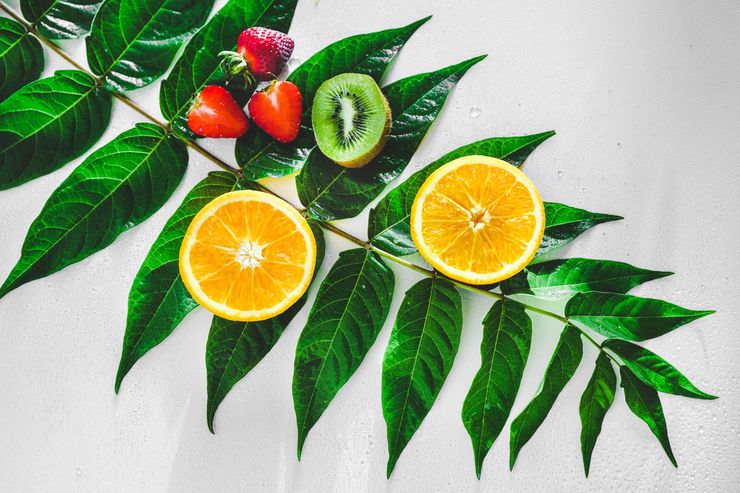
First, eat the food. Oranges, strawberries, kiwi, bell peppers, broccoli, and potatoes get you to that 400 to 500 mg plateau with zero kidney-stone signal and a lot of fiber and potassium along for the ride. Dietary vitamin C has never been linked to the stone risk seen with pills.
Second, do not swap vitamin C for your urate-lowering medication. If you take allopurinol (Zyloprim) or febuxostat (Uloric), keep taking it exactly as prescribed; 0.23 mg/dL does not beat 1.9, and crystals only dissolve below 6.0 mg/dL over months. If starting febuxostat flared your gout before, that is a dosing and prophylaxis conversation with your doctor, not a reason to go pill shopping. We walked through why the flare happens and how the low-dose approach works in our piece on starting febuxostat. The same applies to the other supplement darlings: tart cherry juice and lemon water sit in the same “maybe a small nudge, never a replacement” bucket.
Third, if you want to try a supplement anyway, 500 mg a day is the dose the best trial used and the dose the 2025 analysis still found effective. Skip the 2,000 mg mega-doses. Men with a history of calcium oxalate kidney stones should probably avoid supplemental vitamin C altogether and talk to a urologist or nephrologist (a kidney specialist); gout plus chronic kidney disease changes the whole treatment map, as we covered in the piece on gout treatment when your kidneys fail.
Fourth, hydrate. Most of the stone risk math improves with urine volume, and water is free.
Vitamin C is not a fraud. It is a small kidney nudge wrapped in an oversized reputation. The people who swear it fixed their gout often changed three other things the same month, dropped 10 pounds, cut the beer, started sleeping. Give the food version credit. Give your prescription the job it was hired to do.
Frequently Asked Questions
How much vitamin C should I take for gout?
If you do not have gout yet and want the possible preventive benefit, food sources around 400 to 500 mg a day are where the observational benefit plateaus. If you already have gout, the only randomized trial in patients with gout used 500 mg a day and found a clinically insignificant effect. Gram-level doses add kidney stone risk without proven uric acid payoff.
Can vitamin C replace allopurinol or febuxostat?
No. In the only head-to-head randomized comparison, 500 mg of vitamin C lowered uric acid by 0.23 mg/dL over eight weeks, while allopurinol lowered it by 1.9 mg/dL. Vitamin C also has no evidence that it dissolves existing urate crystals or stops flares. The ACR guideline recommends urate-lowering medication over supplements for people with recurrent gout.
Can vitamin C give me kidney stones?
Supplemental vitamin C at high doses raises urinary oxalate, the building block of calcium oxalate stones. A metabolic study measured a 20% increase in healthy people and a 33% increase in known stone formers at 2 grams a day. A large Swedish cohort found about double the stone risk in men taking vitamin C-only supplements (a relative risk of 1.92 means close to twice the risk, not a 192% chance of getting a stone). Food intake has not shown this risk, and women in pooled cohorts did not show a significant increase.
Why does the ACR recommend against vitamin C when the studies show lower uric acid?
The trials showing the lower numbers enrolled people without gout. The one trial in patients with established gout found an insignificant 0.23 mg/dL drop, and the 2020 guideline panel judged the benefit too small to justify recommending a supplement that also raises kidney stone risk in a population already prone to stones. It is a conditional recommendation against, based on low-certainty evidence, not a safety ban.
Do vitamin C-rich foods carry the same risk?
No. The kidney stone association tracks with supplemental pills, typically at doses of 1,000 mg a day or more, not with fruits and vegetables. Foods high in vitamin C also provide potassium and citrate, which generally help stone chemistry. An orange a day is not the same exposure as a 1,000 mg tablet, and nothing in the advice here suggests skipping produce.
References
- Huang HY, Appel LJ, Choi MJ, Gelber AC, Charleston J, Norkus EP, Miller ER 3rd. “The effects of vitamin C supplementation on serum concentrations of uric acid: results of a randomized controlled trial.” Arthritis and Rheumatism. 2005;52(6):1843-1847. PMID: 15934094. doi:10.1002/art.21105
- Juraschek SP, Miller ER 3rd, Gelber AC. “Effect of oral vitamin C supplementation on serum uric acid: a meta-analysis of randomized controlled trials.” Arthritis Care & Research. 2011;63(9):1295-1306. PMID: 21671418. doi:10.1002/acr.20519
- Gao X, Curhan G, Forman JP, Ascherio A, Choi HK. “Vitamin C intake and serum uric acid concentration in men.” The Journal of Rheumatology. 2008;35(9):1853-1858. PMID: 18464304.
- Choi HK, Gao X, Curhan G. “Vitamin C intake and the risk of gout in men: a prospective study.” Archives of Internal Medicine. 2009;169(5):502-507. PMID: 19273781. doi:10.1001/archinternmed.2008.606
- Stamp LK, O’Donnell JL, Frampton C, Drake JM, Zhang M, Chapman PT. “Clinically insignificant effect of supplemental vitamin C on serum urate in patients with gout: a pilot randomized controlled trial.” Arthritis and Rheumatism. 2013;65(6):1636-1642. PMID: 23681955. doi:10.1002/art.37925
- FitzGerald JD, Dalbeth N, Mikuls T, Brignardello-Petersen R, Guyatt G, et al. “2020 American College of Rheumatology Guideline for the Management of Gout.” Arthritis Care & Research. 2020;72(6):744-760. PMID: 32391934. doi:10.1002/acr.24180
- Traxer O, Huet B, Poindexter J, Pak CY, Pearle MS. “Effect of ascorbic acid consumption on urinary stone risk factors.” The Journal of Urology. 2003;170(2 Pt 1):397-401. PMID: 12853784. doi:10.1097/01.ju.0000076001.21606.53
- Thomas LDK, Elinder CG, Tiselius HG, Wolk A, Akesson A. “Ascorbic acid supplements and kidney stone incidence among men: a prospective study.” JAMA Internal Medicine. 2013;173(5):386-388. PMID: 23381591. doi:10.1001/jamainternmed.2013.2296
- Jiang K, Tang K, Liu H, Xu H, Ye Z, Chen Z. “Ascorbic acid supplements and kidney stones incidence among men and women: a systematic review and meta-analysis.” Urology Journal. 2019;16(2):115-120. PMID: 30178451. doi:10.22037/uj.v0i0.4275
- Ye G, Liu C, Zheng X, Fang J, Xie C, Liu M, Wang Y, Zhao L, Wang H. “The effectiveness and safety of specific dietary supplements in modulating uric acid levels, oxidative stress, and lipid metabolism in patients: a network meta-analysis of 13 interventions.” Nutrition & Metabolism. 2025;22(1):80. PMID: 40702568. doi:10.1186/s12986-025-00977-2
Reviewed by the GoutSavvy Editorial Team