After 20 Years of the Same Old Gout Pills, Something Actually Different Just Showed Up
If you have been on febuxostat for years and your uric acid still will not budge, you are not alone. Most gout medications on the market right now work the same way: they block your body from making uric acid. That is it. One approach. One mechanism. For two decades.
But on August 11, 2026, a Korean drug company called JW Pharmaceutical dropped Phase 3 data on a drug that does the exact opposite. Instead of stopping uric acid production, it helps your kidneys dump more of it. The drug is called epaminurad (code name URC102), and in a 612-person trial across five Asian countries, the 6 mg dose beat febuxostat 40 mg at getting patients below the 6 mg/dL uric acid target.
That is not a typo. A uricosuric drug, the same class that has been sitting on the shelf for years, just outperformed the most prescribed gout pill in Korea. Let me walk you through what happened and, more importantly, what it means for you.
What Is Epaminurad and How Does It Work?
Most gout drugs you have heard of, febuxostat, allopurinol, they are xanthine oxidase inhibitors. They tell your liver to slow down uric acid production. Think of it like turning down the faucet.
Epaminurad works differently. It blocks a protein in your kidneys called hURAT1 (human uric acid transporter 1). Here is the quick version of why that matters:
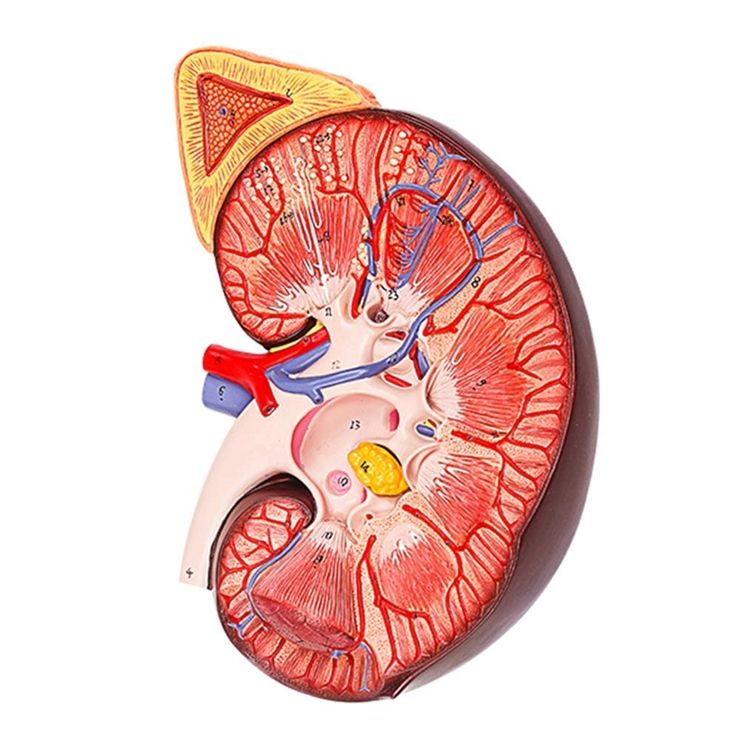
Your kidneys filter uric acid out of your blood, but then a transporter called URAT1 grabs some of it back and sends it into your bloodstream. It is like a recycling machine that keeps putting uric acid right back where it came from. Epaminurad jams that recycling machine. More uric acid stays in the urine. Less stays in your blood.
If febuxostat turns down the faucet, epaminurad opens the drain. Different strategy, same goal: lower serum uric acid below the saturation point where crystals form.
This matters because about 60% of people with gout are underexcreters. Their problem is not that the body makes too much uric acid. It is that the kidneys are not clearing enough of it. For those people, a drug that boosts excretion makes more sense than one that slows production.
The Phase 3 Numbers: What Actually Happened
Here is the trial design. JW Pharmaceutical enrolled 612 patients with gout at 52 sites across South Korea, Taiwan, Thailand, Malaysia, and Singapore. Patients were randomly assigned to receive either epaminurad (6 mg or 9 mg) or febuxostat (40 mg or 80 mg) in a double-blind setup. The main treatment period lasted 24 weeks, with an optional 28-week extension.
The primary endpoint was straightforward: what percentage of patients got their serum uric acid below 6 mg/dL during the final three measurements of the main study period?
The results:
- Epaminurad 6 mg: 50.0% (76 of 152 patients) hit the target
- Febuxostat 40 mg: 38.3% (59 of 154 patients) hit the target
- The 12 percentage point gap was statistically significant. Not just non-inferior. Superior.
Let that sink in. A once-daily pill that helps your kidneys excrete uric acid outperformed the standard febuxostat 40 mg that dominates the Korean gout market (which accounts for about 63% of all gout prescriptions there).
The 9 mg dose told a different story. Epaminurad 9 mg reached 59.6% versus febuxostat 80 mg at 63.3%. That 4 percentage point gap went the wrong direction, and the 9 mg dose missed its non-inferiority target. The company says it will run subgroup analyses before deciding whether to pursue approval for the higher dose.
On safety, the two groups looked nearly identical. Adverse event rates hovered around 50% across all four arms. No drug-related deaths. No surprises. That is reassuring, especially since older uricosuric drugs like benzbromarone were pulled from some markets over liver toxicity concerns.
Epaminurad vs. Dotinurad: The URAT1 Inhibitor Family Keeps Growing
If you have been following gout research, the name dotinurad might already be familiar. It is also a selective URAT1 inhibitor, already approved in Japan since 2020 and more recently in China and Thailand. Epaminurad uses the same target but comes from a different molecule, and the Phase 3 data puts it in direct competition.
The key comparison to keep in mind: dotinurad at its standard dose of 2 mg daily is roughly equivalent to febuxostat 40 mg in uric acid lowering. Epaminurad 6 mg just showed it can do better than that in a head-to-head trial.
But before you get too excited, a few caveats. The trial compared epaminurad against febuxostat, not against dotinurad directly. There is no head-to-head data between the two URAT1 inhibitors yet. The patient population was entirely Asian, which matters because genetic differences (particularly in uric acid transporter genes like ABCG2 and SLC22A12) affect how different populations respond to uricosuric drugs.
What we can say: the URAT1 inhibitor class is proving itself. Two different molecules, both hitting the same target, both showing strong results. The era of “only xanthine oxidase inhibitors work” is ending.
Why This Matters If You Have Gout Right Now
You might be thinking: “Great, another drug in trials. I will see it in five years, if ever.” Fair concern. But here is what matters today:
1. Treatment options are shifting. For years, if allopurinol or febuxostat did not work for you, your options were limited. Now there are multiple URAT1 inhibitors in late-stage development. The pipeline has options that work through a completely different mechanism.
2. Underexcreters finally have targeted options. If your doctor has told you that your kidneys are not clearing uric acid well, a uricosuric drug is the logical choice. The problem has always been safety. Older drugs in this class (probenecid, benzbromarone) had drawbacks that limited their use, particularly for people with kidney disease. The new generation appears cleaner.
3. Combination therapy becomes more realistic. Some specialists already combine a xanthine oxidase inhibitor with a uricosuric drug when monotherapy falls short. With more URAT1 inhibitors entering the market, that combination approach could become standard practice.
If your current medication is not getting your uric acid below 6 mg/dL, talk to your doctor about whether a different mechanism makes sense for you. You do not have to stay on the same drug forever just because it was the first one prescribed.
The Bigger Picture: Uricosurics Are Having a Moment
Epaminurad is not the only new uricosuric making headlines. A drug called pozdeutinurad showed it could dissolve tophi in earlier trials. And the NASP therapy (nanocapsulated pegadricase) just reported Phase 3 results in uncontrolled gout, using a completely different approach to break down uric acid enzymatically.
The global gout treatment market is projected to grow from about $2.8 billion in 2024 to $4.1 billion by 2030. That growth is being driven by more than just more patients. It is driven by the fact that the drug pipeline, which sat flat for 20 years, is suddenly producing real options.
For JW Pharmaceutical, epaminurad has been selected for a fast-track review program under Korea’s Ministry of Food and Drug Safety. The company plans to file its New Drug Application with the goal of getting approval in 2027. They are also looking for international licensing partners to bring the drug to other markets.
What to Watch For
The full Clinical Study Report is expected by the end of 2026. That will give the medical community more details on subgroup outcomes, long-term safety data from the extension period, and kidney function parameters. Those details matter, especially for uricosuric drugs, since increasing uric acid excretion puts more load on the kidneys.
The 9 mg dose story is not over either. The company plans to dig into subgroup data to see if certain patient populations respond better at the higher dose. If they find a sweet spot, epaminurad could end up with a flexible dosing strategy: 6 mg for most patients, 9 mg for those who need more.
And the real test will come when someone runs a head-to-head trial between epaminurad and dotinurad. Same target. Different molecules. Which one actually works better in practice? That is the question nobody can answer yet.
The bottom line: after years of the same treatment playbook, gout management is getting more complicated in the best possible way. More options, more mechanisms, more chances of finding something that actually works for your specific situation.
Frequently Asked Questions
What is epaminurad and is it available now?
Epaminurad (URC102) is an investigational gout drug developed by JW Pharmaceutical. It selectively blocks hURAT1 in the kidneys to increase uric acid excretion. As of August 2026, it has completed Phase 3 trials but is not yet approved. The company targets Korean regulatory approval in 2027.
How does epaminurad compare to febuxostat?
In a Phase 3 trial with 612 patients, epaminurad 6 mg achieved a 50.0% response rate (patients reaching uric acid below 6 mg/dL) compared to 38.3% for febuxostat 40 mg. The difference was statistically significant, meaning epaminurad outperformed febuxostat at these doses in this study.
Is epaminurad a uricosuric drug?
Yes. Epaminurad is an oral uricosuric agent. Unlike febuxostat and allopurinol, which reduce uric acid production, epaminurad helps the kidneys excrete more uric acid by blocking the hURAT1 transporter.
What were the side effects of epaminurad in the trial?
Side effect rates were similar between epaminurad and febuxostat groups. About 50% of patients in each group reported at least one adverse event, which is comparable to the febuxostat control. No drug-related deaths were reported during the trial.
When will epaminurad be available outside Korea?
JW Pharmaceutical has not announced specific timelines for markets outside Korea. The company is pursuing licensing partnerships for global expansion. International availability would likely follow Korean approval in 2027, but timing depends on regulatory processes in each country.
Can I switch from febuxostat to a uricosuric drug?
Do not switch medications without talking to your doctor first. Some specialists already combine xanthine oxidase inhibitors with uricosuric drugs for patients who do not reach target uric acid levels. Approved URAT1 inhibitors like dotinurad may be available depending on your country.
References
- JW Pharmaceutical. “JW Pharmaceutical Proves Efficacy of Key 6mg Dose of Gout Treatment ‘Epaminurad’ in Multinational Phase 3 Trial.” Press Release, August 11, 2026. (Source: Korea Biomedical Review)
- Lee H. “JW Pharma’s epaminurad 6 mg outperforms febuxostat 40 mg in phase 3 gout trial.” Korea Biomedical Review, August 12, 2026.
- JW Pharmaceutical Official Press Release. “통풍치료제 ‘에파미뉴라드’ 다국가 임상 3상서 주력 6mg 용량 유효성 입증.” August 11, 2026. (Source: JW Pharmaceutical)
- Grand View Research. Gout Therapeutics Market Report: Global market projected to reach $4.1 billion by 2030, from $2.8 billion in 2024.
- UBIST Pharmaceutical Market Research. Korea gout drug market valued at 41.1 billion won ($29 million) in 2025; febuxostat products account for 84.4% of market share.
- Southeast Asia Gout Review. “Gout in Southeast Asia: An Ancient Disease in a Region in Flux.” MDPI, August 2026. Notes dotinurad approval expansion across Philippines, Indonesia, Malaysia.
- American College of Rheumatology. 2020 Guideline for the Management of Gout. Recommends treat-to-target strategy with serum urate goal below 6 mg/dL.
Reviewed by the GoutSavvy Editorial Team