Taking Control of Your Gout with Home Testing
If you have gout, you have probably experienced the frustration of waiting for lab results, rearranging your schedule to visit the doctor office, and wondering if your uric acid levels are actually under control between appointments. What if you could check your levels at home, on your own schedule?
Home uric acid testing is becoming increasingly accessible, and for many people with gout, it is a valuable tool for managing their condition. This guide will help you understand your options, the benefits and limitations of home testing, and how to use the results to work more effectively with your healthcare provider. For more on understanding uric acid measurements, see our comprehensive uric acid guide.
What Is a Home Uric Acid Meter?
How These Devices Work
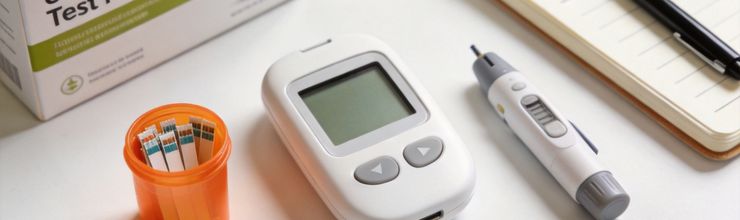
Home uric acid meters are portable electronic devices similar to the blood glucose meters used by people with diabetes. They measure the concentration of uric acid in a small drop of blood from a finger prick.
The testing process involves:
- Pricking your finger with a small lancet to get a drop of blood
- Applying the blood to a disposable test strip
- Inserting the strip into the meter
- Waiting about 10-15 seconds for your uric acid level to appear on the display
Available Devices
Several home uric acid meters are available on the market. Some popular options include:
- Fora G31: Known for accuracy and ease of use
- EasyLife UA: Compact design with reliable readings
- CardioChek PA: Multi-analyte system that can measure uric acid along with cholesterol and other markers
- Mission Uric Acid Meter: Affordable option with good reviews
These devices typically cost between $30-100 for the meter itself, with test strips running about $1-3 per strip depending on where you purchase them.
Accuracy: Home Tests vs. Laboratory Results
What the Research Shows
This is the question most people want answered: Are home uric acid meters accurate enough to be useful?
Studies have shown that modern home uric acid meters provide results that are generally within 10-15% of laboratory measurements. While not as precise as laboratory analysis, this level of accuracy is considered clinically useful for monitoring trends and detecting significant changes in your uric acid levels.
According to research published in the Journal of Clinical Laboratory Analysis, home meters perform well for:
- Tracking whether uric acid is rising, falling, or staying stable
- Identifying when levels are significantly above or below your target
- Providing frequent data points that can reveal patterns over time
Factors That Affect Accuracy
Several factors can influence the accuracy of your home readings:
- Test strip expiration: Using expired strips will give inaccurate results
- Storage conditions: Strips should be stored in a cool, dry place
- Proper coding: Some meters require coding to match batch-specific strips
- Sample size: Too little blood can give incorrect readings
- Extremely high or low values: Accuracy may decrease at very high or low ranges
- Hydration status: Severe dehydration can temporarily affect readings
When Home Tests May Be Less Reliable
Be aware that home testing may be less accurate in certain situations:
- If you have conditions that affect blood cell counts, such as anemia or polycythemia
- During acute illness or severe stress
- If you are taking certain medications that interfere with uric acid metabolism
- Immediately after eating a high-purine meal (levels can spike temporarily)
Benefits of Home Uric Acid Monitoring
Why Patients Value Self-Monitoring
People who use home uric acid meters consistently report several advantages:
- Greater sense of control: You do not have to wait for appointments to know where you stand
- Earlier detection of problems: Spot rising levels before they trigger a flare
- Better medication management: See how well your current regimen is working
- More informed conversations: Arrive at appointments with data to discuss
- Motivation boost: Watching your numbers improve can encourage adherence to diet and medication
- Convenience: Test anytime without scheduling or travel
Tracking Trends Over Time
One of the biggest advantages of home testing is the ability to track patterns over weeks and months. A single lab reading gives you a snapshot, but regular home testing reveals:
- How your levels respond to dietary changes
- Whether your medication is consistently effective
- Effects of stress, illness, or other factors on your uric acid
- The impact of exercise or weight changes
- Patterns related to time of day or season
How Often Should You Test?
Testing Frequency Guidelines
The right testing frequency depends on your individual situation:
If You Are Starting New Medication
- Test every 1-2 weeks initially
- This helps determine if the medication is working and if dosage adjustments are needed
If Your Gout Is Well-Managed
- Test once a month may be sufficient
- Confirm your levels stay within your target range
If You Are Experiencing Frequent Flares
- Test more frequently (weekly or biweekly)
- This helps identify triggers and evaluate management strategies
For General Monitoring
- Once or twice monthly can provide useful trend data
- Even less frequent testing is better than no self-monitoring
Best Times to Test
For most consistent results, consider testing:
- At the same time of day each time (morning tends to be more consistent)
- When you are well-hydrated but not immediately after eating
- Before taking your morning medication (if you take uric acid-lowering drugs)
- At least 24 hours after a flare has resolved
Understanding Your Results
Target Uric Acid Levels
Understanding what your numbers mean is crucial. First, review our complete guide to uric acid levels for more context:
- Below 6.0 mg/dL (360 µmol/L): The target for most people with gout. At this level, uric acid crystals dissolve over time and flares typically decrease
- 6.0-7.0 mg/dL (360-420 µmol/L): Moderate risk zone. Your doctor may recommend more aggressive management
- Above 7.0 mg/dL (420 µmol/L): High risk for crystal formation and flares
Note: These are general guidelines. Your doctor may set different targets based on your specific situation, including the severity of your gout, presence of tophi, kidney function, and other health conditions.
What to Do With Your Results
Keep a log of your readings and look for patterns:
- Are your levels consistently above target? Discuss with your doctor about adjusting treatment
- Are they bouncing around significantly? This may indicate inconsistent medication adherence or diet swings
- Did a flare follow a spike in levels? This data helps you understand your personal triggers
- Are you consistently at goal? Congratulations, share this with your doctor and ask about maintaining your current regimen
Cost Considerations
Comparing Expenses
Let us compare the costs of home testing versus relying solely on lab visits:
| Method | Initial Cost | Ongoing Cost | Frequency |
|---|---|---|---|
| Home testing | $30-100 for meter | $30-90/month for strips | Monthly to weekly |
| Lab testing | Usually covered by insurance | $10-50 copay per visit | Quarterly (typical) |
If you have insurance, lab testing may be virtually free. However, home testing provides more frequent data points that can be valuable for fine-tuning your management plan.
Finding Affordable Supplies
- Buy test strips in bulk online (often cheaper than pharmacies)
- Look for manufacturer coupons and rebates
- Compare prices between different retailers
- Consider store-brand meters and strips if available
Working With Your Healthcare Provider
Sharing Your Home Test Data
Home testing should complement, not replace, regular medical care. Beyond monitoring at home, consider exploring natural ways to lower uric acid alongside your treatment plan. When you see your doctor:
- Bring your log of readings to show trends
- Ask your doctor to periodically order lab tests to calibrate your home device
- Discuss any significant changes or persistent patterns you have noticed
- Ask questions about what your numbers mean in the context of your overall health
When to See Your Doctor
Contact your healthcare provider if:
- Your uric acid levels remain above 7.0 mg/dL despite medication
- You experience frequent flares (more than 2-3 per year)
- You develop tophi (visible lumps under the skin)
- You have kidney stones or notice changes in urination
- You have side effects from medications
- Your home readings differ significantly from lab results
Frequently Asked Questions
- Can I use a home uric acid meter instead of getting lab tests?
- Home meters are useful for tracking trends between lab visits, but they should not completely replace laboratory testing. Lab tests are more comprehensive and accurate. Use home testing to supplement, not replace, your regular medical care. Your doctor can advise you on the right balance for your situation.
- Do I need a prescription for a home uric acid meter?
- No. Home uric acid meters and test strips are available over-the-counter without a prescription. You can purchase them online or at pharmacies. However, insurance typically does not cover them, so you will pay out of pocket.
- How do I know if my home meter is accurate?
- The best way to check accuracy is to compare your home reading to a simultaneous lab test. Have your blood drawn at the lab, then immediately test yourself with your home meter. If the results are within 10-15% of each other, your meter is performing well. You can also test yourself twice in quick succession—consistent results suggest good precision.
- Should I test on an empty stomach or after eating?
- For the most consistent results, test when you have been fasting for at least 4-6 hours, such as first thing in the morning before breakfast. However, what is most important is consistency—if you prefer testing after eating, just test after meals each time so you can compare apples to apples.
- Can I use the same meter for multiple family members?
- Yes, you can share a single meter between family members. Each person should use their own lancet device (for hygiene) and their own set of test strips. Simply clean the meter with alcohol between users if sharing.
Related: Uric Acid Blood Test | Uric Acid Chart | Gout Lab Tests
Frequently Asked Questions
Can I use a home uric acid meter instead of getting lab tests?
Home meters are useful for tracking trends between lab visits, but they should not completely replace laboratory testing. Lab tests are more comprehensive and accurate. Use home testing to supplement your regular medical care rather than replace it, and share your home readings with your doctor to help guide your treatment decisions.
Do I need a prescription for a home uric acid meter?
No. Home uric acid meters and test strips are available over-the-counter without a prescription at pharmacies and online retailers. However, insurance typically does not cover them, so you will pay out of pocket. Factor in the ongoing cost of test strips when choosing a meter.
How do I know if my home meter is accurate?
The best way to check accuracy is to compare your home reading to a simultaneous lab test. Have your blood drawn at the lab, then immediately test yourself with your home meter using a drop from the same blood draw. If the results are within 10–15% of each other, your meter is performing well. Testing yourself twice in quick succession also checks precision.
Should I test on an empty stomach or after eating?
For the most consistent results, test when you have been fasting for at least 4–6 hours, such as first thing in the morning before breakfast. However, consistency matters most—if you prefer testing after eating, just test after meals each time so you can track meaningful trends rather than individual fluctuations.
References
- Perez-Ruiz F, Castillo E, Chinchilla SP, Herrero-Beites AM. Renal clearance of uric acid is linked to insulin resistance and lower renal excretion of uric acid in gout. Ann Rheum Dis. 2015;74(3):571-574. PubMed
- Jin M, Yang F, Yang L, et al. Uric acid as a key factor in the pathogenesis of gout and hyperuricemia (high uric acid levels). Front Immunol. 2022;13:940865. PubMed
- Chen-Xu M, Yokose C, Rai SK, Pillinger MH, Choi HK. Contemporary Prevalence of Gout and Hyperuricemia in the United States and Temporal Trends by Socioeconomic Status. Arthritis Rheumatol. 2019;71(5):764-770. PubMed
- American College of Rheumatology. 2020 Guideline for the Management of Gout. Arthritis Care & Research. 2020. PubMed
- Neogi T, et al. 2015 Gout Classification Criteria. Arthritis Rheumatol. 2015;67(10):2557-2568. PubMed
Reviewed by the GoutSavvy Editorial Team