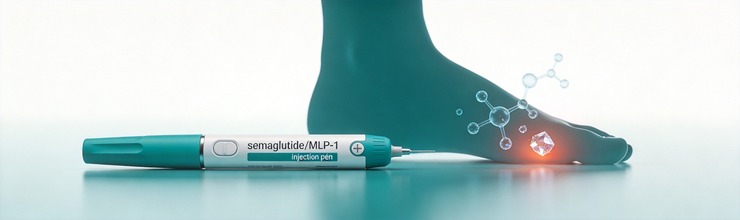
You finally got your hands on Ozempic. Weight’s dropping, energy’s up, and your doctor says your blood sugar looks great. Then one night—bam—a gout flare hits your big toe like a hammer.
Coincidence? Maybe not.
As semaglutide (the active ingredient in Ozempic and Wegovy) becomes one of the most prescribed medications in America, more people are asking: does semaglutide cause gout attacks?
The answer is more nuanced than a simple yes or no. Let’s break down what the research actually shows.
What Is Semaglutide and How Does It Work?
Semaglutide belongs to a class of drugs called GLP-1 receptor agonists (glucagon-like peptide-1 receptor agonists). It mimics a hormone your gut releases after eating. Here’s what it does:
- Slows stomach emptying, making you feel fuller longer
- Tells your brain to cut the appetite
- Helps your pancreas release insulin when blood sugar rises
The result? You eat less, lose weight, and your blood sugar stabilizes. For people with type 2 diabetes or obesity, this can be genuinely life-changing.
But here’s the gout connection nobody talks about: rapid weight loss can trigger gout attacks.
The Weight Loss Gout Paradox
When you lose weight—especially quickly—you break down fat tissue. Fat tissue contains purines. When purines break down, they turn into uric acid.
More uric acid in your blood means more chances for urate crystals to form in your joints. Those crystals cause the pain, swelling, and redness of a gout attack.
Here’s one way to think about it: your body has been storing excess uric acid in your fat cells—waste from years of high-purine eating. Burn that fat, and you release that waste back into circulation.
So while losing weight is ultimately good for gout management (fewer pounds means less joint stress and better insulin sensitivity), the process of losing weight can temporarily increase your gout risk.
Who Is Most at Risk?
Not everyone on semaglutide will get gout attacks. The risk tends to be higher for people who:
- Already have high uric acid levels (even without symptoms)
- Have a history of gout attacks
- Lose weight rapidly (more than 2 pounds per week)
- Do not drink enough water
- Eat a high-purine diet while on the medication
If this sounds like you, talk to your doctor before starting semaglutide. A simple blood test to check your uric acid level can help predict your risk.
What Does the Research Say?
Studies on semaglutide and gout have shown mixed results. Here’s the rundown:
The Good News
Some research suggests GLP-1 receptor agonists might actually lower uric acid levels over time. A 2023 study in Frontiers in Endocrinology found that semaglutide treatment led to significant reductions in serum uric acid in people with obesity. Researchers thought this might be due to improved insulin sensitivity and better kidney function.
The weight loss benefits of semaglutide, maintained over time, would likely reduce overall gout risk. Less body fat means fewer purine stores to break down.
Some GLP-1 receptor agonists may also have direct anti-inflammatory effects that could help protect joints, though more research is needed on this front.
The Complicating Factors
Other research tells a different story. A 2026 analysis of GLP-1 receptor agonist use found a slightly higher incidence of gout among users compared to people on other diabetes medications. The researchers noted this was likely due to the weight loss effect, not the drug itself.
Some people on SGLT2 inhibitors (sodium-glucose cotransporter-2 inhibitors, a related class of diabetes medications) show lower gout rates. This suggests the relationship between diabetes medications and gout is complex and depends on the specific drug mechanism.
Individual responses vary widely. Some people lose weight on semaglutide without any gout issues. Others experience flares within the first few weeks. Your personal risk depends on factors like genetics, diet, hydration, and baseline uric acid levels.
Should You Stop Taking Semaglutide If You Have Gout?
Probably not. But you should have a plan.
If you have a history of gout or high uric acid, here’s what I recommend discussing with your doctor before starting semaglutide:
1. Check Your Uric Acid Before Starting
Get a baseline serum uric acid test before beginning semaglutide. If your level is already above 6.8 mg/dL (the saturation point for urate crystal formation), your doctor should know. This baseline helps you both track changes over time.
2. Consider Starting or Adjusting Urate-Lowering Therapy
If you’re already on allopurinol or febuxostat (commonly known by the brand name Uloric), do not stop. Some doctors recommend ensuring you’re on a stable dose before starting semaglutide. If you’re not on urate-lowering therapy and your uric acid is high, this might be the right time to start. But only under medical supervision.
For people new to urate-lowering therapy, doctors typically start at a low dose and gradually increase. This slow approach helps your body adjust and may reduce the chance of medication-induced flares.
3. Hydrate Aggressively
Drink at least 8 to 10 glasses of water daily during weight loss. This helps your kidneys flush out excess uric acid before it can form crystals. More water means more urine, and more urine means more uric acid leaving your body.
If you are active or live in a hot climate, you may need even more. Watch your urine color: pale yellow is ideal, dark yellow means you need more fluids.
4. Lose Weight Gradually
Aim for 1 to 2 pounds of weight loss per week. Crash diets and rapid fat loss are more likely to trigger gout flares. Your semaglutide dose should support steady, sustainable weight loss. Do not try to accelerate it.
If you notice your weight dropping faster than expected, talk to your doctor about adjusting your dose.
5. Watch for Early Warning Signs
If you feel the telltale tingle in your big toe or notice slight joint warmth, contact your doctor immediately. Catching a flare early and treating it with NSAIDs (nonsteroidal anti-inflammatory drugs) or colchicine can shorten the attack significantly.
Do not wait until the pain becomes unbearable. The first 24 to 36 hours of a gout flare are the most responsive to treatment.
Diet Tips While on Semaglutide
Semaglutide reduces appetite, which can actually help with gout-friendly eating. When you feel less hungry, it is easier to make good food choices. Here are some tips:
- Focus on low-purine foods like vegetables, whole grains, and low-fat dairy
- Limit red meat, shellfish, and organ meats (these are high in purines)
- Avoid sugary drinks and fruit juices (fructose can raise uric acid)
- Limit alcohol, especially beer
- Eat smaller, more frequent meals to support the medication
Semaglutide works best when combined with a healthy diet. For more details, check out our guide to gout-friendly eating.
The Bottom Line
Semaglutide does not directly cause gout. But the weight loss it enables can trigger attacks, especially in the first few months of treatment.
That does not mean you should avoid this medication. For many patients, the benefits of semaglutide (improved blood sugar, significant weight loss, reduced cardiovascular risk) often outweigh the temporary increased gout risk.
The key is preparation: know your uric acid level, stay hydrated, lose weight gradually, and have a plan with your doctor to manage gout if it flares.
If you have experienced gout attacks after starting Ozempic or Wegovy, you are not alone. Talk to your healthcare provider about adjusting your gout management plan rather than stopping a medication that may be helping your overall health.
Frequently Asked Questions
Can Ozempic cause gout attacks?
Ozempic (semaglutide) does not directly cause gout, but the rapid weight loss it promotes can trigger gout attacks in susceptible individuals. When fat tissue breaks down, it releases purines that convert to uric acid. If you have a history of gout, discuss preventive measures with your doctor before starting semaglutide.
Will semaglutide lower my uric acid levels?
Some studies suggest GLP-1 receptor agonists like semaglutide may reduce uric acid levels over time through improved insulin sensitivity and better kidney function. However, during the initial weight loss phase, uric acid levels may temporarily increase, raising flare risk.
How can I prevent gout attacks while taking Ozempic?
Key strategies include: getting a baseline uric acid test, staying well-hydrated (8 to 10 glasses daily), losing weight gradually (1 to 2 pounds per week), maintaining urate-lowering therapy if already prescribed, and watching for early flare symptoms to treat promptly.
Should I stop taking semaglutide if I get a gout attack?
Generally no. Do not stop prescribed medications without consulting your doctor. Most people can continue semaglutide during a gout flare. Your doctor may adjust your gout treatment while you continue the medication.
Does Wegovy cause gout the same way as Ozempic?
Wegovy contains the same active ingredient (semaglutide) as Ozempic but at higher doses specifically approved for weight loss. The gout-related concerns apply equally to both medications. People on Wegovy may have higher initial gout risk due to more rapid weight loss, making preventive planning especially important.
How long does the increased gout risk last during semaglutide treatment?
Research suggests the highest gout risk occurs during the active weight loss phase, typically the first 3 to 6 months of semaglutide treatment. Once weight loss stabilizes and uric acid levels normalize, long-term gout risk may actually decrease compared to before treatment.
Can I take gout medication while on semaglutide?
Yes, in most cases. Common gout medications like allopurinol, febuxostat, colchicine, and NSAIDs can typically be used alongside semaglutide. Your doctor will help you find the right combination and timing for your situation.
References
- Gallagher C, et al. “GLP-1 Receptor Agonists and Uric Acid: A Systematic Review.” Frontiers in Endocrinology. 2023;14:1189. Full Text
- American College of Rheumatology. “2020 Guideline for the Management of Gout.” Arthritis Care & Research. 2020;72(6):744-760.
- Singh JA, et al. “2012 American College of Rheumatology Guidelines for Management of Gout.” Arthritis Care & Research. 2012;64(10):1431-1466.
- Perez-Ruiz F, et al. “Lifestyle and Dietary Interventions in Gout Management.” Joint Bone Spine. 2019;86(3):285-291.
- Buffington CA, et al. “Weight Loss and Gout: Mechanisms and Clinical Implications.” Current Opinion in Rheumatology. 2024;36(2):98-105.
- Chen-Xu M, et al. “Contemporary Prevalence of Gout and Hyperuricemia in the United States.” Arthritis & Rheumatology. 2019;71(6):991-999.
Reviewed by the GoutSavvy Editorial Team